
Updated October 2026
Air duct cleaning after damage in Oklahoma City matters because a forced-air system shares one supply of air across the whole house. If it ran during a fire, during mold growth or while drywall was being cut, the ducts now hold that residue. Cleaning happens near the end of the job, after the source is gone.
When ducts need cleaning and when they do not
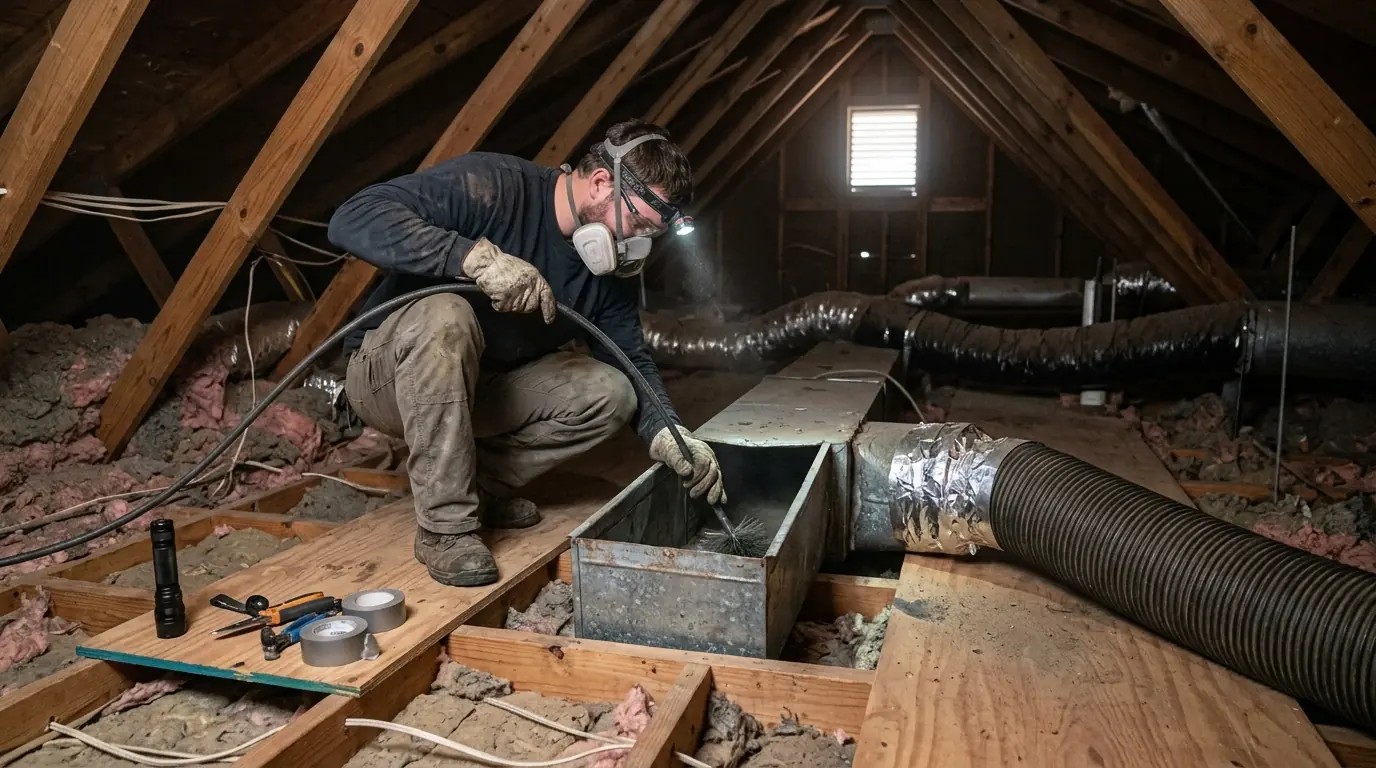
Routine duct cleaning in a house with no problem is often unnecessary. After damage it is different. Soot at the registers, mold inside a duct or a layer of drywall dust are all reasons to clean, because the system will keep moving that material into rooms you already cleaned.
We work under negative pressure. A HEPA collection unit connects to the trunk line, registers get sealed, and rotary brushes and air whips knock residue loose so it is pulled into the collector instead of the room.
The air handler gets attention too: the blower, the coil face and the drain pan. Flex duct coated with soot or mold usually gets replaced rather than cleaned, since its inner liner tears easily.
What decides the cost of duct cleaning after damage
No published cost source covers duct cleaning after fire or mold, and the price depends heavily on the system. These are the factors that move it.
- Number of runs. More supply and return runs mean more setup and more cleaning time.
- Duct material. Metal ducts clean well. Flex duct and duct board often need replacing when soiled.
- What is in the ducts. Dry dust is quick. Oily soot and mold growth take more passes and treatment.
- Air handler condition. A soot-covered coil or blower adds cleaning time or parts.
- Access. Ducts in a tight attic or a low crawl space slow down every step.
Damage gets into ducts in three ways, and the cleaning approach follows the cause.
Soot in Ductwork
If the blower was running during a fire, or a return sits near the room that burned, soot gets pulled through the whole system. It shows up as dark streaks at the supply registers and a black filter. Metal ducts can be brushed and vacuumed. Duct board and flex duct that hold soot in their fibers often need replacing. The coil gets cleaned too, since soot there smells every time the system runs.
Mold in Ducts and Registers
Mold in ducts starts with moisture: condensation on poorly insulated ducts in a hot attic, a clogged drain pan, or water that got in during a leak or flood. Cleaning without fixing that moisture just resets the clock. We find the cause, remove the growth, replace insulation or flex runs that cannot be cleaned, and coordinate the work with any mold remediation happening elsewhere in the house, so the ducts are not recontaminated.
Duct Cleaning After Construction Dust
Tear-out and drywall sanding make fine dust that the return pulls straight into the system. We seal registers during our rebuild work, but if a system ran unprotected, dust coats the ducts, the blower and the coil, and airflow drops. A cleaning at the end of the job restores that airflow and keeps the dust from settling on new paint, new floors and freshly cleaned furniture. A new filter goes in last.
What a duct cleaning after damage should cover
Some duct cleaning offers only vacuum the register boots. After real damage, the scope has to reach further.
- Every supply and return run, including the return plenum
- Negative pressure with HEPA collection during cleaning
- Register and grille removal and cleaning
- The blower, evaporator coil and drain pan
- Replacement of flex duct that cannot be cleaned
- A new filter and an airflow check at the end
When floodwater reaches the ducts under the floor
Thirteen people died in flash flooding in Oklahoma County during the evening of May 31, 2013, a reminder of how fast water can move into houses in Oklahoma City. In a home with ductwork under the floor, water that rises to floor level pours into the registers and the duct runs below them. Those ducts then sit wet in the dark, which is where mold gets started. After any water reaches the floor, we check the registers and duct runs before the system goes back into regular use.
How we clean ducts after a fire or mold job
- We inspect the systemFilter, registers, a camera look inside the trunk lines, and the coil and blower.
- We set negative pressureA HEPA collection unit connects to the ducts and every register gets sealed.
- We clean each runBrushes and air whips loosen residue, and the collection unit pulls it out.
- We clean or replace partsRegisters, grilles, coil and blower get cleaned, and ruined flex runs get replaced.
- We restart and checkNew filter in, system on, and we check airflow and smell at the registers.
Signs the damage reached your ductwork
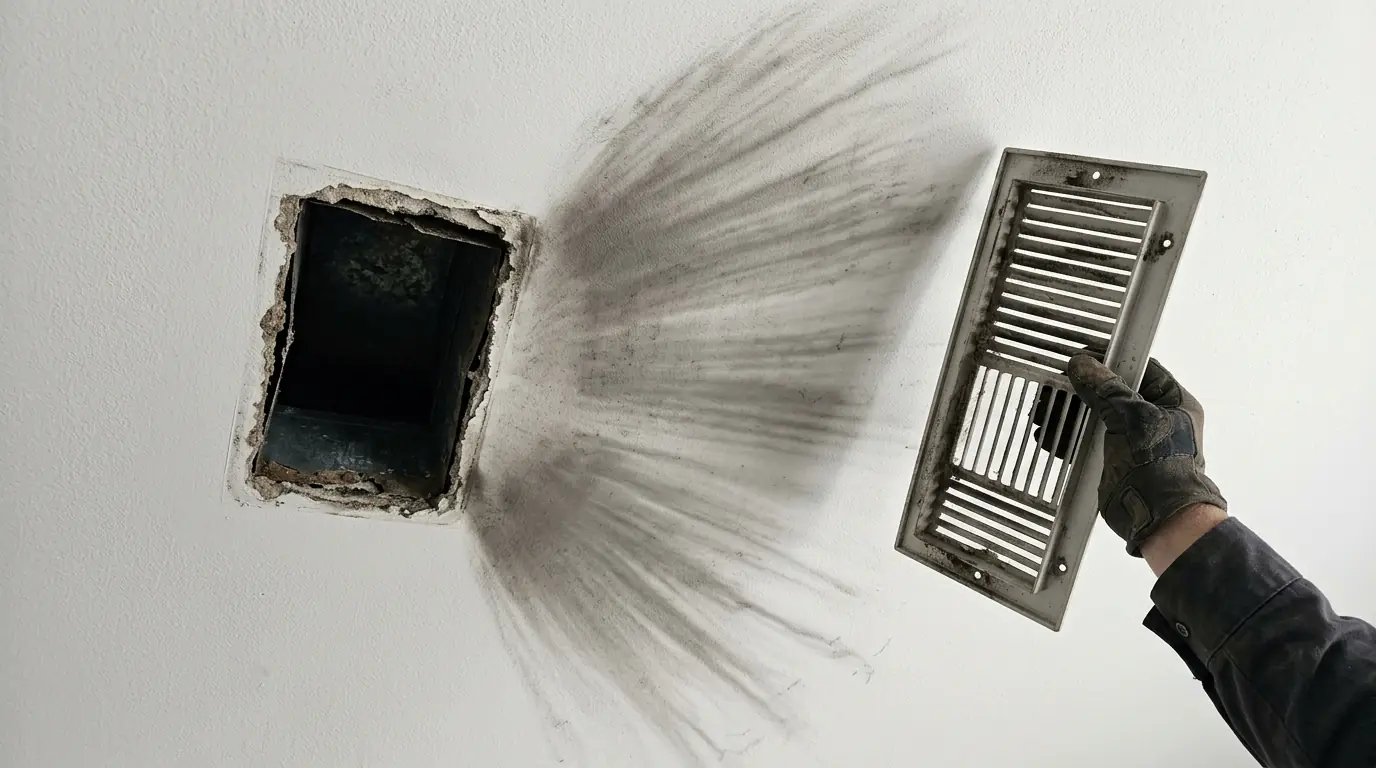
- Dark streaks around registersSoot in the airflow leaves a gray fan shape on the ceiling around a register.
- A black or gray filterA filter that darkened quickly after a fire shows the system moved smoke.
- Musty smell at startupOdor that spikes when the system starts points to growth in the ducts or coil.
- Dust puffing from registersVisible dust after a repair means debris is sitting in the runs.
- Spots on register grillesSpeckled growth on grilles often continues inside the duct.
Duct cleaning questions after fire and mold damage
Not until the system has been checked. Running it spreads soot into every room, including rooms that had none. If you must run it for safety in extreme weather, put in a new filter first and change it often.
Yes. A musty smell that gets stronger when the system kicks on usually points to growth in the ducts, the drain pan or on the coil. Cleaning removes the growth, but the moisture causing it also has to be fixed.
Near the end. Ducts cleaned while drywall is still being cut and sanded just get dirty again. We seal the registers during the work and clean the system once the dusty stages are finished.
Usually not after fire or mold. Its thin inner liner tears under brushes and holds residue in its folds. Replacing soiled flex runs often costs less than trying to clean them and gives a cleaner result.
It removes one source. Smoke odor also lives in drywall, insulation and fabrics, so duct cleaning is usually one part of a larger smoke and odor job rather than the whole fix.