
Updated October 2026
Flood damage cleanup in Oklahoma City starts with one rule: water that came in from outside carries soil, bacteria and runoff, so the porous materials it touched usually come out rather than being dried in place. After that, the job is cleaning, disinfecting and drying the structure before any drywall or flooring goes back.
How flood cleanup differs from drying a leak
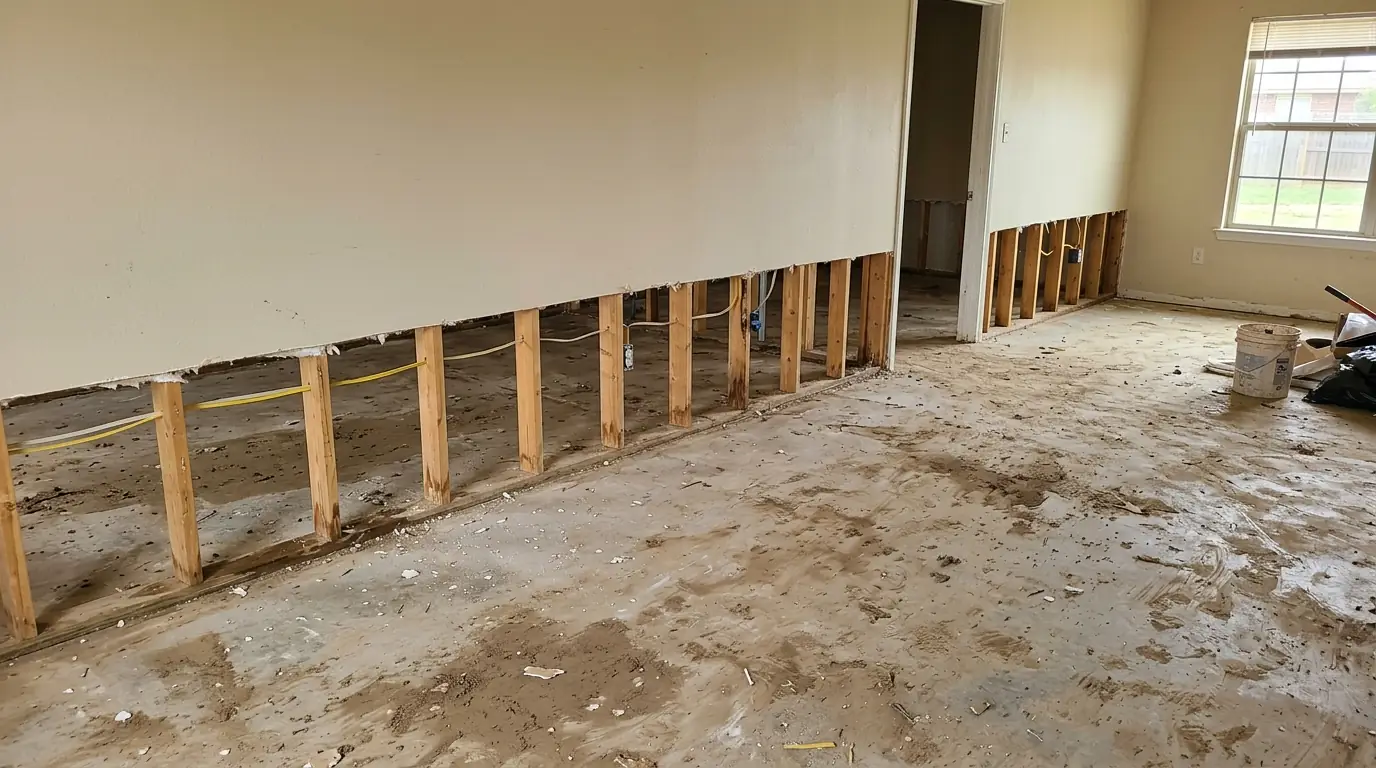
A burst pipe soaks a house with clean water. A flood brings in whatever was in the yard, the street and the storm drain, and that changes the plan. Carpet and pad are usually lost, drywall gets a flood cut above the wet line, and wet insulation comes out of every affected wall.
We start by pumping standing water and pulling out what cannot be saved, with photos of each room before anything leaves the house. Then the exposed framing, slab and subfloor get cleaned and treated, and drying equipment runs until the readings reach the dry target.
Mud, sediment and odor take more labor than the water itself, so a flood job runs slower than a leak of the same size.
Water gets into houses here in three main ways when it rains hard, and each one leaves a different kind of mess.
Flash Flood Water in the House
Flash flooding is fast surface water: a street that turns into a creek, a yard that drains toward the house, a door threshold that gets overtopped. It carries mud and debris and can reach several rooms in minutes. Everything porous below the wet line is suspect. We cut drywall above the highest wet reading, pull the flooring, and shovel out and wash down the slab before any drying equipment goes in.
HomeAdvisor, in a 2017 estimate, gave $1,000 - $4,000 as the average cost of hiring professionals for flood damage cleanup.
Groundwater Seepage
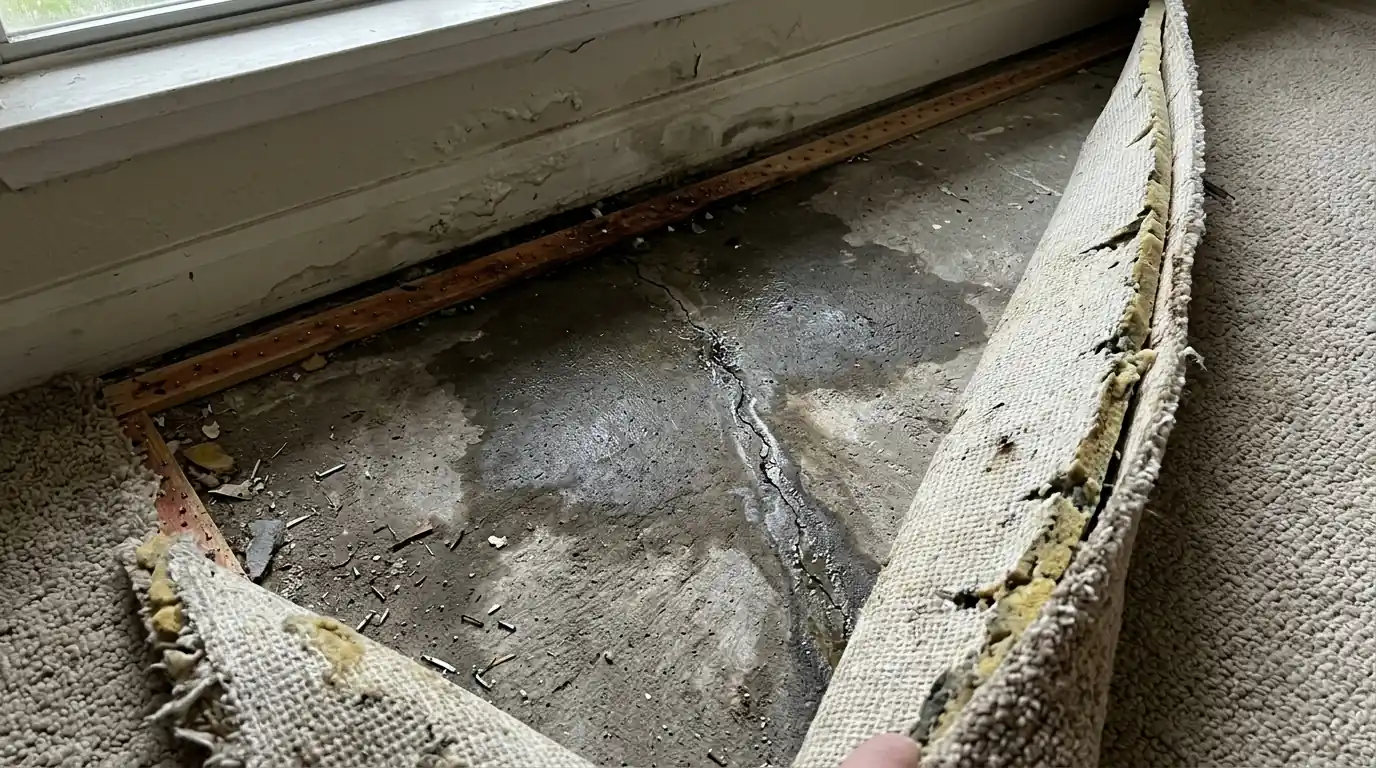
Seepage comes up instead of in. After days of rain, water pushes through slab cracks, along the joint where the slab meets the foundation, or up into a crawl space. It is slower and quieter than a flash flood, and it often shows as wet carpet along one wall or a damp smell. Drying it without fixing the drainage just sets up the next round, so we show you where the water is entering.
Flooded Garages
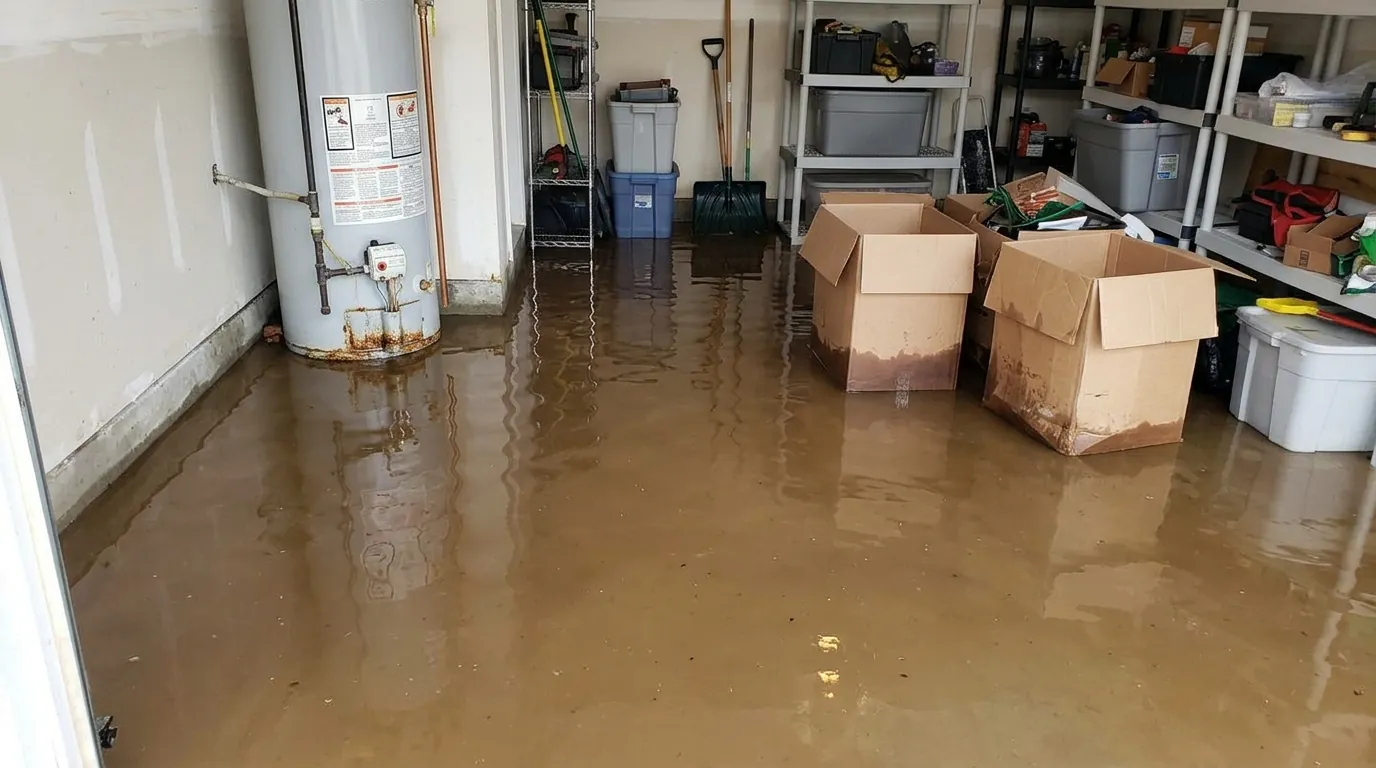
Garages flood first because the slab sits lower and the door seal is the only barrier. The water itself is often easy to remove. The trouble is what sits on the garage floor: boxes, the bottom of the drywall, the water heater and the door into the house. We clear and dry the garage, then check the drywall and flooring on the house side to confirm water did not cross the threshold into the living space.
The order a flood cleanup runs in
- We check for hazards firstPower to flooded rooms is cut and gas appliances that took water are flagged before anyone wades in.
- We pump and photographStanding water comes out and every room is photographed with the water line visible.
- We remove what floodwater ruinedCarpet, pad, drywall below the cut, insulation and soaked contents, listed as they go out.
- We clean and disinfectFraming, slab and subfloor are washed and treated so drying does not seal contamination in.
- We dry, then rebuildEquipment runs until readings hit the dry target, then insulation, drywall, flooring and trim go back.
Flood maps and building rules in Oklahoma City
Oklahoma City's FEMA flood studies cover several river and creek basins that run through the city, and parts of the city fall inside mapped floodplains. The city requires new and substantially improved buildings in a floodplain to be built at least one foot above the base flood elevation. That matters after a flood: if repairs to a house in a mapped floodplain are large enough to count as a substantial improvement, the rebuild may have to meet that rule, so check the city's flood maps before the scope is set.
What a complete flood cleanup scope should include
Some flood estimates skip steps that later show up as odor or mold. Ask about each.
- Pumping standing water and removing mud and sediment
- Photo records of every room and the water line
- Flood cuts above the highest wet reading, not a fixed height
- Removal of wet insulation from affected walls
- Cleaning and disinfecting exposed framing, slab and subfloor
- Daily moisture readings until the dry target is met
- Hauling away ruined materials and contents
- Rebuild of drywall, flooring, baseboard and paint
Cut, clean or replace: what happens to each material after floodwater
Porosity decides, not price.
| Material | Usually saved | Usually removed | What decides it |
|---|---|---|---|
| Carpet and pad | Rarely | Pad always, carpet usually | Contamination in the backing |
| Drywall | Above the wet line | Below the flood cut | How high water wicked |
| Solid wood framing | Yes, cleaned and dried | Only if rotted | Readings after cleaning |
| Tile and hard furniture | Yes, disinfected | Swollen particleboard | Whether the core absorbed water |
What changes the price of flood cleanup
Flood jobs are priced by what came in with the water and how much of the house it touched.
- Water depth. An inch means flooring and baseboard. A foot means flood cuts, insulation and lower cabinets.
- Mud and debris. Sediment is shoveled, washed out and hauled before drying starts.
- How long it stood. Water that sat a day or more wicks higher and soaks deeper into framing.
- Square footage. Every wet room adds removal, cleaning, equipment and rebuild.
- Contents. Furniture and appliances in the water are moved, cleaned or discarded and listed.
Published national price ranges
- $1,000 - $4,000 (average cost for hiring professionals) (per job), flood damage cleanup. Dealing with Flood Damage Repair and Cleanup (HomeAdvisor)
These are planning ranges from national cost guides, not our quote. The price for your house depends on the factors above, and we give you a written scope before repair work starts.
Flood cleanup questions from Oklahoma City homeowners
A basic homeowners policy does not cover flooding from rising water. That takes a separate flood policy, often written through the National Flood Insurance Program. A burst pipe is a different kind of claim, so the water's source matters.
There is no fixed number. We cut above the highest point where moisture readings show the drywall got wet, which can be well above the visible water line. A cut that is too low leaves wet material behind the patch.
A little water in a garage, yes, with boots, gloves and the power off. Floodwater in living space carries bacteria and sometimes sewage, and what it soaked usually needs removal and disinfection, not household fans.
The EPA advises drying water-damaged areas within 24 to 48 hours to prevent mold growth. After a flood that clock starts when the water goes down, so removal and drying should begin as soon as it is safe to enter.
Usually not while contaminated materials are coming out, especially for children, older adults or anyone with breathing problems. Once removal and disinfection are done, many families move back in while drying runs.