
Updated October 2026
Hail and wind siding repair in Oklahoma City means replacing cracked, holed or blown-off pieces and sealing the wall behind them. Vinyl turns brittle in cold weather, so a winter hailstorm can shatter panels that would only dent in June. We check the house wrap and sheathing before any new siding goes on.
What hail and wind actually do to a wall
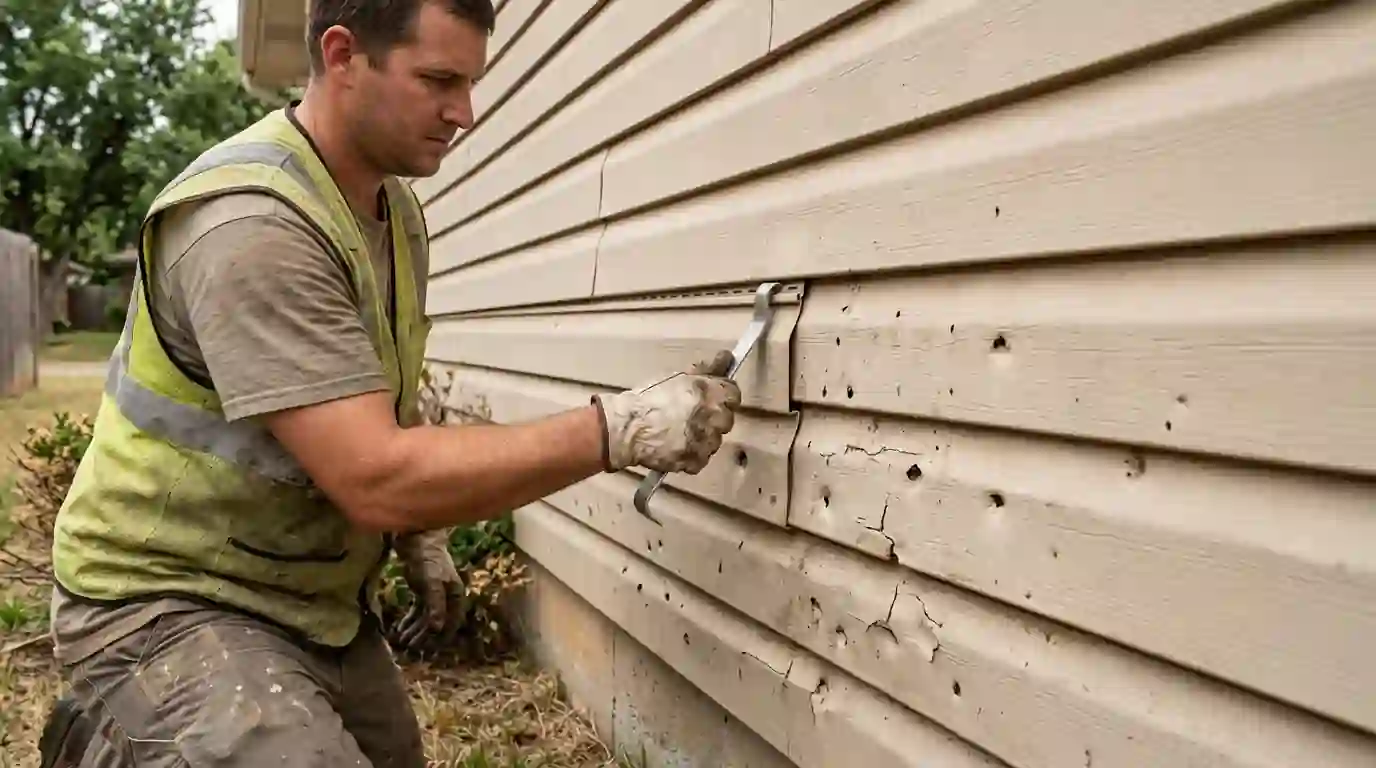
Storm damage to siding falls into two groups. Hail punches holes, cracks panels and chips paint on the side that faced the storm. Wind gets under a loose course, pops it free of the one below and peels a whole run off the wall.
We mark each damaged piece and check whether the profile and color are still made. Vinyl comes off with a zip tool and new panels lock into the existing courses. Fiber cement planks are cut out and face nailed. Wood siding and trim are replaced, primed and painted to match.
Before anything new goes on, we check the house wrap behind the damage, because a hole in the siding is often a hole in the weather barrier too.
What changes the price of a siding repair
Siding repairs are priced by the piece and the hour, so scope matters more than material.
- Material. Vinyl swaps fast; fiber cement and wood need cutting, sealing and paint.
- Color and profile match. Discontinued vinyl means sourcing, a hidden-wall swap or residing a side.
- Wall height. Second-story walls need ladders or staging.
- Damage behind the siding. Torn wrap, wet sheathing or rot is fixed first.
- Paint. New fiber cement and wood are primed and painted to match.
- Trim and accessories. J-channel, corner posts, soffit and window trim add parts.
Published national price ranges
- Normal range $367 - $1,520; average $925 (per project), siding repair. How Much Does Siding Repair Cost in 2026? (HomeAdvisor)
These are planning ranges from national cost guides, not our quote. The price for your house depends on the factors above, and we give you a written scope before repair work starts.
Patch the damaged courses or reside the whole wall?
It usually comes down to whether matching material exists and how much of the wall took hits.
| Situation | Patch the courses | Reside the wall | What decides it |
|---|---|---|---|
| A few cracked panels | Usually right | Not needed | Matching panels still made |
| Faded vinyl | Hidden-wall swap | Often cleaner | How visible the wall is |
| Most of one side hit | Leaves a patchwork | Usually right | The adjuster's scope |
| Rot behind the siding | Not enough | Open and repair | The sheathing |
The repair depends on what the house is wearing. Each material fails differently and gets replaced differently.
Vinyl Siding
Vinyl is the most common siding on newer Oklahoma City houses. Hail cracks it, especially in cold weather, and wind can unhook a course and fold it back. Single panels can be swapped without disturbing the rest of the wall. The hard part is color. Older vinyl fades, so we take a sample to the supplier, or move panels from a hidden wall to the damaged side and put the new ones out of sight.
HomeAdvisor puts the normal range for siding repair at $367 - $1,520, with an average of $925.
Fiber Cement Siding
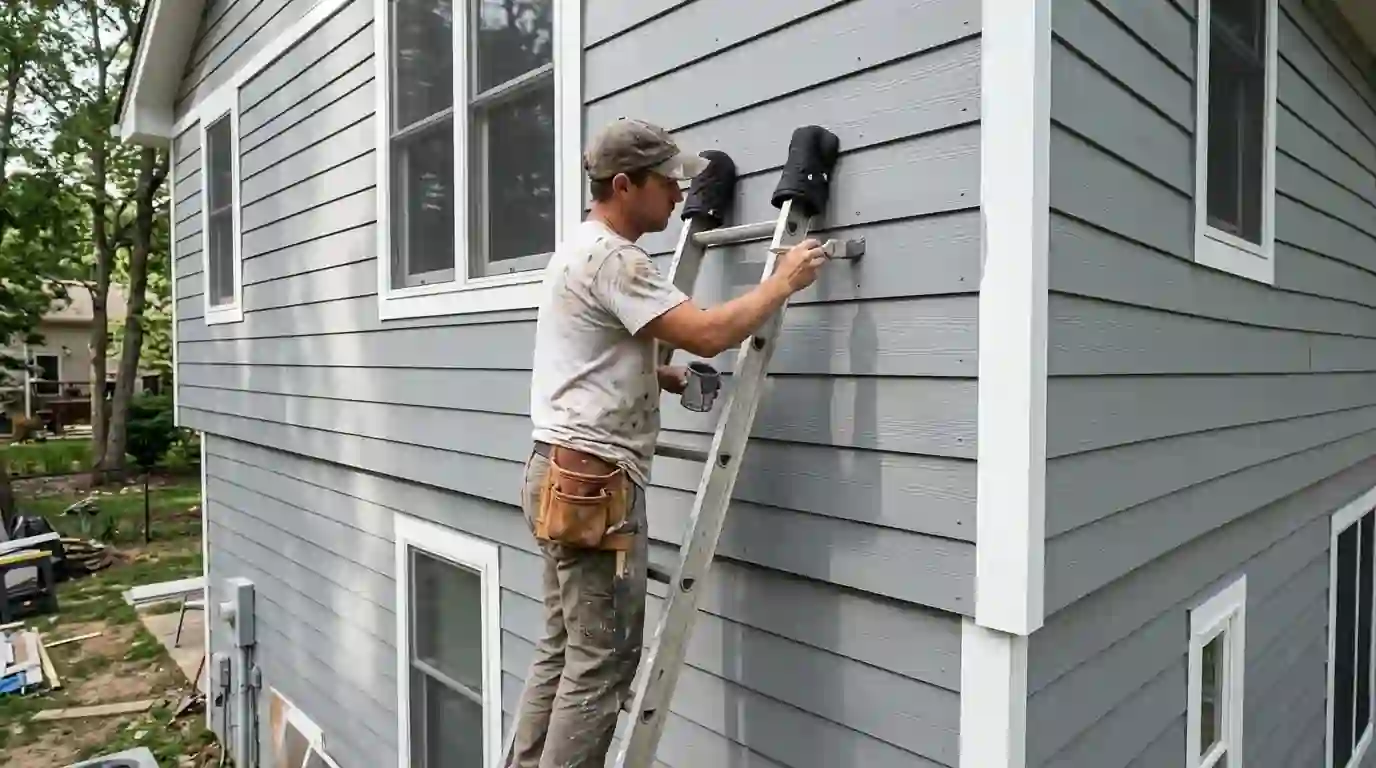
Fiber cement holds up to hail far better than vinyl, but large stones can still crack planks or knock chunks off the bottom edge, where water then soaks in. Cracked planks are cut out and replaced with new ones, then nail heads, edges and butt joints are sealed and painted. Cutting fiber cement releases silica dust, so we cut outdoors with dust collection and keep the debris out of your beds.
Wood Siding and Trim
Wood lap siding, T1-11 panels and painted trim show hail as dents and split paint. A split board lets water in, and wood that stays wet rots from the back. We replace split boards and soft trim, caulk the joints, back-prime the new wood before it goes up and paint it to match the wall. Where the same trim keeps rotting, engineered trim is a sturdier option that takes paint the same way.
What grapefruit-size hail did to siding in the south metro
On May 10, 2010, the Oklahoma Climatological Survey logged 3.75-inch hail at Del City and 4.00-inch hail about a mile east-northeast of Moore, with softball-to-grapefruit size stones in several areas. Hail that size does not just dent vinyl, it punches straight through it and shears the bottom edge off fiber cement planks. After a storm like that the work is rarely one panel. It is whole elevations, and the wrap behind them has to be checked before the wall is closed up again.
Brands we install on this work
On siding repairs we install James Hardie fiber cement and LP SmartSide siding and trim, finished with Sherwin-Williams or Benjamin Moore paint on new wood and fiber cement.
Materials we install on rebuilds and roof repairs
How a storm siding repair runs
- We walk every wallEach damaged piece is marked and photographed.
- We source the matchA sample goes to the supplier, or we plan a hidden-wall swap.
- We open the damaged areaBroken pieces come off and we check the wrap behind them.
- We install and sealNew siding goes in, joints are sealed and trim is reset.
- We paint and clean upNew fiber cement and wood get paint, and debris is cleared.
Storm siding damage worth a closer look
- Round dents or cracks on one sideHail hits cluster on the wall that faced the storm.
- Panels that rattle or bulgeA course knocked loose by wind moves when pressed.
- Fresh chips in the trim paintNew bare spots after a storm usually mean hail strikes.
- Pieces lying in the yardSiding or J-channel in the grass means a gap on the wall.
- Stains inside an outside wallWater marks near outlets can mean rain got behind cracked siding.
Siding questions after hail and wind in Oklahoma City
Often, yes. We take a piece to the supplier to match profile and color. When the color has faded or is discontinued, we move panels from a hidden wall to the damaged side and put new ones out of sight.
On aluminum and steel siding, dents are mostly cosmetic but count as hail damage on many claims. On vinyl, look for cracks and holes. On fiber cement, check the bottom edges, where chips let water in.
Hail and wind are covered perils under most homeowners policies, minus the deductible. Matching is the usual argument, so we give the adjuster photos of each damaged piece and a note on whether matching material is still made.
Where the wrap behind damaged siding is torn or wet, yes. We patch or replace it before new siding goes on, because the wrap is what keeps wind-driven rain off the sheathing.
A handful of vinyl panels takes a few hours. A full side of the house, or fiber cement that needs paint, usually takes two to four days depending on paint drying time and weather.