
Updated October 2026
Tornado damage repair in Oklahoma City runs in a set order: make the structure safe, remove debris, close the house to rain, then rebuild. A wall that racked or a roof that lifted off its walls can collapse during cleanup, so temporary shoring goes in before anyone pulls debris out from inside the house.
Why tornado repairs follow a strict order
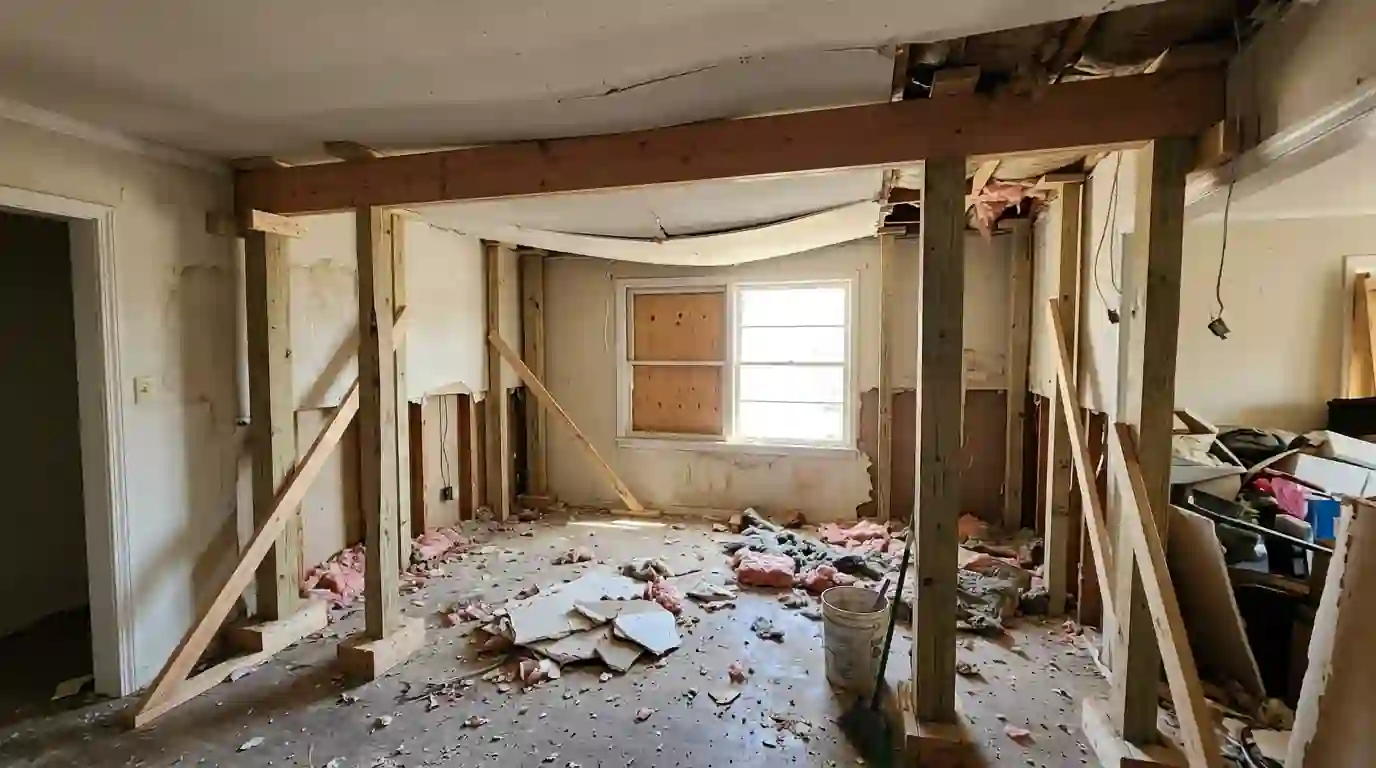
Tornado damage is rarely one hole. Wind and debris can lift the roof off its walls, push walls out of plumb, blow out windows and drive rain into every room through the openings. Some of that is obvious. Some, like a cracked top plate or rafters pulled from their connections, only shows when you look up from inside.
So the work runs in order. Shoring holds up anything unstable. Debris comes out, with salvageable belongings set aside. Tarps and plywood close the openings, and wet materials start drying before mold gets a foothold.
Only then does the rebuild start, with new framing, decking, sheathing and siding going on before the interior work. We keep dated photo records at every stage.
Tornado jobs split into three phases. Each one carries its own risks when it is rushed or skipped.
Temporary Shoring
Shoring is temporary support for framing that can no longer carry its load. We set posts and beams under sagging ceilings, brace walls that racked, and support headers over blown-out openings. Shoring goes in before debris removal, because pulling a fallen beam or a pile of wet drywall can be what lets an unstable section drop. It stays until the permanent framing is in, and we check it again after any more storms.
Debris Removal
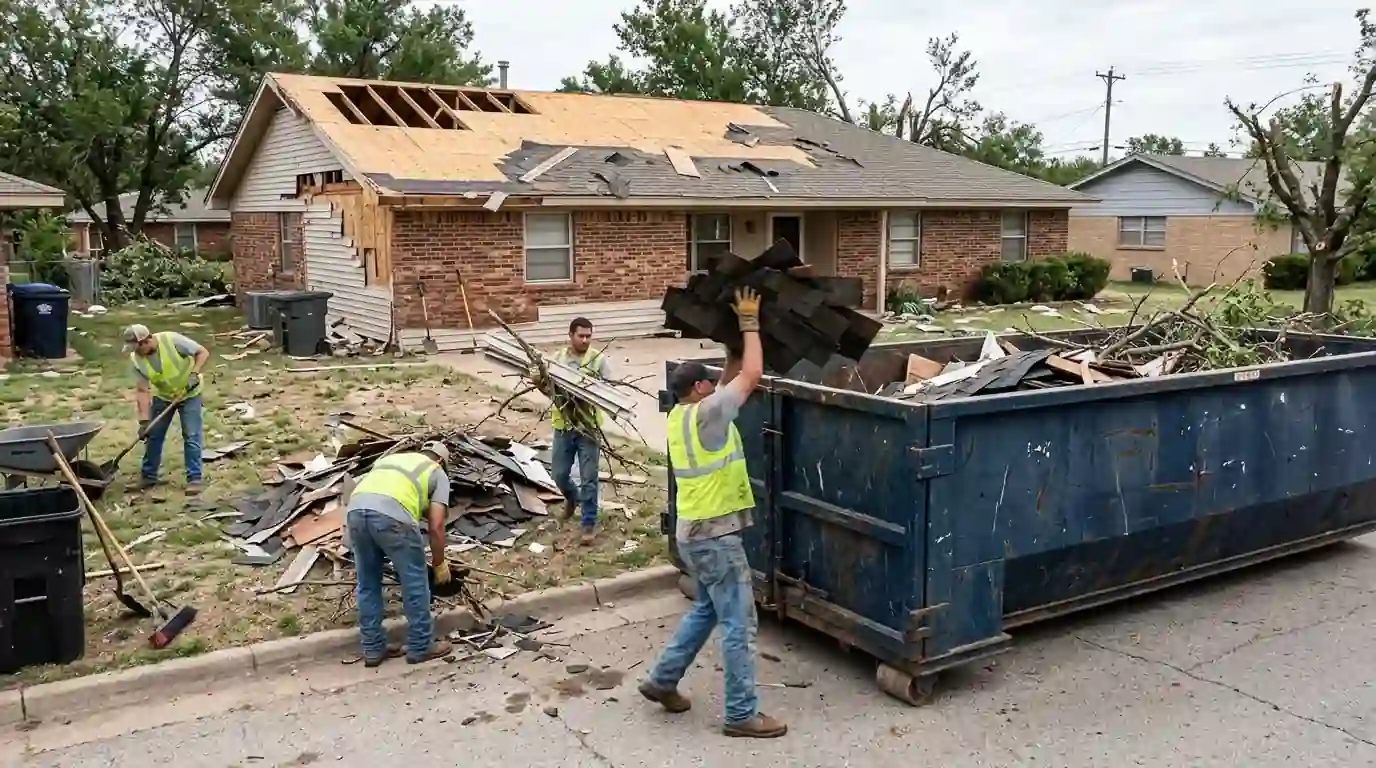
Debris after a tornado is a mix of your house and other people's: roofing, insulation, broken glass, limbs and sometimes sheet metal. We sort what comes out, setting aside belongings that can be saved, photographing damaged items for your claim and hauling the rest. Inside, wet insulation and drywall come out with the debris so drying can start. Nails and broken glass get swept from the yard and driveway too.
Roof Deck and Wall Rebuild
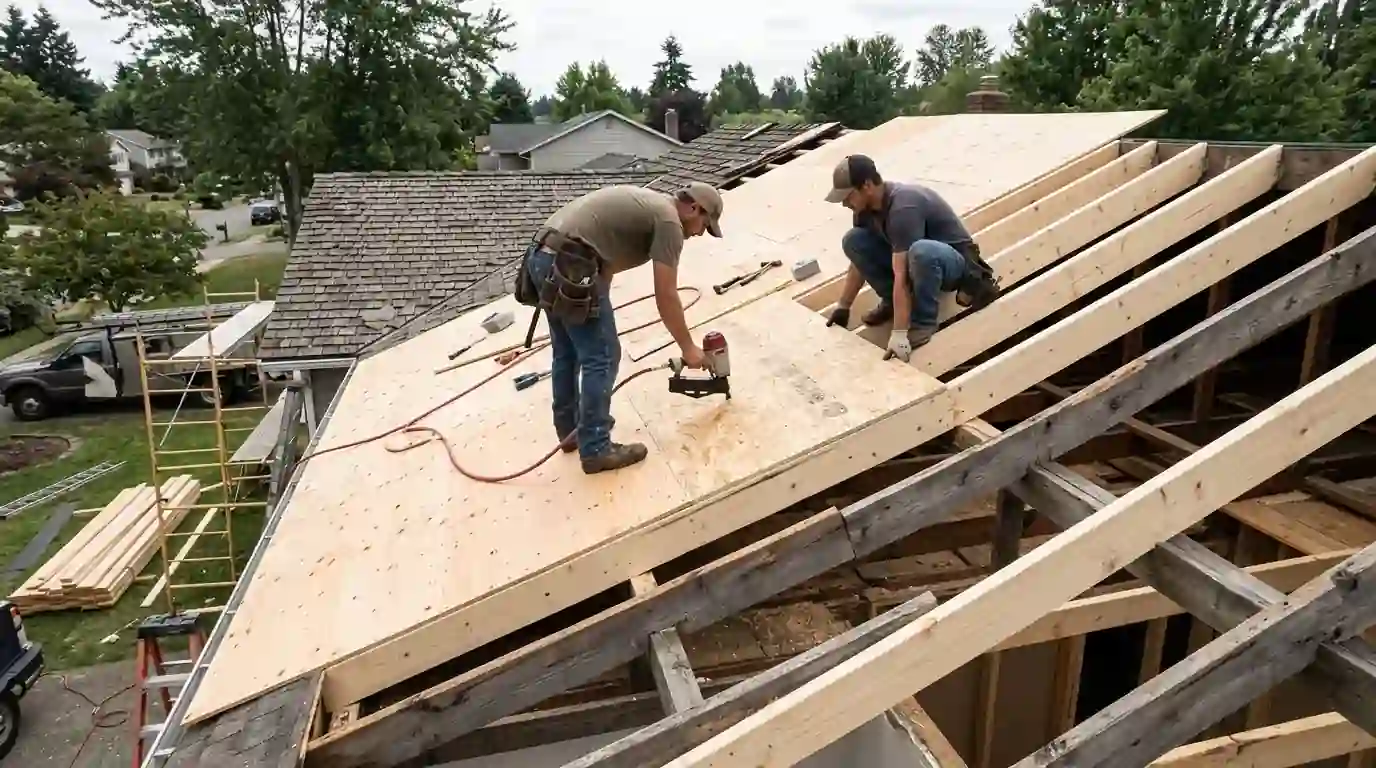
Once the house is stable and dry, we replace broken rafters and studs, install new roof decking and wall sheathing, and tie the roof framing back to the walls with the connectors the repair calls for. Then come the roof covering, siding, windows, insulation and drywall, scheduled in order so the house closes up as fast as materials allow. Permits and inspections run alongside the work when the scope requires them.
How we take a tornado-damaged house back
- We walk the structure firstFraming, walls and roof are checked before anyone works under them.
- We shore and stabilizePosts, beams and braces go under anything that sags or leans.
- We clear and save what we canDebris out, belongings sorted and photographed, wet materials removed.
- We dry the house inTarps, plywood and drying equipment close the house to weather.
- We rebuild in orderFraming, decking, roofing and windows, then insulation, drywall and finishes.
What two Moore tornadoes showed about the damage path
NWS Norman counts 36 direct deaths from the May 3, 1999 Bridge Creek-Moore tornado, rated F5, which destroyed an estimated 1,800 homes and damaged 2,500 more. On May 20, 2013, an EF-5 struck Newcastle and tracked about 14 miles through south Oklahoma City and Moore, up to 1.1 miles wide, in roughly 40 minutes. In 1999, damaged homes outnumbered destroyed ones. Those damaged houses are the repair work after any tornado here: shored, dried in and rebuilt rather than torn down.
Repair in place or tear down and rebuild
A badly damaged house is not automatically a teardown. The choice turns on the structure, not on how it looks from the street.
| Condition | Usual path | What it involves | What to ask |
|---|---|---|---|
| Roof covering and windows hit, framing sound | Repair in place | Tarps, board-up, roofing, glass, drying | Is framing hidden under the damage? |
| Some roof deck and rafters broken | Partial rebuild | Shoring, new rafters and decking, roofing | Are the walls below still plumb? |
| Walls racked or roof lifted off | Major structural repair | Shoring, rebuilt walls, roof tied down again | Can the floor system be reused? |
| Most framing gone or foundation shifted | Demolition and rebuild | Clearing to the foundation, new structure | Can the foundation be reused? |
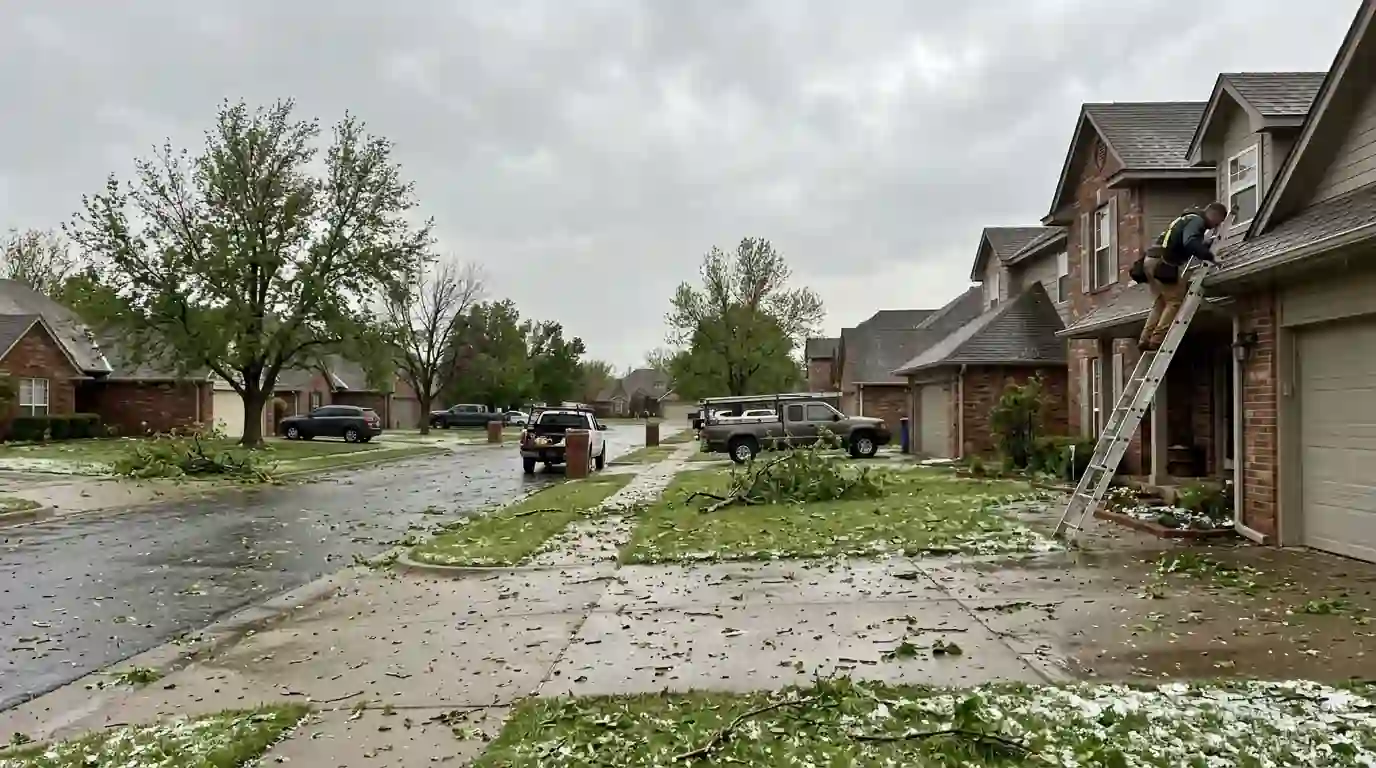
What drives the cost of tornado damage repair
Tornado repairs range from a roof and a few windows to most of a house. The scope, not the storm, sets the price.
- Structural damage. Shoring and framing repair add labor and lumber that cosmetic work never needs.
- Debris volume. Hauling, sorting and disposal are billed by the load and the hour.
- Water that got in. Rain through open roofs and walls adds drying and interior replacement.
- Roof deck replacement. Each broken sheet of decking and each broken rafter adds a line item.
- Permits and lead times. Structural permits and back-ordered windows or siding add fees and weeks.
Published national price ranges
- Normal range $2,632 - $22,127; post-storm and hail roof repairs cost an average of $12,300 (per job), storm damage roof repair. How Much Do Storm and Hail Damage Roof Repairs Cost in 2026? (HomeAdvisor)
These are planning ranges from national cost guides, not our quote. The price for your house depends on the factors above, and we give you a written scope before repair work starts.
Tornado repair questions from people standing in the yard
Not until someone checks the structure. Look for sagging ceilings, leaning walls, a gas smell and downed lines before entering. If you smell gas or see wires down, stay out and call the utility.
Every side of the house, the roof from the ground, each damaged room and the things you value most where they lie. Photos taken before debris is moved help your adjuster see the damage the way the storm left it.
Yes, for steps that prevent further damage: shoring, tarping, board-up and water removal. Policies generally expect those. We document everything first. Permanent rebuilding usually waits for the adjuster's inspection unless they say otherwise.
Stabilizing and drying in take days. The rebuild depends on scope, permits and material lead times. A roof and windows can take weeks, and structural rebuilds take longer, especially after a large outbreak strains materials and inspections.
Yes. Roofing, insulation, glass and limbs in the yard come out along with the debris inside, and we sweep driveways and lawns with magnets for nails. Anything from the house is photographed before it is hauled.