
Updated October 2026
Commercial fire and smoke restoration in Oklahoma City begins after the fire department releases the building, and the first job is making it secure. Broken glass, a vented roof or a forced door has to be boarded or tarped the same day, because an open storefront invites both weather and theft.
What happens to a commercial building after a fire
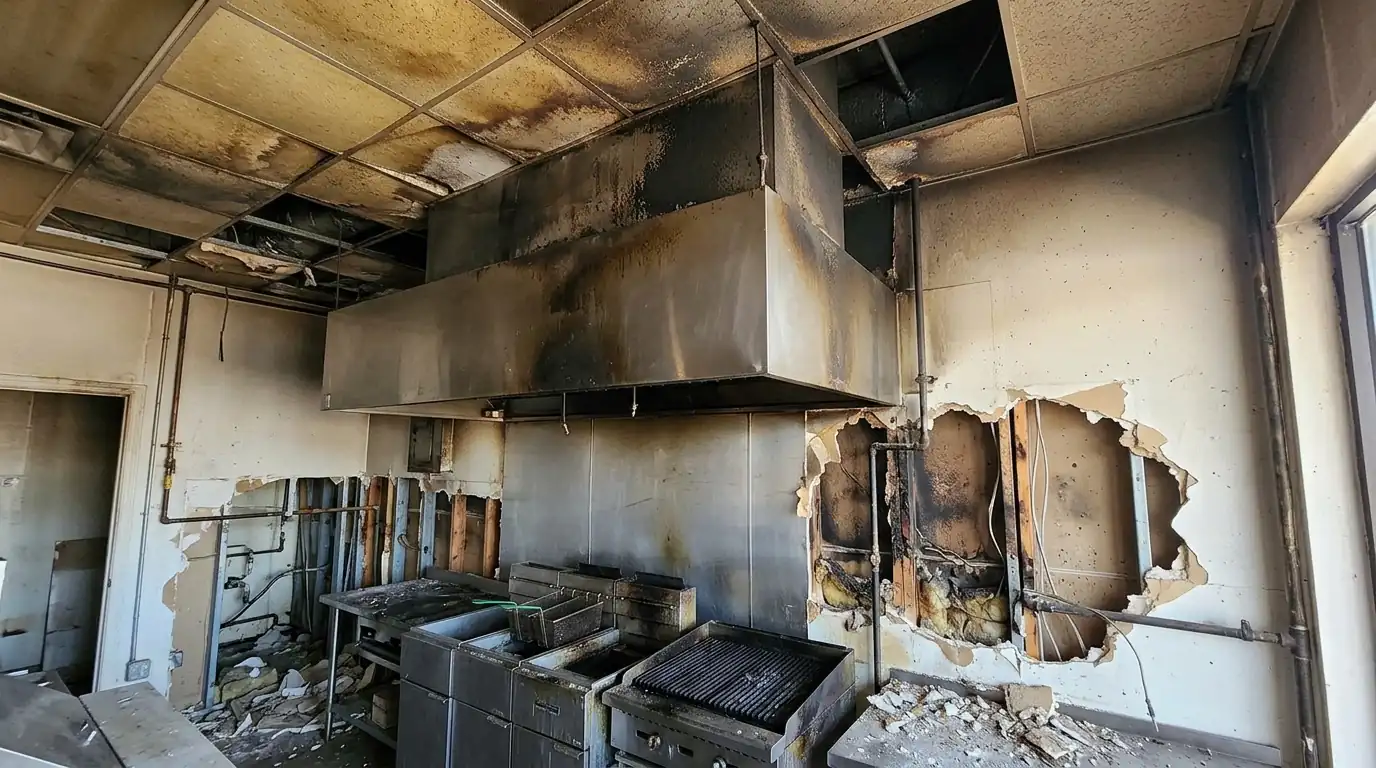
Commercial fires rarely stay where they start. Smoke rides the return air, slips above a drop ceiling and moves through shared walls into the suite next door. The burned area is easy to find. The soot film three doors down is what makes a tenant call a week later.
We start by securing the building and mapping smoke travel room by room. Then comes removal of charred materials, soot cleaning matched to the residue, deodorization, and the water that firefighting left behind, which needs extraction and drying like any other water loss.
Throughout the job we keep dated photos and a written scope, because a commercial fire claim usually involves a building policy and a tenant policy, and each adjuster needs to see which damage belongs to whom.
Three situations make up most commercial fire calls, and each one changes how the building gets cleaned and how fast parts of it can reopen.
Restaurant Kitchen Fires
The NFPA names cooking as the leading cause of home fires, and in restaurants the hood, ducts and line equipment are where the fire and grease meet. A kitchen fire leaves greasy, sticky residue that ordinary cleaners smear rather than remove. We clean the hood area, walls and ceiling with degreasers suited to protein and grease smoke, replace charred drywall and ceiling tiles, and coordinate with the hood and duct cleaning vendor so the system is cleared before the line fires back up.
Smoke Through Shared Walls
In a strip center or a multi-tenant office, the business that had the fire is not always the one with the most complaints. Smoke moves through attic spaces above shared walls, through gaps around pipes, and through connected ductwork.
We inspect neighboring suites, check above the ceiling grid, and document which spaces show soot and odor. That record matters when several tenants and one landlord all file claims for the same fire.
Keeping Part of the Building Open
When the fire stayed in one area, part of the building can sometimes keep working. We seal off the damaged section with plastic walls and negative air machines that pull air out through filters, so soot and odor do not drift into the open space. Dirty work runs after hours when possible. Whether a space can safely reopen also depends on the fire marshal, the building owner and utility restoration, so we work to their sign-off, not ours.
How long commercial fire restoration takes
Securing the building and starting cleanup happens in the first days. A kitchen fire limited to the hood and one wall might be cleaned and rebuilt in a few weeks once the scope is approved. Fires that reached the roof structure, wiring or several suites take longer, and permits, inspections and adjuster approvals often set the pace more than the labor does.
Steps from the fire department's release to reopening
- We secure the buildingBoard-up of glass and doors, roof tarping where needed, and a check that the building can be locked.
- We map smoke and documentRoom-by-room photos, notes on soot in each suite and above the ceilings, shared with owner and adjuster.
- We remove and dryCharred materials come out and water left by firefighting is extracted and dried.
- We clean and deodorizeSoot cleaning matched to the residue, then odor treatment, with damaged areas sealed off from open ones.
- We rebuild and walk itDrywall, ceilings, paint and finishes go back, and the owner walks each area before reopening.
Why the first visit here is about securing the building
Oklahoma City covers 606.20 square miles of land, according to the Census Bureau, and commercial buildings sit spread across all of it, from small strip centers to stand-alone restaurants on long arterial roads. A fire on the edge of the city can leave a business dark and unwatched overnight once the fire department leaves. That is why the first visit is about board-up, tarping and locking the building down, and the cleaning plan comes after the property is secure.
Close the whole building or keep part of it open?
Owners usually face this choice in the first days. The right answer depends on where the smoke went, not how big the fire looked.
| Factor | Keep part open | Close fully | What decides it |
|---|---|---|---|
| Smoke spread | Smoke stayed in one area | Smoke moved through ducts or ceilings | Our room-by-room smoke map |
| Air system | Damaged zone can be shut off | One shared system feeds everything | How the HVAC is zoned |
| Utilities | Power and water restored to open areas | Utilities off building-wide | Utility and fire marshal release |
| Work schedule | Messy work after closing | Crews work full days | Whether staff and customers share the space |
What moves the cost of commercial fire restoration
Commercial fire jobs are priced from a written scope after the building is mapped. These are the factors that decide the size of that scope.
- How far smoke traveled. One room of soot cleans quickly. Smoke through ceilings and ducts into other suites multiplies the cleaning.
- Type of residue. Dry smoke wipes off more easily. Greasy kitchen and protein residue needs more labor and stronger cleaners.
- Structural damage. Charred framing, roof decking or ceiling joists add demolition, engineering and rebuild work.
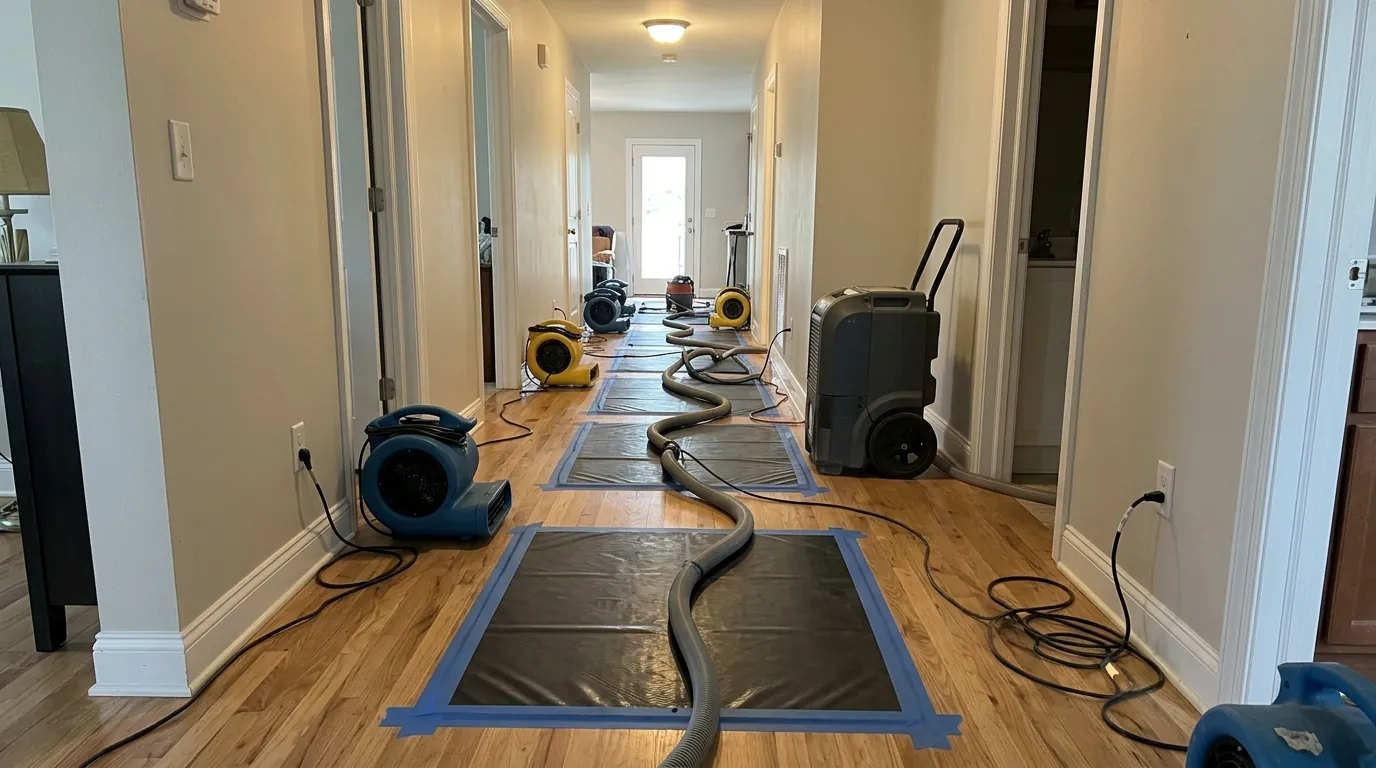
- Firefighting water. Water from hoses and sprinklers needs extraction and drying on top of the fire cleanup.
- Working around open areas. Containment, negative air and after-hours scheduling add setup and labor time.
- Contents and equipment. Cleaning, packing out or discarding inventory, furniture and fixtures adds to the building work.
Commercial fire questions from Oklahoma City business owners
Only after the fire department releases it, and sometimes after a utility or building inspection. Once released, we can walk it with you to secure it and pull out what you need, such as records, cash drawers or equipment, as long as the area is safe.
Smoke moves through shared attic space, gaps above walls and connected ductwork. Your suite can carry a soot film and odor without visible fire damage. We document it separately, which helps when your carrier and the neighbor's carrier both look at the loss.
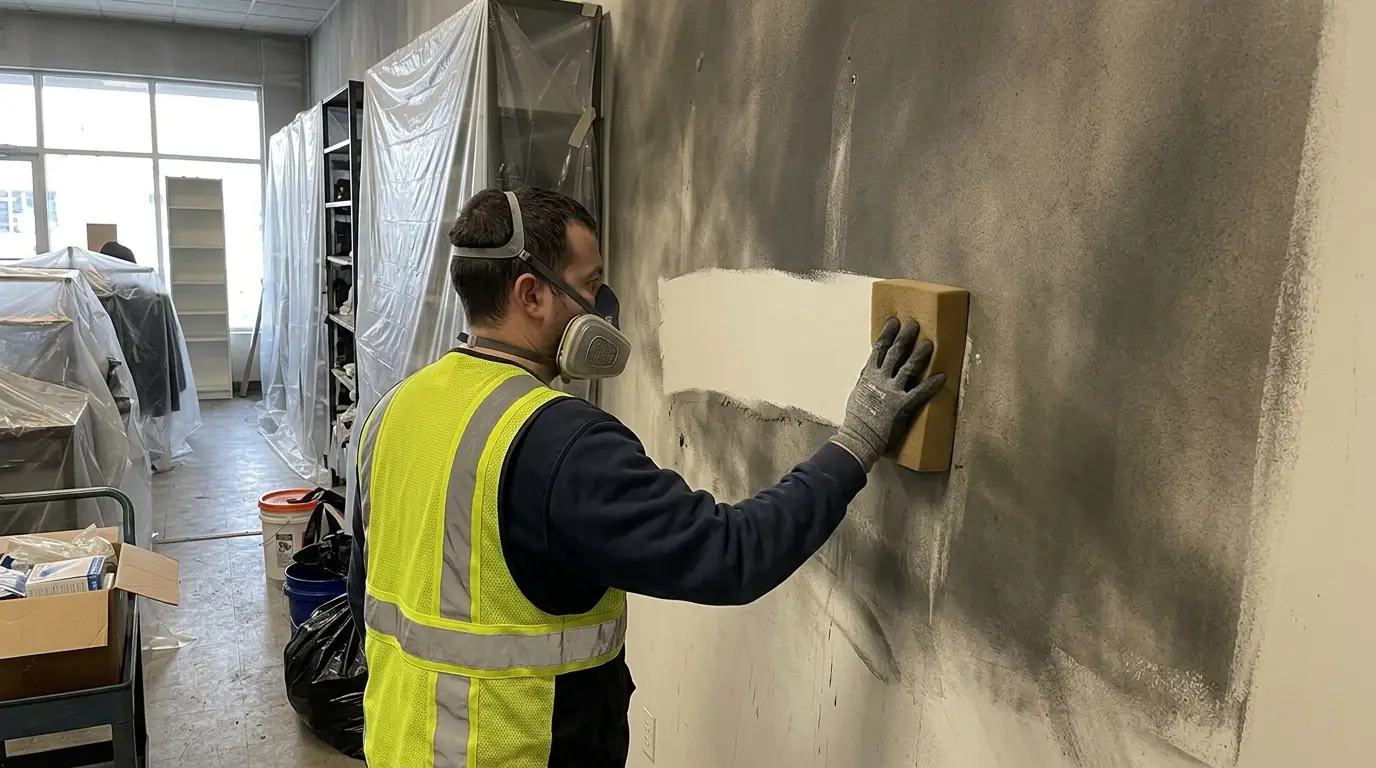
Not with ordinary cleaners. Wiping with a wet rag often smears soot deeper into paint and drywall. Dry residue is lifted first with dry sponges and vacuums, then the surface is washed, and greasy kitchen residue needs a degreaser.
Not by itself. Odor lives in the soot, the insulation and the ductwork. The surfaces have to be cleaned and deodorized first, then sealed with a stain-blocking primer before paint, or the smell returns on the first warm day.
If the air system ran during or after the fire, very likely. Smoke pulled through the returns coats the ductwork and blows odor back into cleaned rooms. We check the system and plan duct cleaning before final deodorizing.