
Updated October 2026
Carpet water extraction in Oklahoma City starts with removing as much water as the carpet and pad will release, because what stays behind is what grows mold. A weighted extraction tool pulls far more than a wet vac, and the pad, not the carpet face, decides whether drying in place will work.
What extraction does that a wet vac cannot
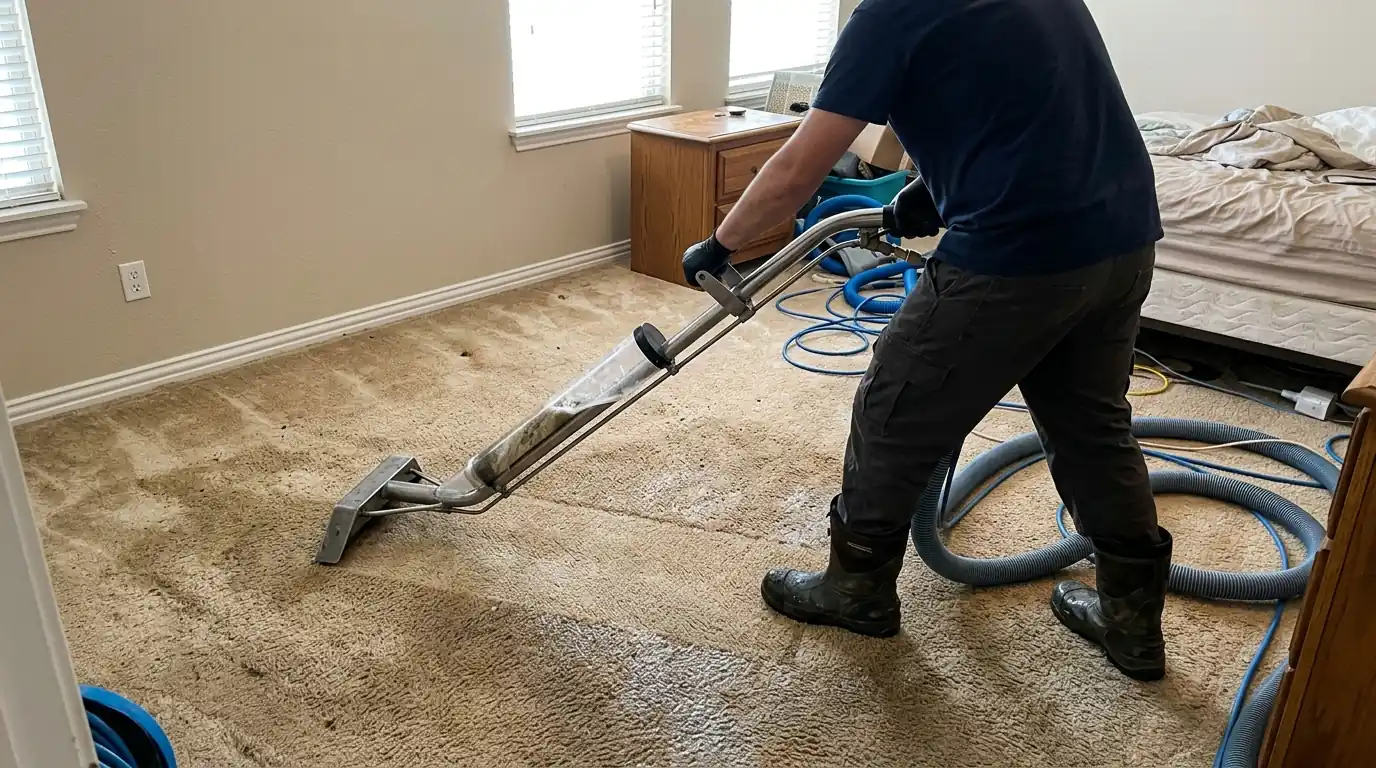
Carpet holds water in three places: the fibers, the backing and the pad. A shop vac only reaches the top. Our weighted extraction tools press down while they draw, squeezing water out of the pad as well as the carpet, which cuts drying time by days.
After extraction we check the pad. Clean water in a pad that is not too old can often be dried in place by floating the carpet, lifting it from the tack strip and blowing air underneath. Saturated or older pad usually gets cut out and replaced, which costs little next to the carpet itself.
Then the floor underneath gets its own reading. A wet slab or subfloor under dry carpet will bring the smell back within a week.
What happens to the carpet depends mostly on where the water came from.
Saving Carpet After Clean Water
When water came from a supply line, a sink or a rain leak and is found quickly, the carpet itself can usually be saved. We extract, lift the carpet off the tack strip and float it with air movers underneath while dehumidifiers dry the room. Once dry, the carpet is stretched back in and the seams are checked. Delamination, where the backing separates from the face, is the main reason clean-water carpet still gets replaced.
Pad Replacement
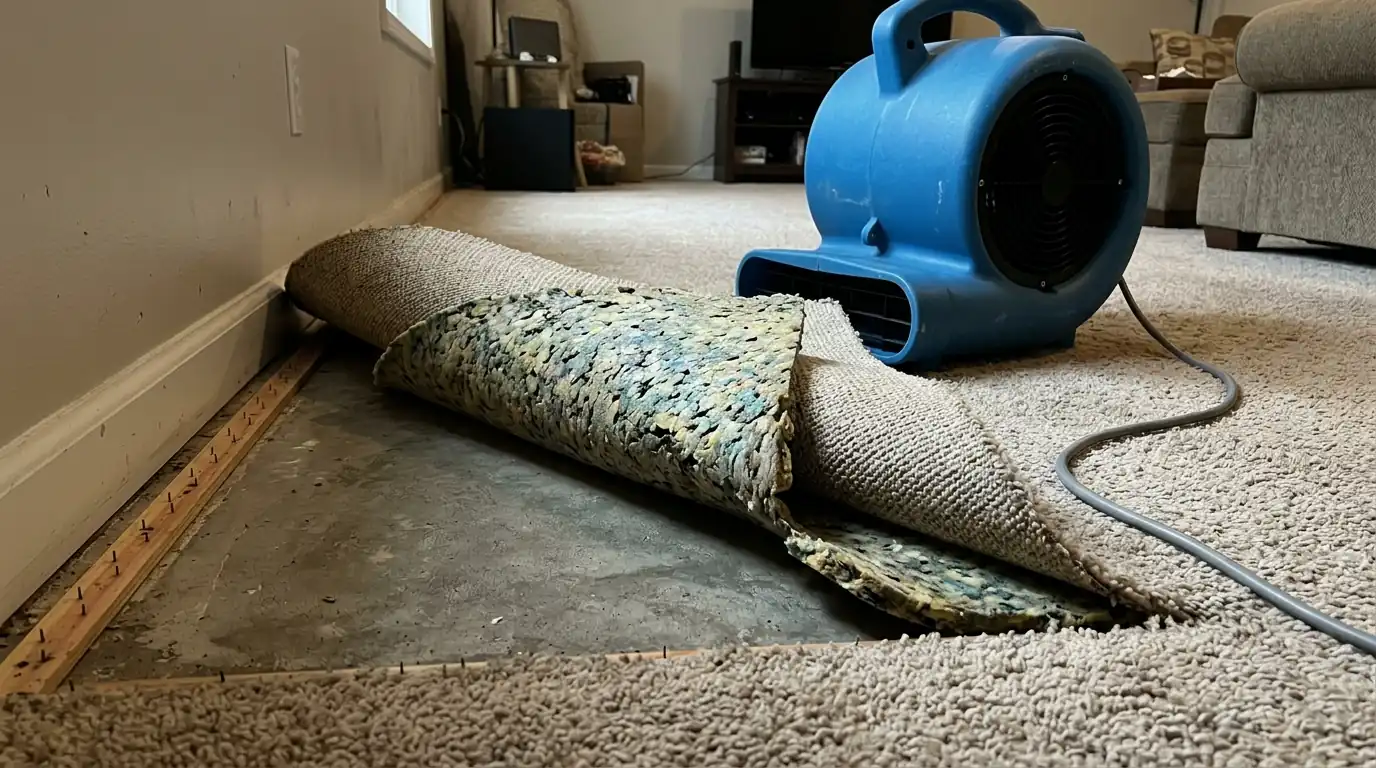
The pad is the sponge under the carpet and holds most of the water. Saturated pad dries slowly and can stay wet against the floor long after the carpet feels dry. Replacing it is often the faster and cleaner choice: we cut out the wet section, dry the floor, install new pad and re-lay the original carpet. That keeps the carpet you already have while removing the part most likely to grow mold.
HomeGuide lists carpet replacement after water damage at $2 to $8 per square foot, with labor and materials included.
Removing Contaminated Carpet
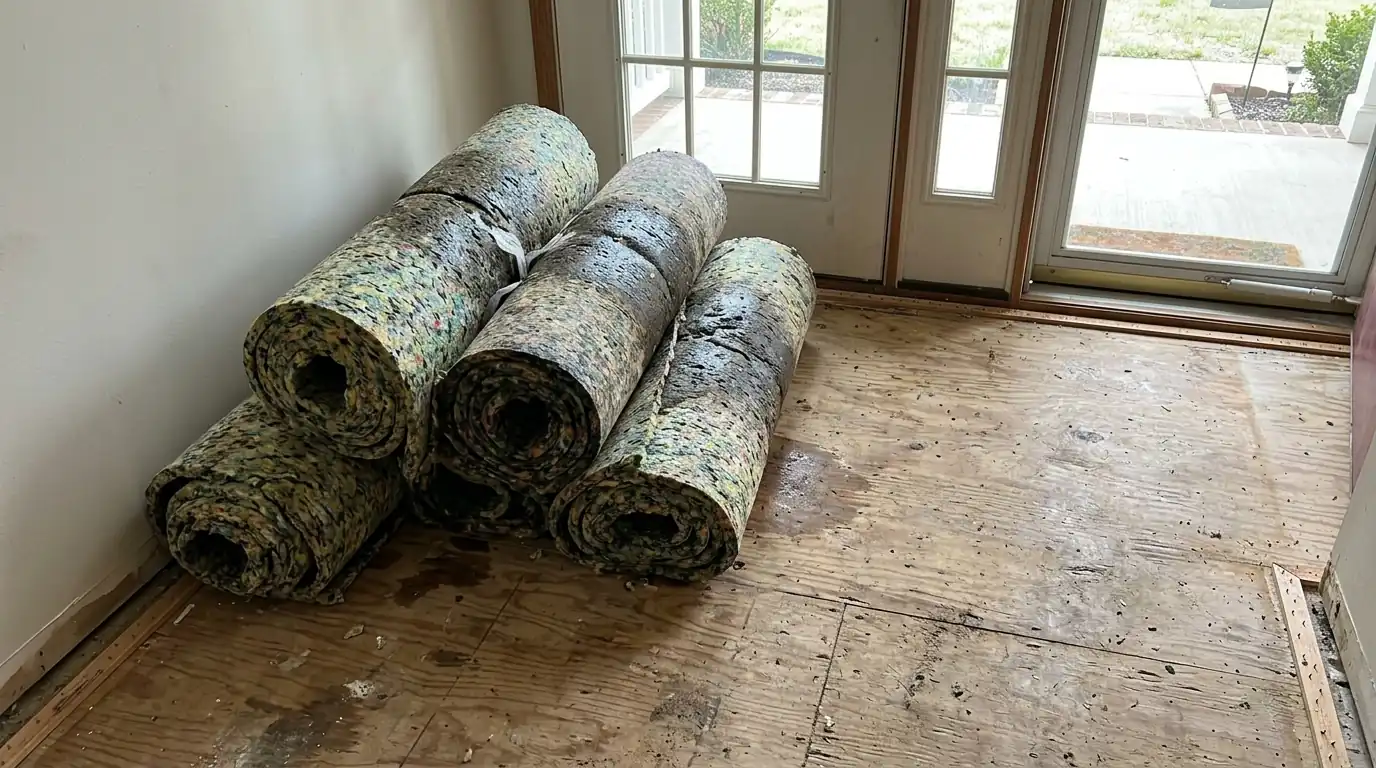
Sewage, toilet overflows with waste and floodwater from outside carry bacteria that carpet and pad cannot be cleaned of. Both come out, bagged and removed, and the floor underneath is cleaned and disinfected before it dries. We work with gloves, respirators and containment so contamination does not track into clean rooms. New carpet goes in only after the floor reads dry against a clean reference spot. For a waste backup, see sewage cleanup.
How we extract and dry wet carpet
- Check the sourceWhere the water came from decides whether the carpet can stay.
- Extract with weighted toolsWater comes out of carpet and pad together, room by room.
- Lift, float or pull padCarpet is floated off the tack strip, or the wet pad is cut out.
- Dry the floor beneathEquipment runs until slab or subfloor readings reach the dry target.
- Re-lay and stretchCarpet goes back over new or dried pad, stretched tight.
Why the first two days decide what happens to wet carpet
In an Oklahoma City house, the clock that matters comes from the EPA, which advises drying water-damaged areas and items within 24 to 48 hours to prevent mold growth. Carpet pad is where that deadline bites first, because it holds water against the floor where air cannot reach. A carpet extracted and floated on the first day is usually a drying job. One found after a long weekend away, with the pad still soaked against the slab or subfloor, is more often a pad replacement, and sometimes a carpet replacement.
Wet carpet steps you can take, and when to call
Some early moves make extraction easier when the water is clean.
| Task | What a homeowner can do | When it needs us |
|---|---|---|
| Moving furniture | Lift it off wet carpet or set legs on foil or blocks. | When the carpet is soaked wall to wall. |
| Blotting a small spot | Press towels into a small spill and run a fan. | When the pad feels wet when you press down. |
| Wet vac | Pull standing water off the carpet face. | When water soaked through to the pad. |
| Checking the source | Shut off the water and note where it came from. | When it came from a toilet, sewer line or outside. |
Save it, re-pad it or replace it
Four outcomes cover almost every wet carpet job.
| Outcome | Typical situation | What we do | What you keep |
|---|---|---|---|
| Dry in place | Clean water, found within hours | Extract, float, dry, re-stretch | Carpet and pad |
| Replace the pad | Clean water, saturated or older pad | Cut out pad, dry floor, new pad | The original carpet |
| Partial replacement | One area damaged, remnant available | Seam in a matching piece | Most of the carpet |
| Replace carpet and pad | Sewage, floodwater or delamination | Remove, disinfect, dry, install new | A clean, dry floor |
What sets the price of carpet extraction and drying
Carpet jobs swing from a quick extraction to a full replacement. These factors decide which end yours lands on.
- Water source. Clean water allows drying in place. Sewage or floodwater means removing carpet and pad.
- Pad condition. Saturated or older pad is usually replaced, which saves drying days.
- Square footage. More wet carpet means more extraction time and more equipment.
- Time before extraction. Days of soaking raise the odds of replacement.
- Delamination. Carpet whose backing has separated cannot be stretched back.
Published national price ranges
- Carpet $2 to $8; hardwood $7 to $25 (labor and materials included) (per sq ft), flooring replacement after water damage. How Much Does Water Damage Restoration Cost? (2026) (HomeGuide)
These are planning ranges from national cost guides, not our quote. The price for your house depends on the factors above, and we give you a written scope before repair work starts.
Wet carpet questions Oklahoma City homeowners ask
Carpet wet with clean water and extracted quickly is often saved, and the pad is replaced more often than the carpet. Carpet wet with sewage or outside floodwater should come out with its pad, because it cannot be reliably disinfected.
The carpet face dried but the pad or the floor underneath did not. Moisture trapped against the slab or subfloor lets bacteria and mold grow. Lifting a corner to check the pad and floor usually finds the source.
Yes, with care. Floated carpet can bunch and shift, and air mover cords cross the room, so walk slowly and keep children and pets out where you can. Keep rugs and furniture off until it is stretched back in.
Wet carpet can loosen and ripple as the backing relaxes. Once fully dry, re-stretching usually pulls it flat. If the backing has delaminated, the ripples come back and the carpet needs replacing.
A rental cleaner pulls water from the surface fibers but not from a saturated pad. For a small clean-water spot it can help. For a room or more, the water left in the pad keeps the floor wet for days.