
Updated October 2026
Hardwood floor drying in Oklahoma City is a race against the boards themselves: wood absorbs water through its edges and underside, swells and starts to cup within a day or two. Drying in place uses suction mats and dehumidifiers to pull water out of the boards and subfloor, and it works when it starts before the cupping sets.
How a wet hardwood floor gets saved
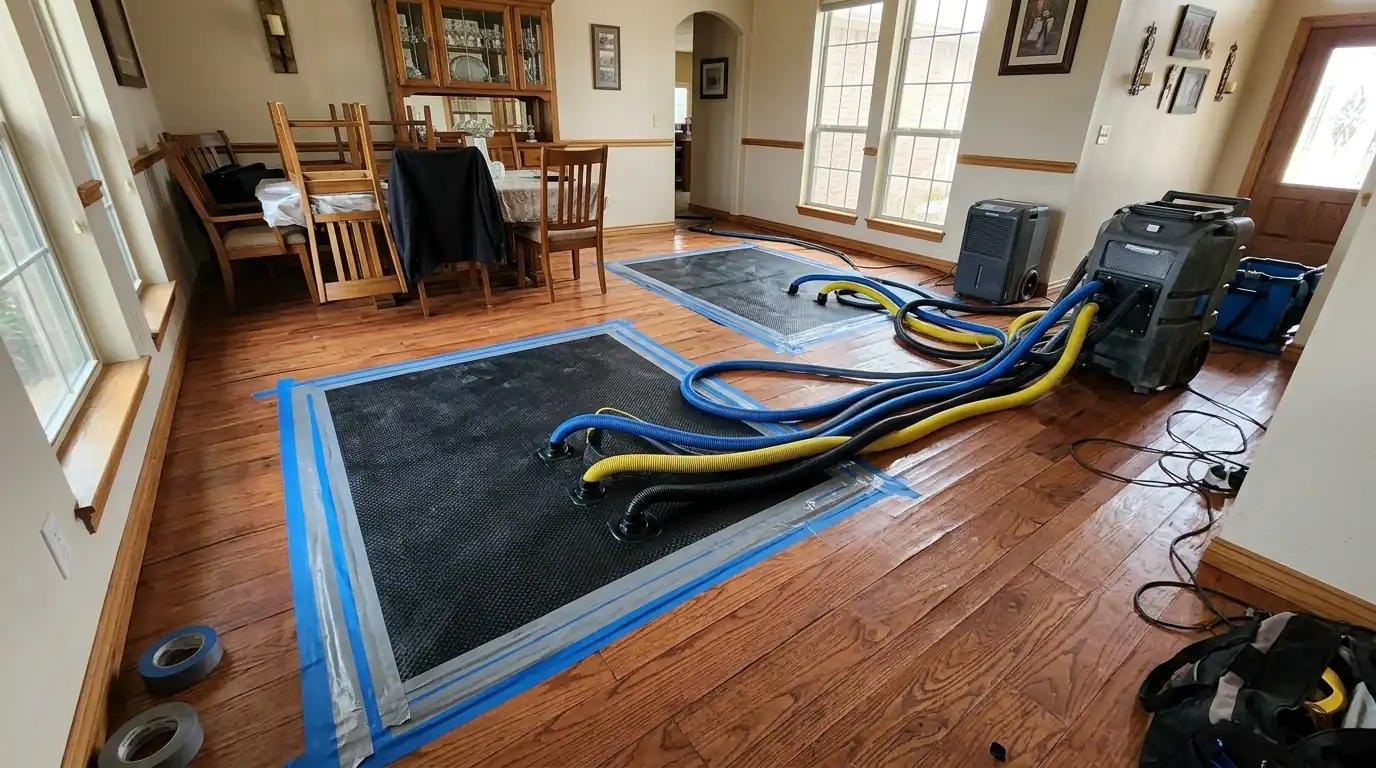
Solid hardwood is installed tight, so when water gets under it the boards swell against each other and push their edges up. If the water is removed and the boards dry slowly and evenly, much of that movement relaxes. Rushing it, with heat or a sander too soon, cracks boards and leaves gaps.
We start by reading moisture in the wood, in the subfloor and in a dry room of the same floor for comparison. Then we lay suction drying mats over the wettest boards, tent the area and run dehumidifiers so the wood gives up water from the top and bottom at once.
Engineered wood and laminate behave differently. Their thin wear layers and fiberboard cores often delaminate once wet, so drying them is less often worth the attempt.
The shape the boards take tells you where the water is now and what the floor needs next.
Cupped Boards
Cupping is when the edges of each board sit higher than the middle. It means the bottom of the board is wetter than the top, usually from water underneath or in the subfloor. Cupped boards often flatten as they dry, which is why we measure and wait instead of sanding right away. Sanding a cupped floor before it is dry flattens the top, and the boards crown later once the bottoms finish drying.
Crowned Boards
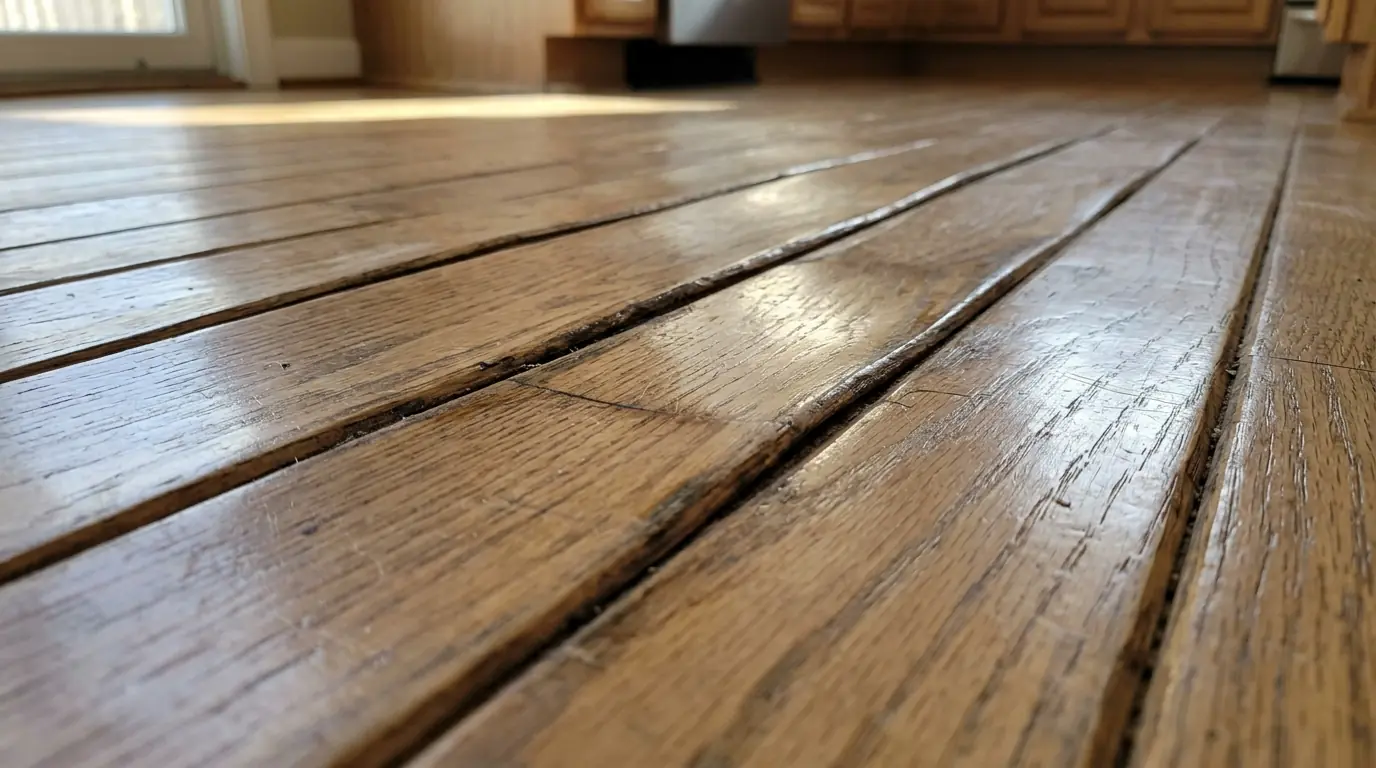
Crowning is the opposite shape, with the middle of each board higher than the edges. It usually shows up when a cupped floor was sanded flat while still wet, or when water sat on top of the floor longer than below. Crowned boards rarely settle back on their own. If the crown is mild, a careful sand and refinish after full drying can correct it. Severe crowning usually means replacing the boards.
Mat Drying Systems
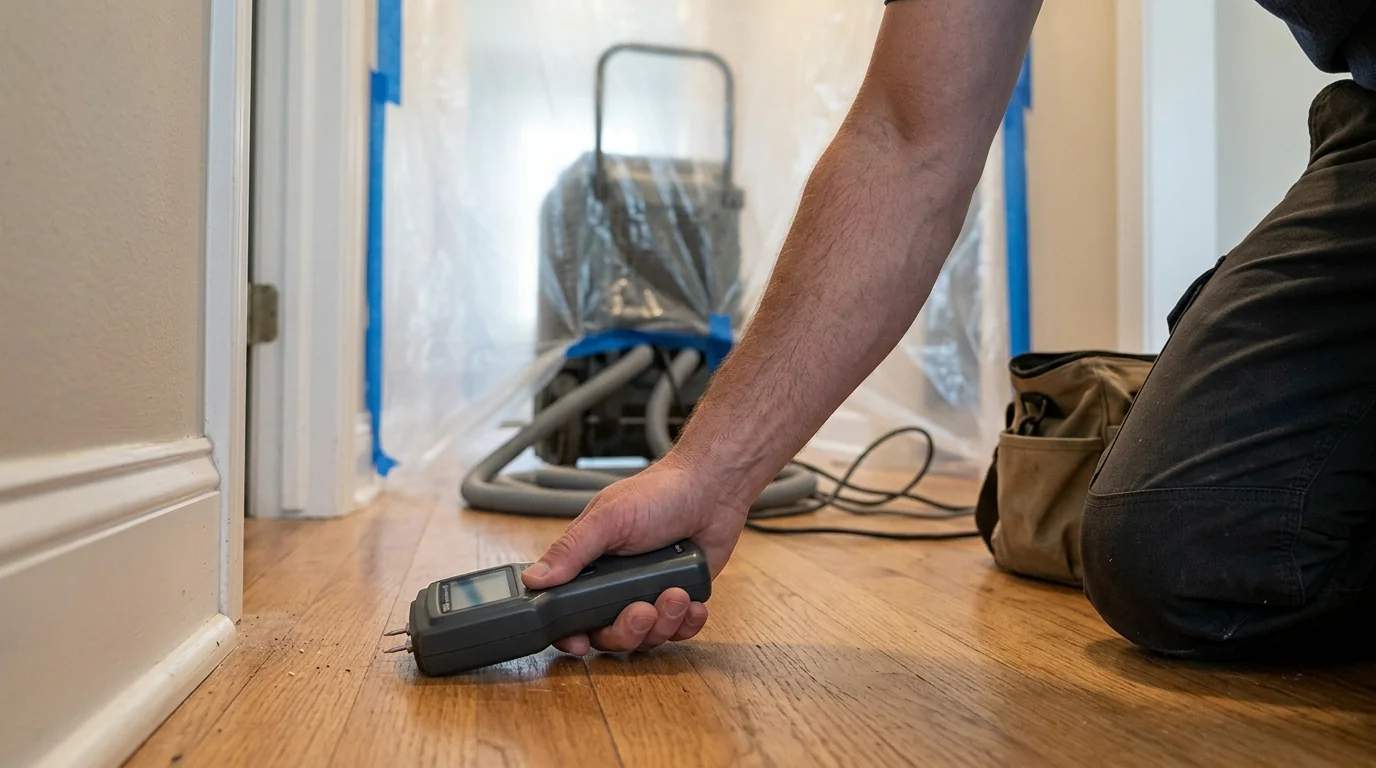
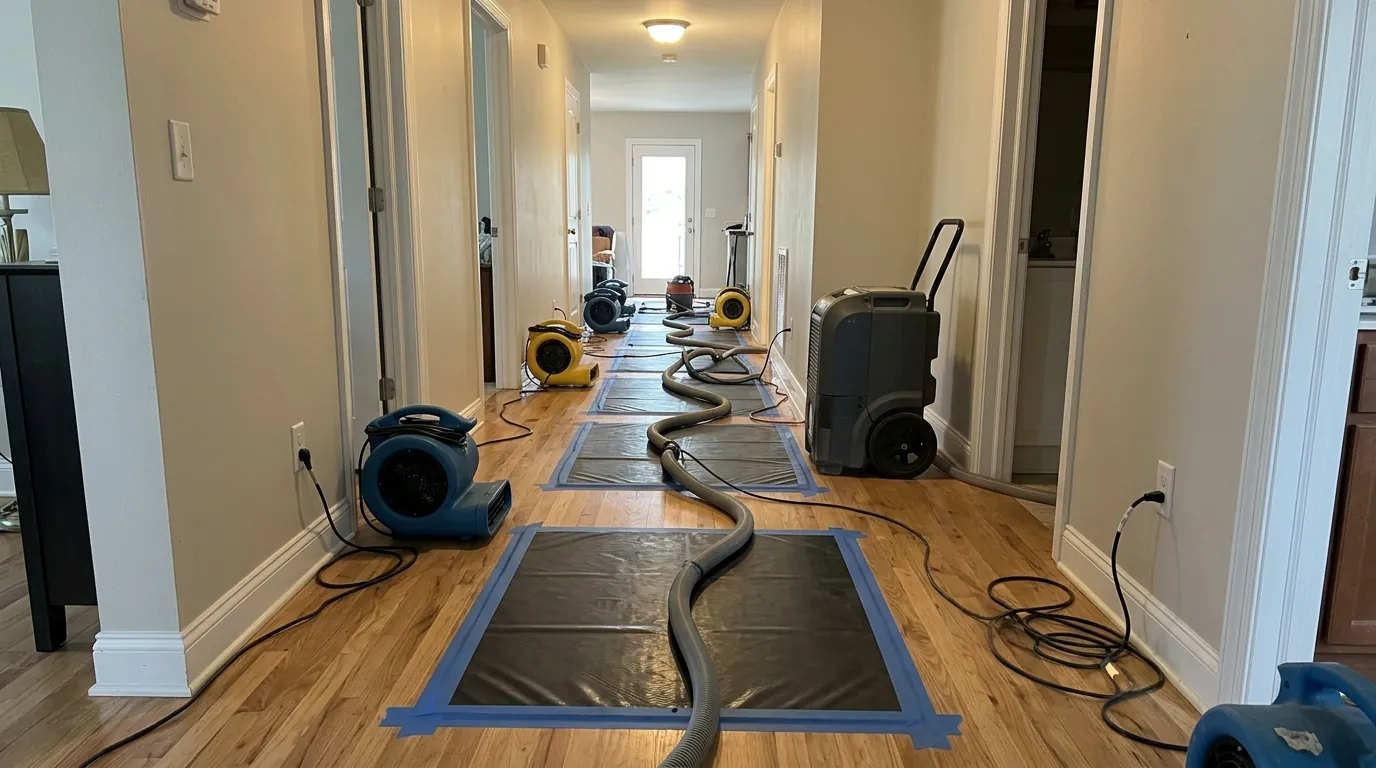
Drying mats are flat panels sealed to the floor surface and connected to a vacuum unit. The suction pulls moisture up through the boards and the gaps between them while dehumidifiers keep the room air dry. Over a crawl space, we also dry from below with air directed at the subfloor. Mat drying takes several days and is checked daily, so the decision to refinish rests on readings, not appearance.
HomeGuide puts hardwood flooring replacement after water damage at $7 to $25 per square foot, labor and materials included.
How a hardwood drying job runs
- Stop the source and extractWater is stopped, then pulled from the surface and between the boards.
- Take baseline readingsWet boards, subfloor and a dry room of the same wood set the target.
- Lay mats and tentSuction mats, plastic tenting and dehumidifiers go on the wettest area.
- Check dailyDaily readings show whether boards are heading to the target.
- Wait, then refinishBoards rest and settle before sanding, refinishing or replacing sections.
Why so many Oklahoma City floors are worth drying
Census Reporter counts 314,255 housing units in Oklahoma City, and Census QuickFacts puts the owner-occupied rate at 58.6%. More than half the homes here are lived in by the people who own the floors, and those owners are the ones deciding between drying and replacing. That choice matters more than it looks. Original solid boards in an older room are hard to match, and replacing one room can mean refinishing the connected rooms so the color lines up. Drying first keeps that option open.
Drying in place versus replacing a wet hardwood floor
The choice comes down to the wood, the water source and how fast drying started.
| Option | When it fits | What it involves | Trade-off |
|---|---|---|---|
| Dry in place | Solid wood, clean water, caught in a day or two | Mats, dehumidifiers, then refinishing | Room is out of use longer |
| Dry and replace some boards | A few boards split or stay cupped | Weaving in new boards, then refinishing | Color match depends on species |
| Replace the affected area | Delaminated engineered wood or dirty water | Removal, subfloor drying, new flooring | Matching connected rooms |
| Replace the whole floor | Severe crowning, rot or no match available | Full tear-out and new installation | Most disruption, one uniform floor |
What changes the cost of drying a hardwood floor
Drying usually costs less than replacing, but the bill depends on the wood, the water and how long it sat.
- Solid or engineered. Solid hardwood often responds to drying. Engineered and laminate are more often replaced.
- Clean or dirty water. Sewage or floodwater under wood usually means removal, not drying.
- How long it sat. Boards dried within a day or two tend to flatten. A week wet often leaves them cupped.
- Crawl space below. A subfloor over a crawl space may need drying from below too.
- Refinishing afterward. Most dried floors need sanding and a new finish, sometimes in connected rooms.
Published national price ranges
- Carpet $2 to $8; hardwood $7 to $25 (labor and materials included) (per sq ft), flooring replacement after water damage. How Much Does Water Damage Restoration Cost? (2026) (HomeGuide)
These are planning ranges from national cost guides, not our quote. The price for your house depends on the factors above, and we give you a written scope before repair work starts.
Hardwood drying questions we hear in Oklahoma City
Often, if the water is removed and the floor dries slowly and evenly. Mild cupping in solid hardwood frequently settles once boards and subfloor reach normal moisture. Boards that stay cupped can be sanded flat or replaced.
No. Sanding a wet, cupped floor removes wood from the raised edges, and when the boards finish drying the middle ends up higher. Wait until readings match a dry area of the same floor, then let the boards rest.
Fans help with surface water but cannot pull moisture from the underside of boards. Heat dries the top faster than the bottom, which can crack boards and worsen cupping. Slow, even drying is what lets wood settle.
Sometimes. Engineered floors with thick wear layers and plywood cores can dry like solid wood. Thin wear layers and fiberboard cores tend to delaminate, and drying will not fix that. We test a few boards before recommending either route.
New boards are woven into the old floor, then the area is sanded and refinished so the color blends. Older or discontinued species are harder to match, and the connected room often needs refinishing too.