
Updated October 2026
Tree on house damage repair in Oklahoma City starts with removing the tree without letting it drop further into the house. The weight resting on the roof is often what holds broken rafters in place, so the tree comes off in sections, top down, before anyone cuts from inside or pulls on the trunk.
Why the tree comes off before anything else
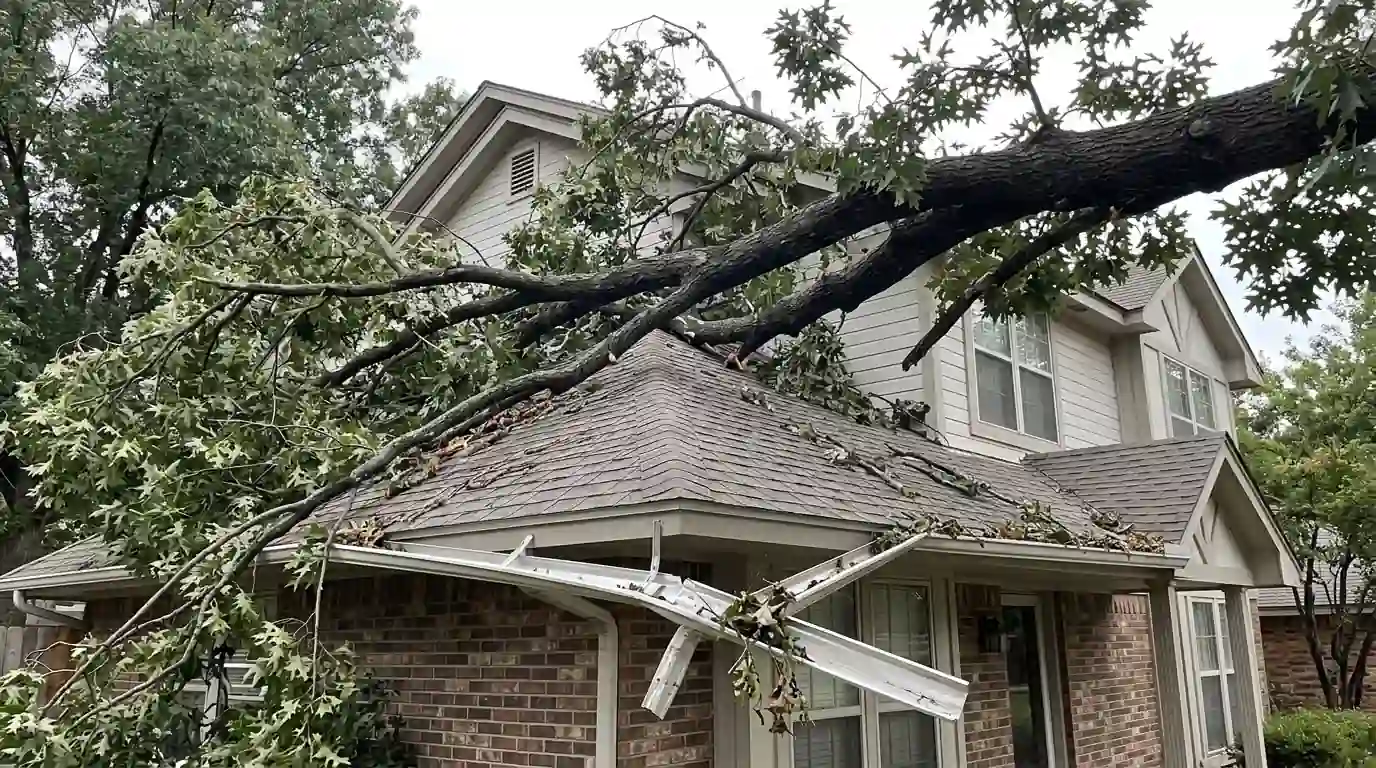
A fallen tree loads a roof in ways it was never built for. Rafters and trusses under the trunk may be cracked but still standing, because the tree itself is wedged against them. Pulling the trunk from the ground or cutting it at the wrong point can release that load all at once.
So removal is planned from the top. Branches come off first, then the trunk in sections, lowered by rope or lifted by crane on large trees. Inside, nobody stands under the damage while the work is going on.
Once the weight is off, we cover the opening, assess the framing and start drying anything rain reached. The permanent repair follows: framing, decking, roofing, insulation and the ceiling below.
Signs a fallen limb did more than scrape the roof
- A ceiling that bows or cracksA new sag under the impact point means the framing above it moved.
- Daylight in the atticLight through the decking means water gets in at the next rain.
- Doors that suddenly stickA strike can shift a wall enough to bind nearby doors and windows.
- A crushed gutterLimbs often hit the eave first, which points to damaged fascia and rafter tails.
- Popping sounds overheadNoise from the attic after the impact means framing is still settling. Stay out of those rooms.
Most tree calls involve all three parts below, and the order matters more than anything else.
Removing the Tree From the Roof
We look at how the tree is resting before we cut. Limbs come off first, lowered with rigging so they do not bounce across the shingles. The trunk is cut in sections from the top, and large trees may need a crane to lift sections clear of the house. Power lines tangled in the tree are the utility's job first, so we wait until those are clear before any saw starts.
This Old House notes that emergency tree removal can cost up to $5,000, and the repair to the house is a separate bill.
Rafter and Truss Repair
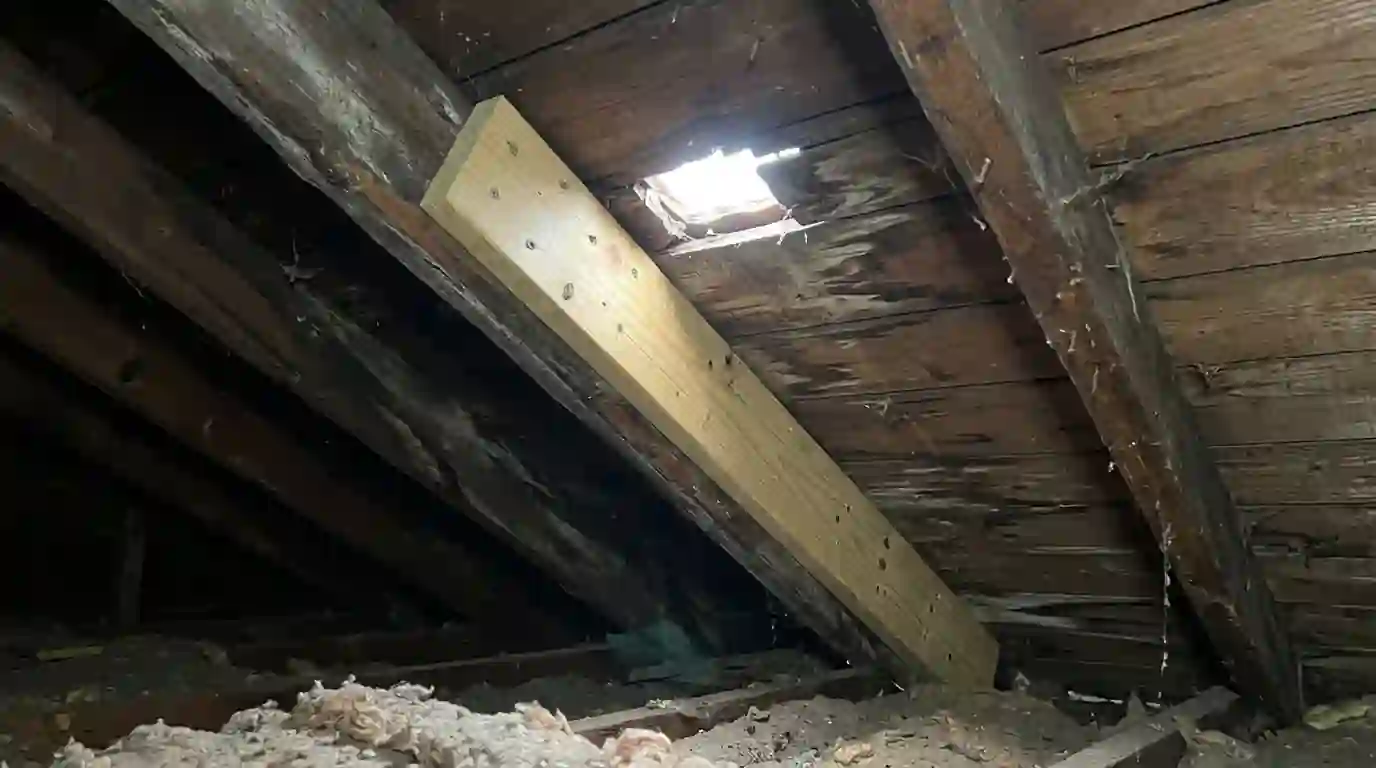
With the tree gone, we open the attic and check every rafter or truss near the impact. Cracked rafters can often be sistered, with a new full-length board fastened alongside the old one. Broken engineered trusses usually need a repair plan from the truss maker or an engineer, because their members work together and cannot be patched freely. Damaged decking is replaced only after the framing under it is sound.
Ceiling Breaches
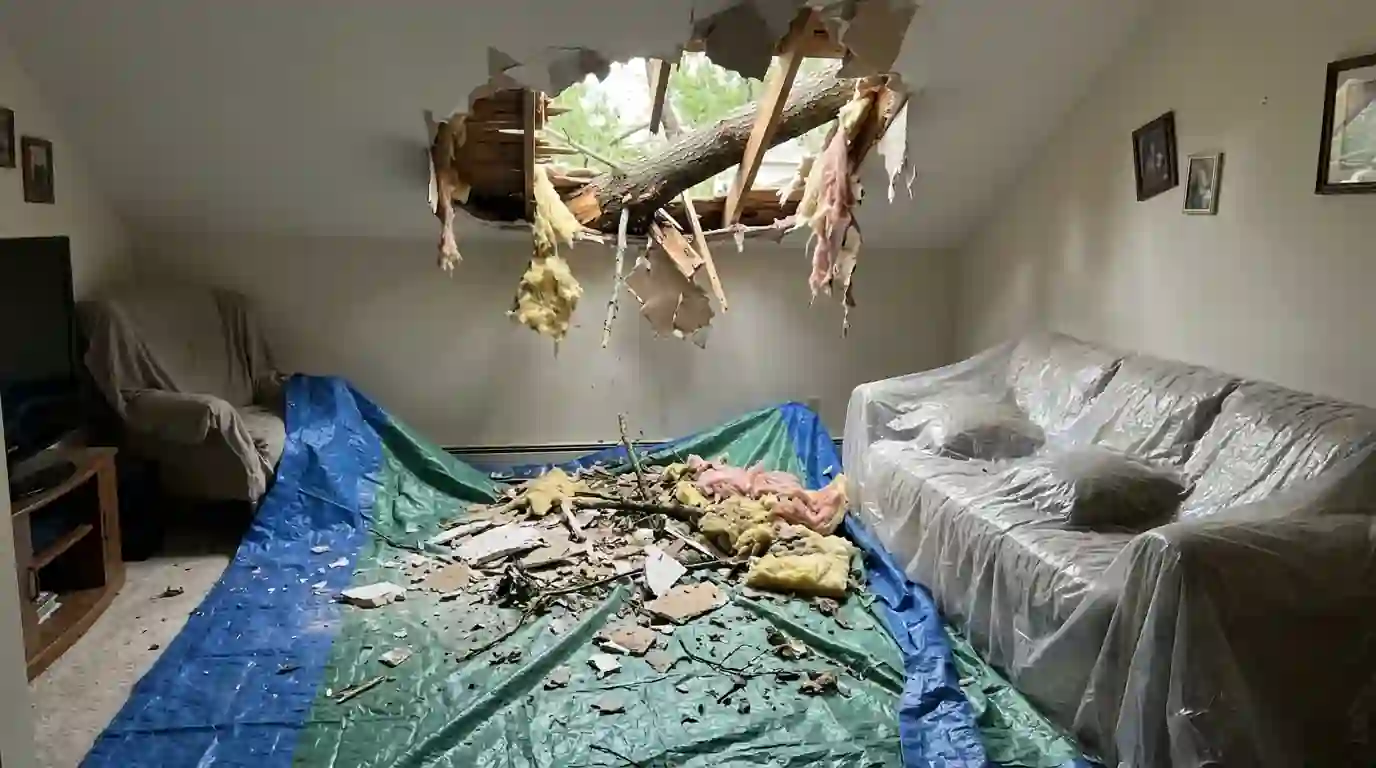
When a limb punches through to the room below, there is drywall, insulation and often rainwater to deal with. We remove the broken drywall back to the nearest framing, bag the wet insulation and dry the area before closing it. New drywall goes up after the framing above is repaired, followed by tape, texture to match and paint. Glass and splinters in the room are cleaned up when the opening is covered.
How a tree-on-house job unfolds
- We check lines and structureDowned lines go to the utility first. Then we look at the framing.
- We remove the tree in sectionsLimbs first, then trunk sections, lowered so nothing drops onto the roof.
- We cover the openingPlywood over holes in the deck and a battened tarp over that.
- We repair the framingSistered rafters, repaired trusses and new decking.
- We finish roof and ceilingShingles, insulation, drywall, texture and paint to match the house.
Spring storm season and falling limbs
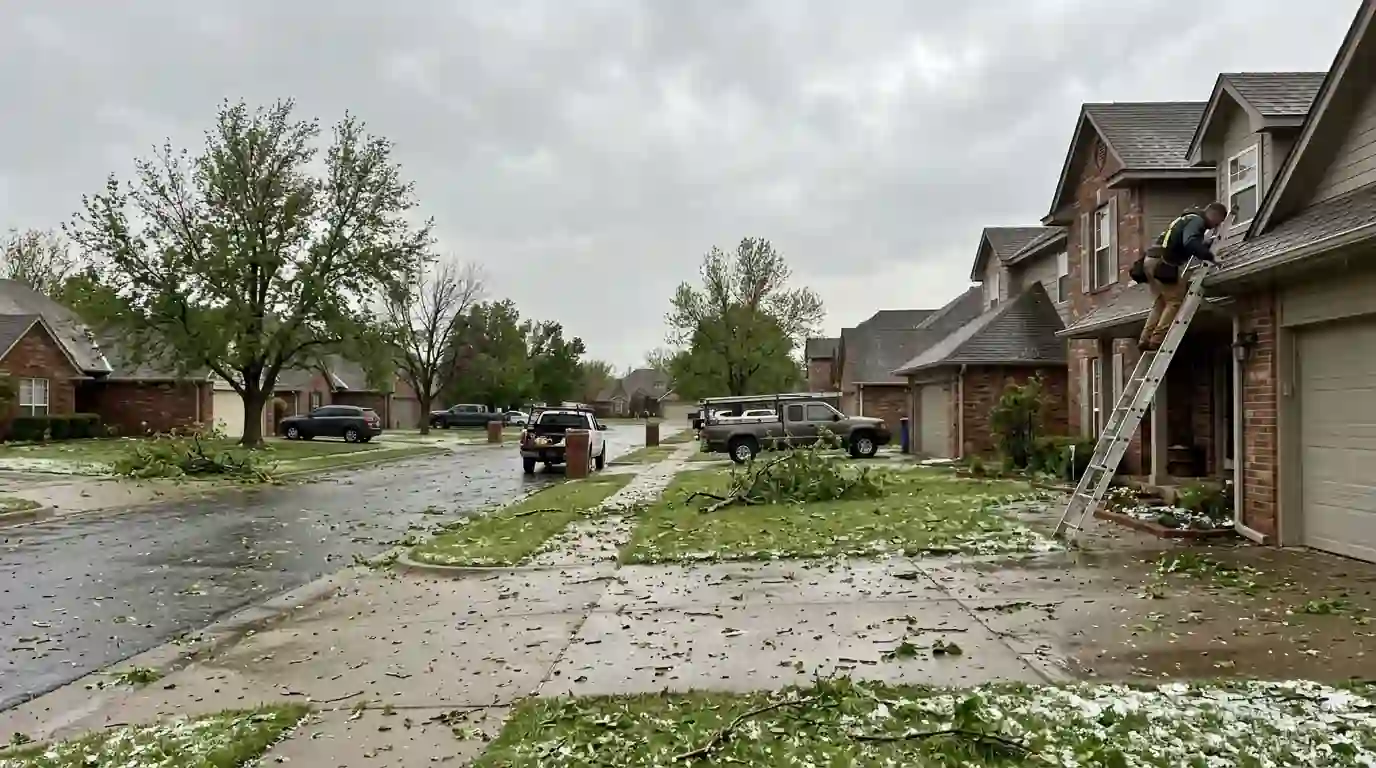
NWS Norman's tornado records for Oklahoma, going back to 1950, show May as the peak month with 1,851 tornadoes, an average of 24.4 a year, followed by April with 951 and June with 578. The same spring systems that produce tornadoes bring the straight-line wind and heavy rain that drop limbs on roofs across Oklahoma City. A tree that comes through in one of those storms often lets rain in behind it, so the cover goes on as soon as the weight is off.
What to handle yourself when a tree hits the house
Chainsaw work near a roof is dangerous. Here is where the line sits.
| Task | What a homeowner can do | When it needs us |
|---|---|---|
| Branches in the yard | Cut and stack limbs that are on the ground and clear of wires. | When limbs touch wires or are still attached to the trunk. |
| Limbs on the roof | Leave them and photograph them from the ground. | Always, since they may be holding up damaged framing. |
| Water through the ceiling | Set buckets and switch off that room's breaker if water nears fixtures. | When the ceiling sags or the leak spreads. |
| Hanging gutters | Keep people and cars away from the hanging section. | Anything that has to be fixed at roof height. |
What changes the cost of a tree-on-house repair
There are really two bills here: getting the tree off and repairing the house. These factors drive both.
- Size of the tree. A big trunk across the ridge takes more rigging and possibly a crane.
- Access. Fences, tight side yards and power lines slow removal and limit equipment.
- Framing damage. Each broken rafter or truss adds repair, and trusses may need an engineered plan.
- Roof area to replace. Crushed decking and shingles are replaced back to solid material.
- Interior damage. Ceiling breaches bring drywall, insulation and sometimes drying.
Published national price ranges
- Emergency tree removal can cost up to $5,000 (per job (upper limit only)), tree removal from roof / tree on house damage. How Much Does Tree Removal Cost in 2026? (This Old House)
These are planning ranges from national cost guides, not our quote. The price for your house depends on the factors above, and we give you a written scope before repair work starts.
Tree on house questions we hear after storms
When a tree damages a covered structure, many homeowners policies help pay for removal, often up to a set limit and often no matter whose yard it grew in. Policies differ, so check yours. We photograph everything before cutting.
Stay out of the rooms under the tree and any room where the ceiling sags. If the framing is badly damaged, gas lines are involved or the power is out, stay elsewhere until the tree is off and the structure is checked.
A tree on the house needs both skills in sequence. Removal has to be planned with the roof repair in mind, and the opening needs covering the moment the weight is off, so we run removal, cover and repair as one job.
Usually repaired. Cracked rafters are often sistered with new lumber, and a few broken trusses can be repaired to an engineered plan. Replacing the whole roof frame is uncommon unless the tree landed across most of the house.
Careful removal limits it. Cutting from the top down and lowering sections keeps pieces from bouncing across the shingles. Some scuffing near the impact is normal, and that area is being replaced anyway.