
Updated October 2026
Lightning damage repair in Oklahoma City starts with finding where the strike entered and every path it took. A direct hit can scorch roof decking, split rafters, melt wire insulation inside walls and blow out siding or brick, often with no visible flames. An electrician has to clear the wiring before any wall is closed.
Following a strike through the house
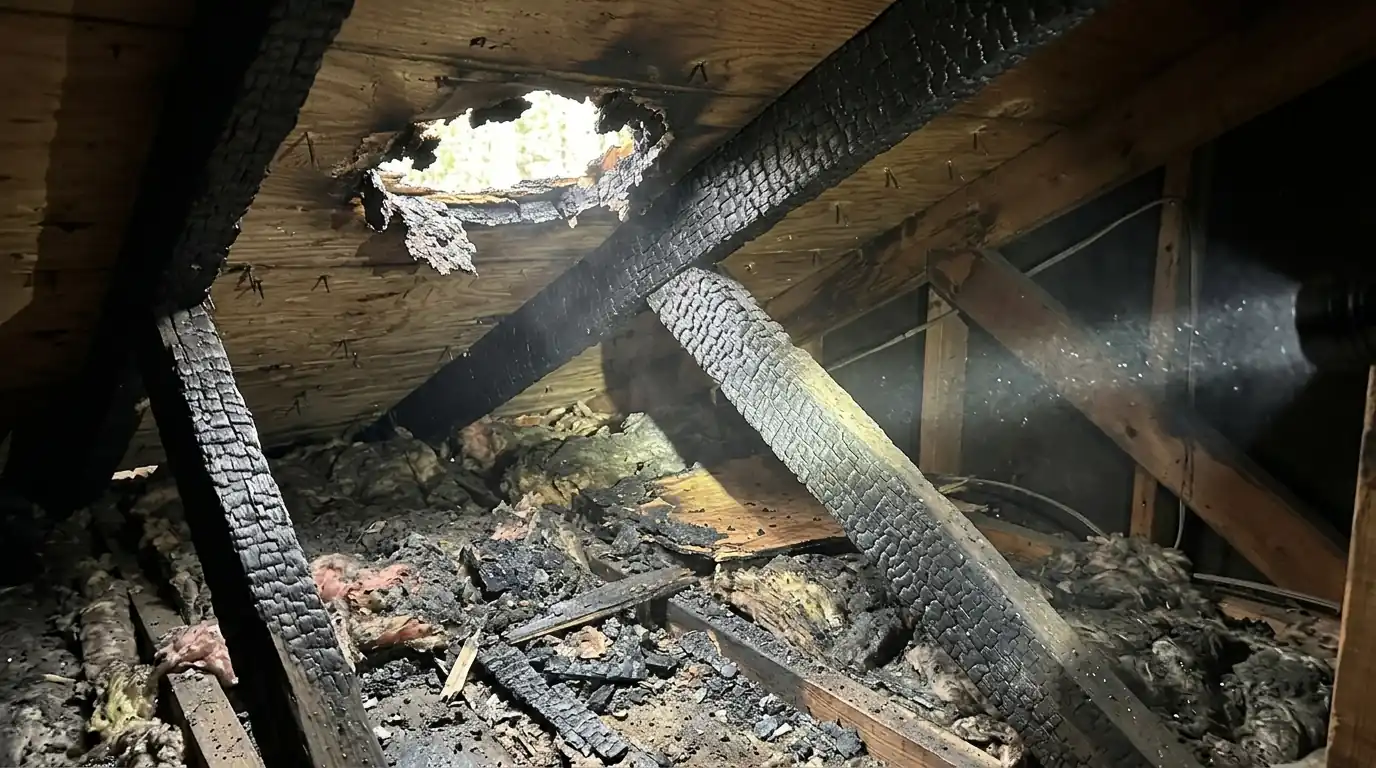
A strike usually lands on the highest point, a chimney, antenna, vent stack or a tree beside the house, then takes the fastest way to ground. That path runs through roof framing, wiring, gas lines, plumbing and metal flashing, and the heat chars wood and blows apart masonry along the way.
We start on the roof and in the attic, looking for scorch marks, split framing and small holes in the decking. Then we check walls near the entry point and along wiring runs with a thermal camera, opening drywall where the camera or the smell points. Areas with burnt wiring stay open for an electrician.
Once the damage is mapped, the repair is ordinary rebuild work: decking, framing, drywall, siding, masonry and paint. It just has to be found first.
Lightning damage tends to show up in three places, roughly in the order the strike travels through a house.
Roof and Attic Burn Damage
At the entry point, look for a scorched shingle, a hole in the decking or a shattered chimney cap. In the attic, the strike can char rafters and leave insulation smoldering, and a small attic fire can burn for a while before anyone notices. We remove charred wood, sister or replace damaged rafters, replace decking and insulation, and seal smoke odor into the framing with a shellac-based primer before the attic is closed.
Scorched Wiring Runs
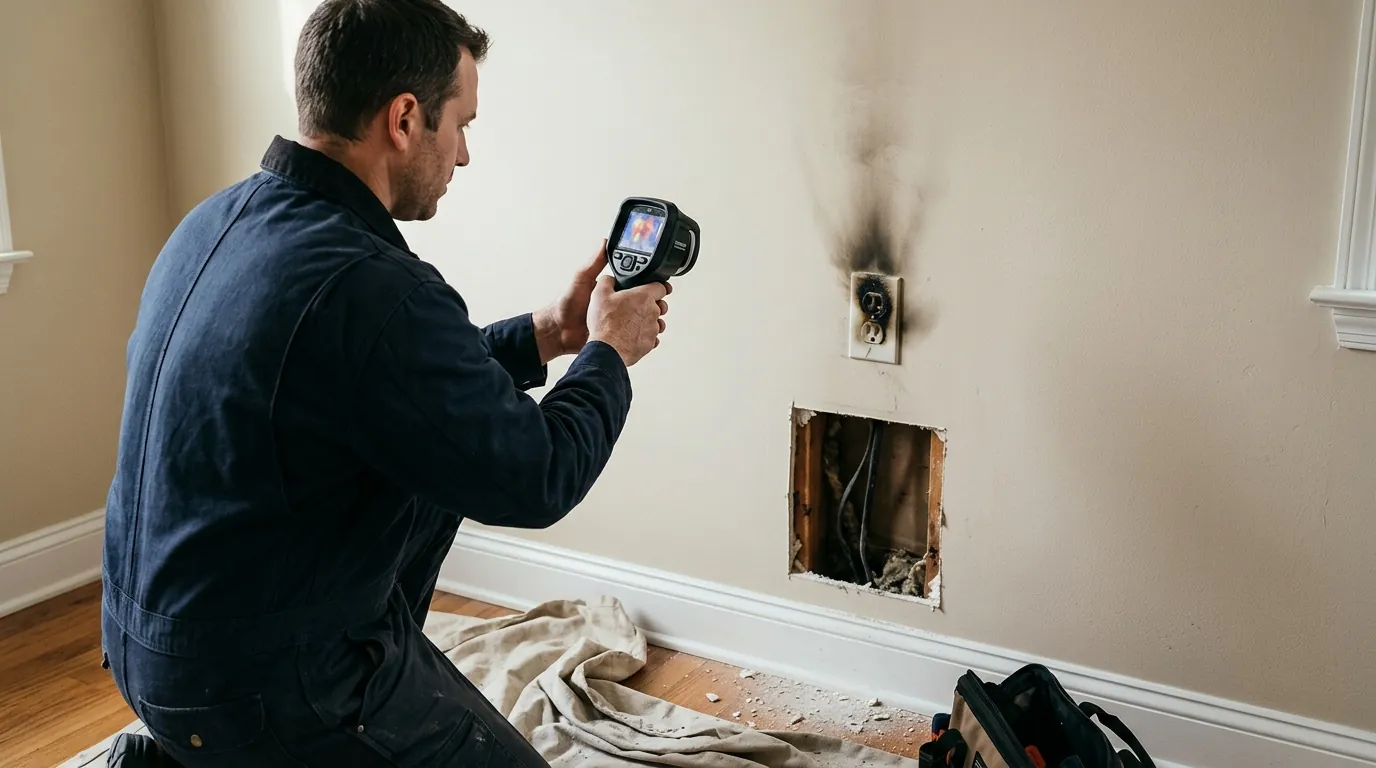
The surge travels through branch circuits and can melt insulation inside walls without tripping a breaker. Signs include a burnt smell at outlets, dead circuits, scorched switch plates and fried electronics on one side of the house. We open walls along the suspect runs so an electrician can inspect and replace the wire, then we patch the drywall, match the texture and repaint, so the wall shows no trace of the repair.
Blown Siding and Masonry
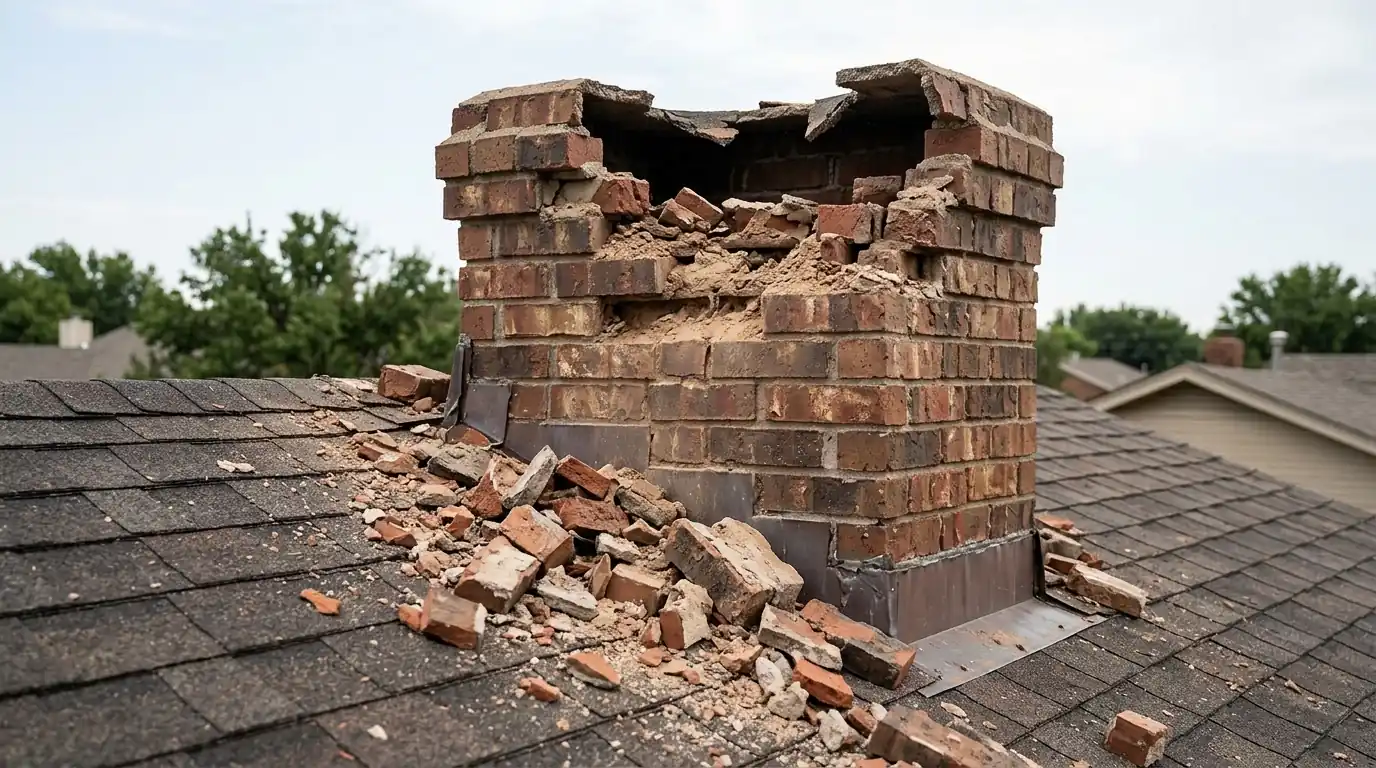
Where current jumps from the house to the ground, it can blow siding off the wall, crack brick and pop mortar out of a chimney. Moisture inside masonry flashes to steam, which is why struck brick can look like it exploded. We replace blown siding, repoint or rebuild damaged brick and have the flue checked before anyone lights a fire again. Siding near the ground rod or downspout is a common spot for this, so we look there first.
From the strike to the final repair
- We find the entry pointRoof, chimney and attic inspection to see where the strike came in.
- We trace the pathThermal imaging and opened drywall show where current and heat traveled.
- We make it safeTarps on roof holes, and damaged circuits left off until an electrician clears them.
- We remove damaged materialCharred wood, insulation and drywall come out and are photographed for the claim.
- We rebuildFraming, decking, drywall, siding and masonry are repaired, painted and cleaned.
Why lightning claims here need a clear paper trail
Citing a 2025 Bankrate report, The Oklahoman said Oklahoma ranks 47th of 50 states for homeowners insurance rates, and the state insurance commissioner put that mainly on extreme weather, high claim frequency and higher repair costs. With premiums that high, a lightning claim has to be documented well, because most of the damage sits where an adjuster cannot see it. We photograph the entry point, the path through the attic and walls, and every opened cavity before repair starts.
Places we check after a lightning strike
Lightning damage hides. Before any repair is priced, these spots should be looked at.
- Roof surface around chimneys, vents and antennas
- Attic framing, decking and insulation near the entry point
- Chimney cap, crown, flue and mortar joints
- Outlets, switches and the panel along the strike path
- Drywall along wiring runs, scanned with a thermal camera
- Siding and brick where the strike reached the ground
- Gas connections near appliances, pressure checked by the gas utility
What to do after a strike and what to leave alone
The first hour matters. Here is what you can do, and what needs someone else.
| Task | What a homeowner can do | When it needs us |
|---|---|---|
| Checking for fire | Look through the attic hatch for smoke or glow. | Any smoke or glow. Call 911 first, then us. |
| Electrical | Shut off breakers for dead or burnt-smelling circuits. | Scorched outlets, panels or wire need an electrician. |
| Gas | If you smell gas, leave and call the gas company from outside. | Lines near the strike path need a pressure check. |
| Roof hole | Put a bucket under any drip and move belongings. | A hole in the decking needs a tarp before the next rain. |
What moves the cost of lightning damage repair
Lightning repairs range from one scorched outlet to a rebuilt attic. These factors decide where yours lands.
- Entry point. A chimney or roof hit means masonry and decking work.
- Fire or no fire. A smoldering attic fire adds smoke cleanup, insulation and framing.
- Wiring damage. More burnt circuits mean more walls opened and repainted.
- Masonry. Rebuilding a chimney top takes longer than replacing siding.
- Rain through the hole. Water through a strike hole adds drying and drywall work.
- Damage found later. Opened walls sometimes show more scorched framing than expected.
Published national price ranges
- Average cost per lightning claim rose from $10,781 to $26,616 in 2025 (Insurance Information Institute cited in article) (per insurance claim), lightning damage repair. One lightning strike could cost homeowners tens of thousands of dollars (Atlanta News First)
These are planning ranges from national cost guides, not our quote. The price for your house depends on the factors above, and we give you a written scope before repair work starts.
Lightning damage questions we get in Oklahoma City
A very loud crack at the same instant as the flash, a burning smell, dead outlets, tripped breakers or fried electronics are common signs. Look for scorch marks on the roof, the chimney or a nearby tree, and check the attic for smoke.
Yes. Insulation and framing in the attic can smolder for hours before flames appear. If you think the house was hit, look into the attic and call the fire department, which can scan walls and ceilings for hidden heat.
Fire and lightning are covered perils in most homeowners policies. Surge damage to electronics may fall under the same coverage or a separate limit. Your agent can tell you which applies to your policy before you file a claim.
No. Burnt wiring has to be inspected and replaced by an electrician. We open the walls so they can reach the runs, then close everything up with new drywall, matching texture and paint once the wiring has been cleared.
A correctly designed and grounded lightning protection system gives a strike a safe path to the ground and greatly reduces damage to the house. Surge protection at the electrical panel also helps protect the wiring and the electronics plugged into it.