
Updated October 2026
Flooring replacement after damage in Oklahoma City starts below the floor. Hardwood, laminate and plank flooring cannot go down until the subfloor or slab reads dry, or the new boards cup and the adhesive fails. We pull the damaged floor, verify moisture, repair soft subfloor, then install new flooring suited to the room and your budget.
What replacing a damaged floor involves
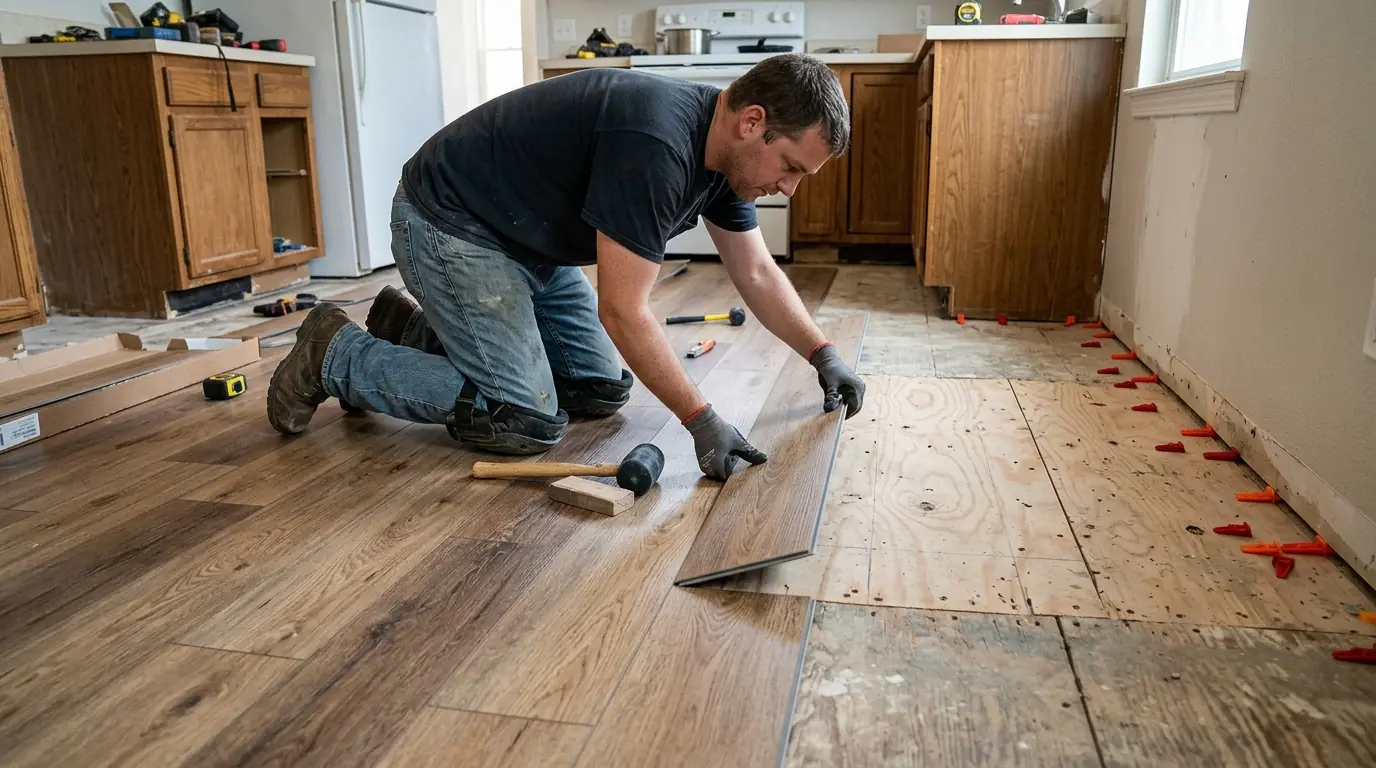
Water damages flooring from the bottom up. Laminate swells at the seams, hardwood cups and then crowns, vinyl plank traps water underneath, and carpet pad stays wet long after the face feels dry. Fire leaves melted vinyl, scorched finish and smoke odor in carpet.
Removal comes first, with any underlayment. Then we read the subfloor or slab. Plywood and OSB that have delaminated or gone soft get replaced. Concrete gets tested for moisture before any glue-down or floating floor goes over it.
Installation follows the maker's acclimation and moisture limits, because those limits decide whether the floor holds up. We follow them even when it adds a day, since a floor that fails a year later costs more than the wait.
What drives the cost of new flooring after damage
Flooring costs depend on the material you choose and how much repair the subfloor needs first.
- Flooring material. Carpet and vinyl plank cost less than hardwood or tile.
- Subfloor repairs. Soft plywood has to be replaced before installation.
- Removing the old floor. Glued floors and mortared tile take more labor to remove.
- Matching existing flooring. Weaving into old hardwood takes more labor than a full room.
- Continuous runs. Floors running through several rooms may need replacing past the damage.
Published national price ranges
- Carpet $2 to $8; hardwood $7 to $25 (labor and materials included) (per sq ft), flooring replacement after water damage. How Much Does Water Damage Restoration Cost? (2026) (HomeGuide)
These are planning ranges from national cost guides, not our quote. The price for your house depends on the factors above, and we give you a written scope before repair work starts.
LVP, hardwood, carpet or tile after a water loss
If the old floor has to come out anyway, this is the time to choose what goes back.
| Floor type | Future leak | Repair after damage | Good fit for |
|---|---|---|---|
| Luxury vinyl plank | Planks resist water; water gets underneath | Relay or replace the affected run | Kitchens, laundry rooms, slab floors |
| Hardwood | Cups and swells if water sits | Weave in boards and refinish | Living areas away from plumbing |
| Carpet | Pad soaks up and holds water | Dry and relay with new pad if clean | Bedrooms |
| Tile | Survives; grout and subfloor may not | Replace cracked tiles and underlayment | Bathrooms and entries |
Most replacements involve one of three flooring families, and each reacts differently to moisture left in the structure.
Luxury Vinyl Plank
Luxury vinyl plank is the most common choice after water damage because the planks themselves do not swell. That does not make the floor waterproof. Water can travel under a floating LVP floor and sit on the subfloor, so the underlayment and the subfloor still need to be dry. We check moisture, flatten high and low spots, and leave the expansion gaps at walls and transitions that the planks need to move.
Hardwood
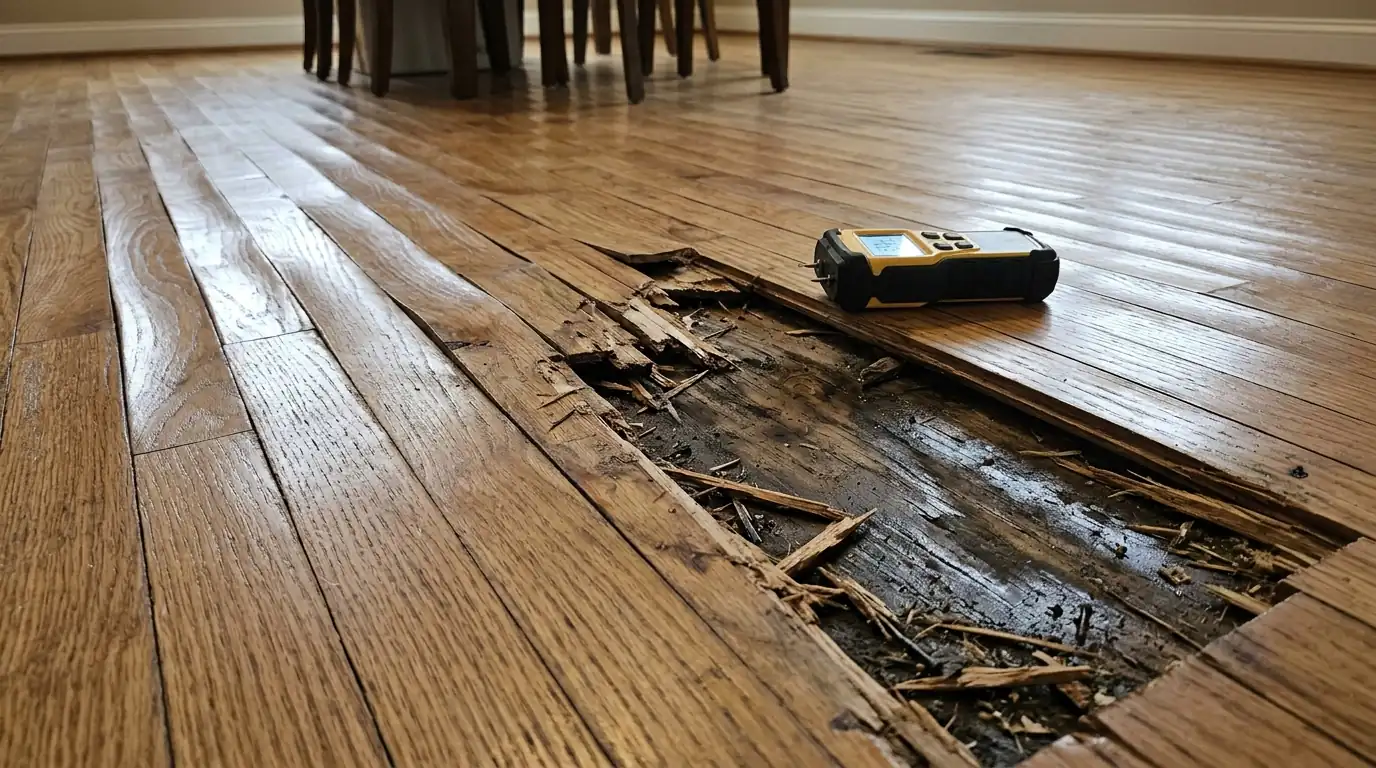
Solid and engineered hardwood can be refinished, patched or replaced. Boards that cupped and then flattened after drying can sometimes be sanded and refinished. Boards that split, blackened or stayed crowned get replaced, and we weave new boards into the existing floor so the run continues. We sand test spots before deciding which boards can stay. New wood acclimates in the house first, and the whole floor is often refinished together so color and sheen match.
HomeGuide puts hardwood replacement after water damage at $7 to $25 per square foot, labor and materials included.
Carpet and Tile
Carpet that took on clean water can sometimes be dried and relaid over new pad. Carpet soaked by dirty water, or left wet too long, gets replaced. Tile usually survives water, but grout, underlayment and cracked tiles may not, and tile over a soft subfloor keeps cracking. We replace tile from the subfloor up where needed and match the existing pattern when only part of a room is affected, so the repair reads as one floor.
HomeGuide puts carpet replacement after water damage at $2 to $8 per square foot.
Floors in Oklahoma City houses with a long history
Putnam Heights began development in 1908, and its representative homes date from about 1906 to 1929. The Shepherd Historic District's period of significance runs from 1925 to 1949. When a house from either era still has its original wood floors, a water loss raises a real choice: weave in new boards and refinish, or replace the room. We look under the floor first, because an older floor may have been covered more than once, and every layer changes the finished height in an Oklahoma City kitchen or hallway.
Brands we install on this work
We install Shaw and Mohawk flooring, and the wall repairs that go with it use USG Sheetrock board and Benjamin Moore paint.
Materials we install on rebuilds and roof repairs
From the damaged floor to the new one
- We remove the damaged flooringFlooring, pad and underlayment are bagged and hauled away.
- We test the subfloor or slabMoisture readings plus a probe test for soft wood.
- We repair what is underneathFailed subfloor is replaced and the surface flattened.
- We acclimate and installMaterials acclimate per the maker, then go down with proper gaps.
- We finish the transitionsBaseboards, thresholds and stair noses are reset or replaced.
How long flooring replacement takes
Removal and subfloor repair usually take a day or two. Carpet and vinyl plank then often go in within a day per area, while hardwood needs days to acclimate, and site-finished wood adds sanding and finish coats.
Flooring replacement questions after water damage
Often, if drying started quickly. Boards that cupped can flatten as the wood dries, then be sanded and refinished. Boards that split, turned black or stayed crowned need replacement, usually woven into the existing floor.
The planks resist water, but the floor as a whole is not sealed. Water can run under the planks at the edges and sit on the subfloor, where it can feed mold. After a leak, the planks often need to come up.
Flooring that runs continuously from room to room has no natural break, so replacing only the damaged section can leave a visible line. Discontinued colors or worn finishes can also make a partial repair stand out.
Until it reaches the moisture level the flooring maker allows. We measure it rather than counting days. Plywood over a crawl space may dry within days with equipment, while a concrete slab can take noticeably longer.
If the same tile or a close match is available, yes. When it is discontinued, a common fix is to borrow tiles from a closet or under an appliance for the visible area and use a complementary tile where it will not show.