
Updated October 2026
Mold inspection in Oklahoma City starts with moisture, not a swab, because mold only grows where water keeps coming back. We check walls, ceilings, attics and crawl spaces with meters and a thermal camera, then take air or surface samples when a lab result would change the plan. You get written findings either way.
What a mold inspection should tell you
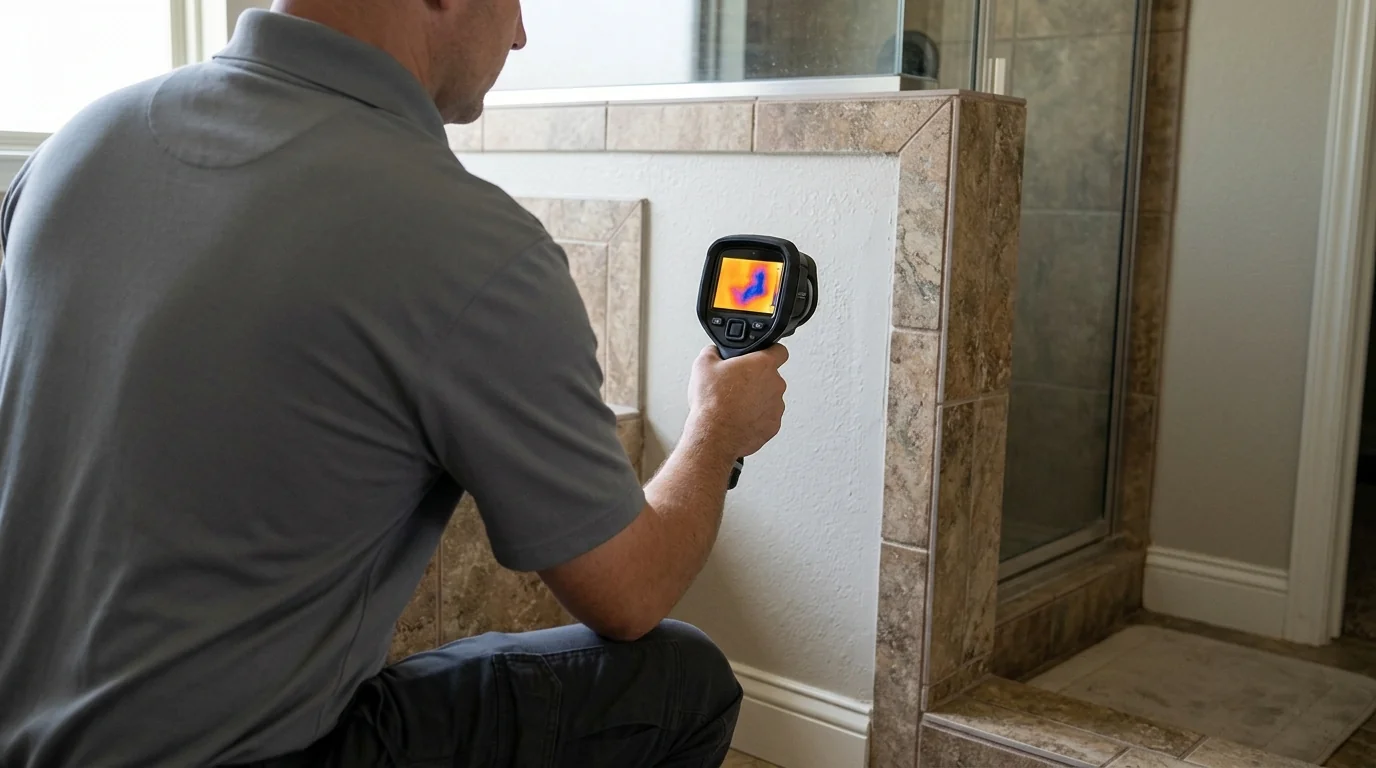
Most calls start with a smell, a stain or a health worry, and the answer usually sits inside a wall or under a floor. We walk the house with a moisture meter and a thermal camera: bathrooms, the water heater closet, under sinks, around windows and below the roof.
Where readings run high, we look closer, behind baseboards, inside cabinet bases, in the attic over a bath fan. Sampling comes after that, and only when it answers a real question, such as whether hidden growth is spreading spores into a bedroom.
The report lists each problem area, its moisture source and the fix. Some findings need mold remediation. Many just need a leak fixed and a wall dried, with no lab work at all.
What a thorough inspection should cover
Inspections vary between companies. We check these areas on every visit.
- Bathrooms, including the wall behind the shower valve
- Under kitchen and vanity sinks and behind the dishwasher
- Water heater and HVAC closets, drain pan and condensate line
- Window sills and the wall below them
- Attic sheathing near bath fan and kitchen vent outlets
- The crawl space or slab edge, depending on the house
- Moisture readings logged room by room with photos
Inspection work comes in three forms, and a homeowner rarely needs all three at once.
Visual and Moisture Inspection
This is the core of every visit. We look for growth, staining and damaged materials, and we read moisture in drywall, trim, subfloor and framing wherever we can reach. A thermal camera shows cold, damp patches behind paint that looks normal. Most questions get answered here, without a lab. If a wall reads wet next to a shower, the shower is the problem, and a test would only confirm what the meter showed.
Fixr puts mold inspection and testing at $450 to $800 when it is billed separately from remediation.
Air and Surface Sampling
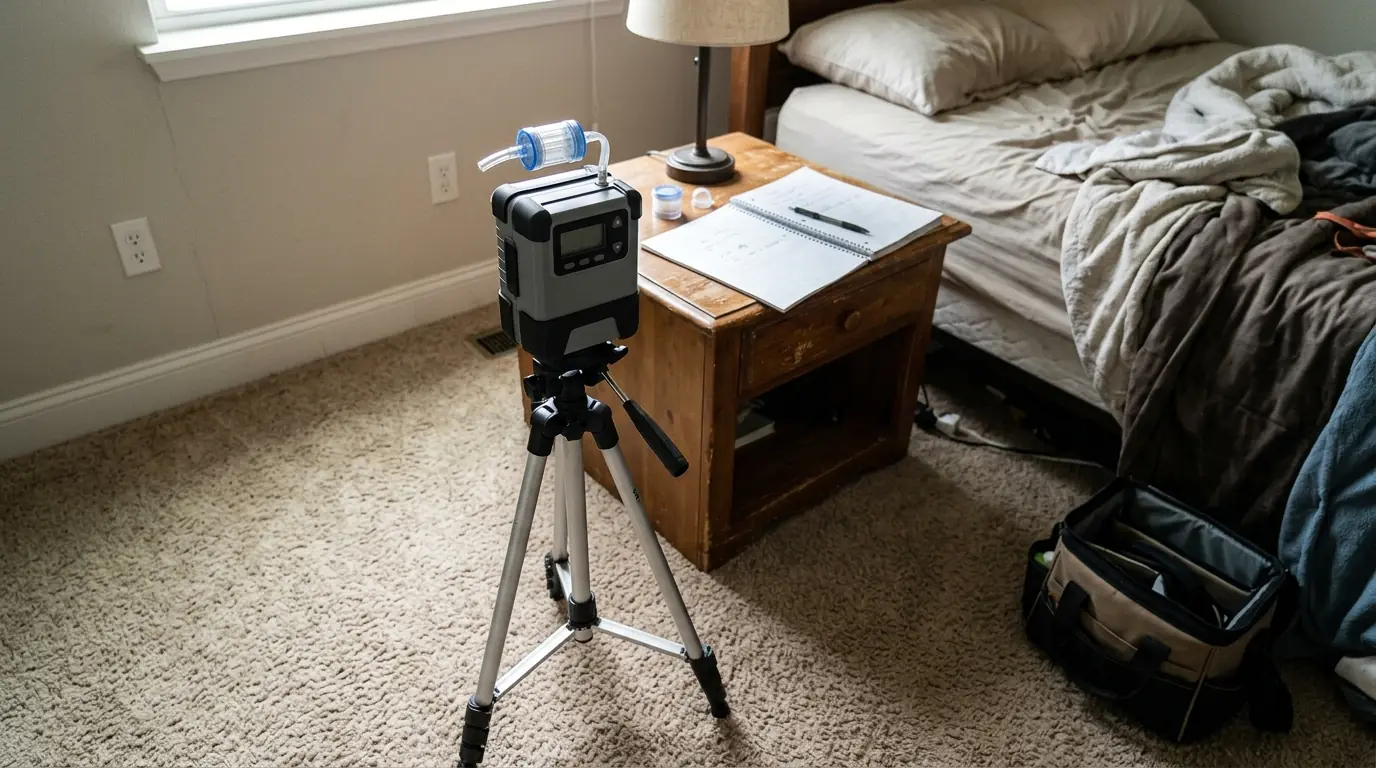
Air samples compare spore counts inside the house to an outdoor sample taken the same day. Surface samples, by swab or tape lift, identify what is growing on one spot. Sampling helps when the smell is strong but nothing is visible, when someone has health concerns, or when a buyer or landlord wants lab results. It does not replace finding the water. A clean air result in a house with a wet wall still means the wall needs attention.
Clearance After Remediation
Clearance is the check after mold removal and before walls close up. We confirm the affected materials are gone, the framing is clean and dry, and the work area reads like the rest of the house. Where the job called for it, air samples inside the former work area show whether spore levels are back to normal. Rebuilding over damp framing starts the problem again, so the moisture readings matter as much as the lab report.
Inspecting the century-old houses north of downtown
In Heritage Hills, the National Register nomination counts 362 residences and says 97 percent were built by 1930. A house approaching its hundredth year has been through many roof patches, plumbing changes and remodels, and each can leave an old leak path inside a wall. So we read moisture across the whole house instead of testing one room. The EPA advises drying water-damaged areas within 24 to 48 hours to prevent mold, and in an older Oklahoma City home a slow leak rarely gets caught that fast.
Moisture inspection, sampling or clearance: which one you need
Each visit answers a different question. Picking the right one saves money.
| Visit type | Question it answers | When it fits | What you get |
|---|---|---|---|
| Moisture inspection | Where is water getting in? | Smell, stains or a past leak | Mapped readings, photos, repair scope |
| Air sampling | Are indoor spores higher than outside? | Odor with nothing visible | Lab counts against an outdoor baseline |
| Surface sampling | What is growing on this spot? | A buyer or doctor wants it identified | Lab identification |
| Clearance check | Is the area ready to rebuild? | After removal, before walls close | Readings and lab results if sampled |
What changes the cost of a mold inspection
Inspection pricing follows the size of the house, how hard the spaces are to reach and how many samples are needed.
- Square footage and levels. More rooms and a second story mean more readings and more time.
- Attic and crawl space access. Tight attics and low crawl spaces take longer to inspect.
- Number of samples. Each sample carries its own lab fee, so we take only useful ones.
- Outdoor comparison sample. Air testing needs an outdoor baseline taken the same day.
- Lab turnaround. Rush results cost more than standard processing.
Published national price ranges
- $450 to $800 when billed separately (per inspection), mold inspection/testing. Mold Remediation Cost | Mold Removal Cost (Fixr)
These are planning ranges from national cost guides, not our quote. The price for your house depends on the factors above, and we give you a written scope before repair work starts.
How an inspection visit runs
- We ask what you noticedSmell, stain, recent leak or health concern tells us where to start.
- We read moisture room by roomMeters and a thermal camera, attic and crawl space included.
- We open nothing without askingIf a closer look needs a small hole, we explain why first.
- We sample when it helpsSamples go to a lab only when the result changes the plan.
- We write it upEach problem area, its source, photos, readings and the fix.
Mold testing questions from Oklahoma City homeowners
Settle plates almost always grow something, because spores are in every house and outdoors. They do not tell you where growth is, how much there is or where the moisture comes from, which is what you need to fix it.
Usually not. Visible growth already tells you mold is there. What matters is how far it extends and what is feeding it. Testing makes sense for health concerns or when a third party needs lab results.
Often we can narrow it down. Moisture readings and thermal images show where a wall is wet, and drywall that stays wet for days is likely to grow mold on its back side. Confirming it takes a small inspection hole.
It can be, especially when the home inspection noted past leaks, stains or a damp crawl space. We focus on moisture sources and hidden damage, which gives a clearer picture of repair costs before closing.
That the remediation area is clean and dry enough to rebuild. We confirm the affected materials are gone, read the framing and, where the job called for it, compare air samples to the rest of the house.