
Updated October 2026
Slab leak water damage in Oklahoma City starts below the concrete, where a supply or hot water line leaks and pushes moisture up through the floor. The plumber fixes the pipe, but the flooring, baseboards and lower drywall that soaked up the water still have to be dried or replaced, and that is the part we handle.
What happens to a house when a line under the slab fails
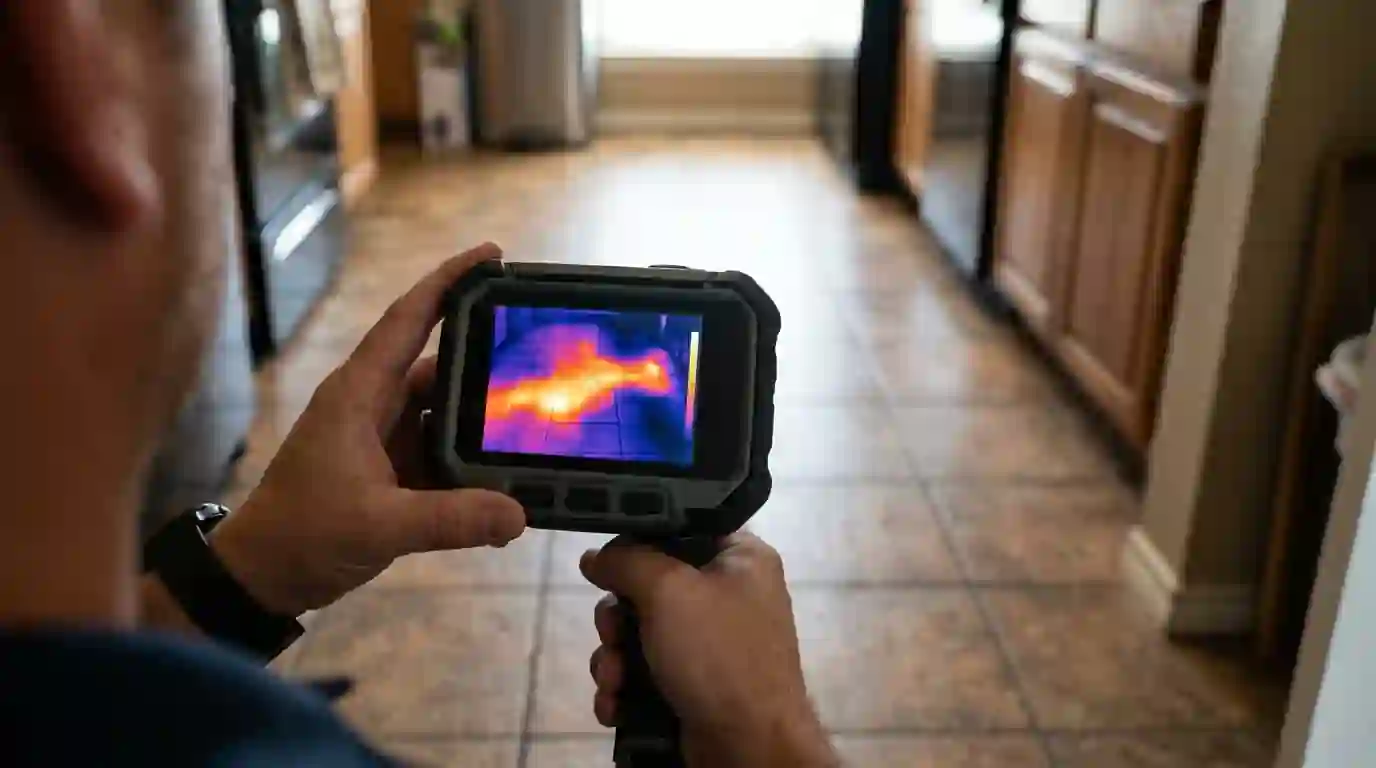
Many homes sit on concrete slabs with water lines running under or through them. When one of those lines leaks, the water has nowhere to go but sideways under the slab and up through cracks and the slab surface. Floors above it get warm if it is a hot line, damp if it is a cold one.
The water does not stay in one spot. It spreads under tile, wicks into carpet pad and swells laminate and engineered wood at the seams. Baseboards and the bottom of nearby walls draw it up.
Once the plumber confirms the leak, we map moisture to find its edges, open the floor where access is needed, dry the slab and the rooms around it, then replace flooring, baseboards and drywall.
Signs a line under your slab may be leaking
- A warm spot on the floorTile or wood warmer in one area can mean a hot line leaking below.
- A climbing water billUsage rising with no change in habits points to a hidden leak.
- Running water with taps offThat sound suggests a pressurized line leaking somewhere.
- Floor lifting mid-roomFlooring that peaks away from any wall has moisture coming from below.
Slab leak work comes in three stages, from the first warm spot to the patch in the concrete.
Warm or Damp Floor Spots
A warm patch on tile, a damp carpet that never dries or a water bill that keeps climbing are the usual first signs. A hot water line leaking under the slab can make one spot noticeably warm to bare feet. We use a thermal camera and moisture meters to outline the wet area, which tells the plumber roughly where to look and tells us how much flooring and baseboard is involved.
Buckled Flooring Over the Slab
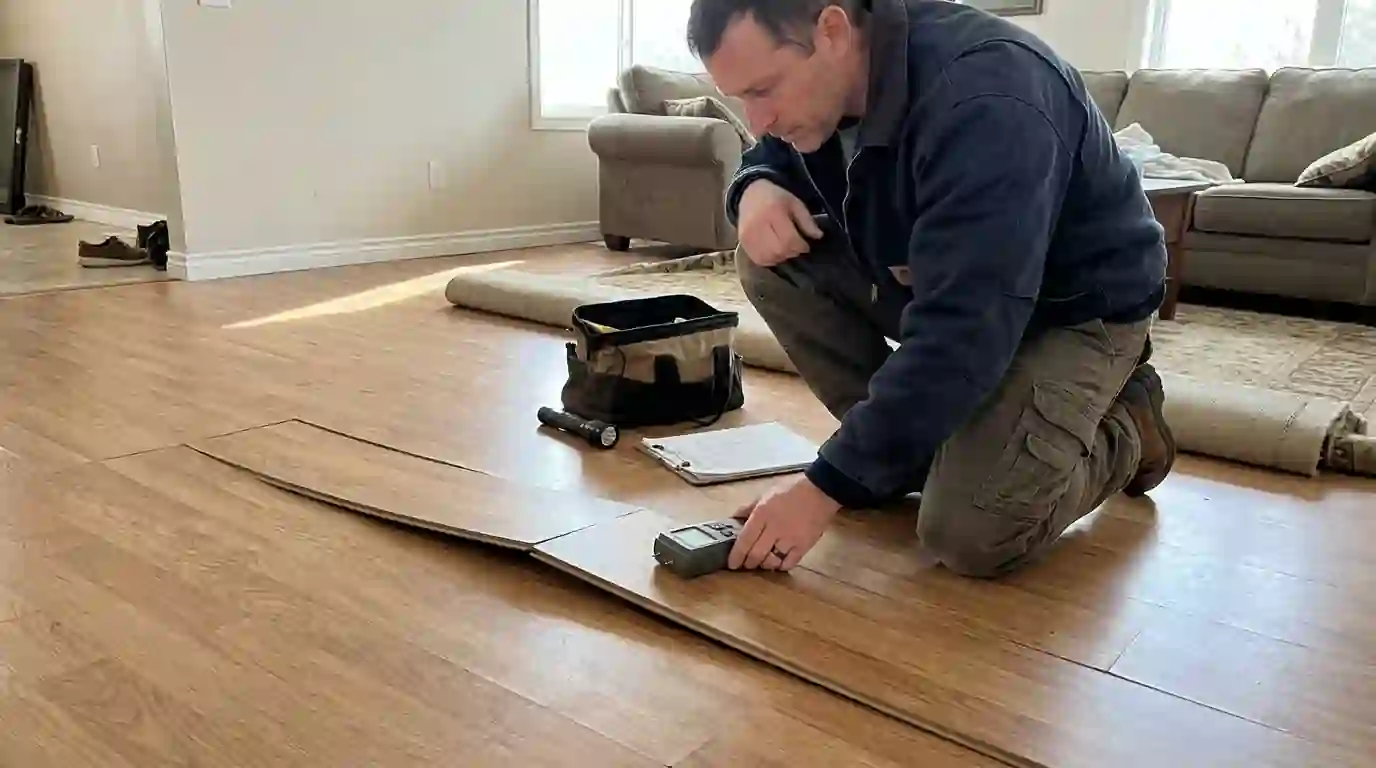
Laminate, engineered wood and solid hardwood over a slab react fast to water from below. Boards cup, seams peak and the floor can lift away from the baseboard. Because the moisture comes from the concrete, drying the surface alone does nothing. The flooring over the wet area usually comes up so the slab itself can dry, and we leave the rooms that read dry in place so less of the house is torn up.
HomeAdvisor puts slab leak repair at $630 to $4,400, with an average of $2,280, and says the water damage repair afterward can run from $500 for a minor subfloor repair to $15,000 or more for extensive damage.
Opening Floors for Access
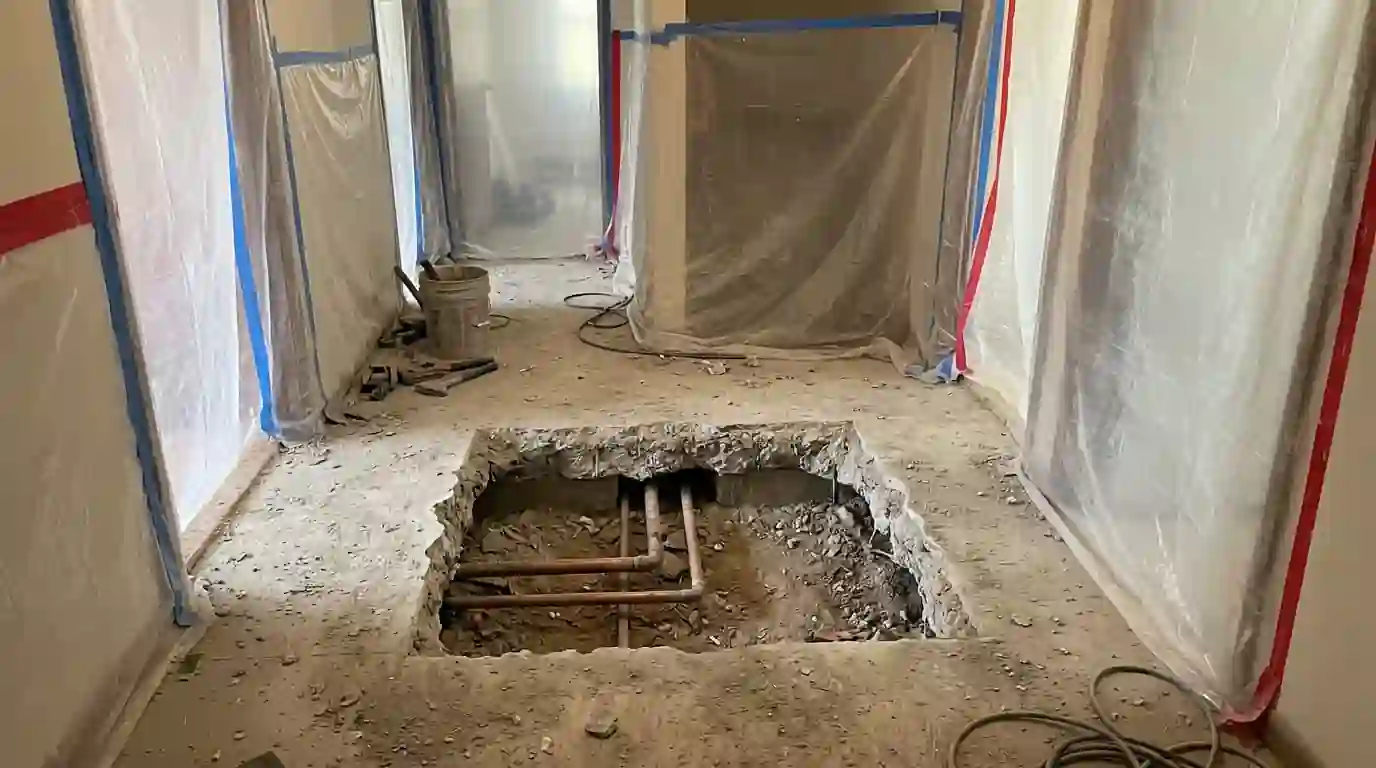
When the plumber repairs the line through the floor rather than rerouting it, someone has to cut the flooring and break the concrete. We pull the flooring back cleanly so salvageable pieces can be reused and keep the dust contained. After the pipe repair, we patch the slab and let it cure before new flooring goes down. Ask your plumber early whether a reroute through the walls or attic is possible, since it can leave the floor alone.
From the first warm spot to new flooring
- Shut the supplyClosing the main or the water heater supply stops more water reaching the slab.
- Map the wet areaThermal imaging and meter readings outline how far the water spread.
- Open for accessWe pull flooring back and cut the slab where the plumber needs it, with dust containment.
- Dry the slab and roomsEquipment runs until readings match dry reference spots.
- Patch and refloorThe concrete patch cures, then flooring, baseboards and drywall go back.
Clay soil, uneven floors and why we test before breaking concrete
Much of central Oklahoma sits on clay. An OSU Agricultural Experiment Station bulletin rated soils such as the Kirkland series as highly expansive, with high shrink-swell potential for low buildings. An Oklahoma foundation specialist told News 9 that long droughts followed by rain move that soil, and that uneven floors and sticking doors are warning signs. So in an Oklahoma City house, a cracked or uneven floor can come from soil movement rather than a leak. We take moisture readings before anyone breaks concrete. Wet readings point to the plumbing. Dry ones point elsewhere.
What a complete slab leak damage repair should include
Estimates for this work vary most in what they leave out.
- Moisture map of every room next to the leak
- Flooring removal limited to the wet area
- Dust containment while the slab is cut
- Timing set with the plumber so the floor opens once
- Daily slab and wall readings until dry
- Concrete patch with cure time before new flooring
- Photo and reading records for your insurance file
What drives the cost of slab leak damage repair
The plumbing bill and the damage bill are separate. The damage side depends on how much floor got wet and how the slab gets opened.
- How long it leaked. A leak caught at the first warm spot affects one room. Months of leaking can wet several.
- Flooring type. Tile and carpet cost less to replace than glued engineered wood or solid hardwood.
- Access route. Breaking the slab means patching and new flooring. A reroute opens drywall instead.
- Drying the slab. Concrete dries slowly, and every extra day adds equipment charges.
- Matching the floor. Discontinued flooring can mean replacing the connected rooms too.
Published national price ranges
- Slab leak repair $630 to $4,400, average $2,280; water damage repair after a slab leak anywhere from $500 for a minor subfloor repair to $15,000 or more for extensive damage (per job), slab leak repair. How Much Does Slab Leak Repair Cost in 2026? (HomeAdvisor)
These are planning ranges from national cost guides, not our quote. The price for your house depends on the factors above, and we give you a written scope before repair work starts.
Slab leak damage questions homeowners ask us
A slab leak usually shows in the floor: a warm or damp spot, flooring lifting mid-room, or running water with every tap off. Wall leaks stain drywall and baseboards first. A climbing water bill can mean either.
If the leak is on the hot side, closing the water heater supply often stops it while cold water stays on. Otherwise, close the main and open it only briefly when needed. Every hour it runs pushes more water under the floor.
The pipe repair is plumbing work. Our part is the damage around it: opening the floor, drying the slab and rooms, patching the concrete and replacing flooring and drywall. We time it with your plumber so the floor opens once.
Many policies cover sudden water damage to floors and walls, and some cover tearing out the floor to reach the pipe, while the pipe itself is often excluded. Ask your agent. We supply photos and moisture logs for the claim.
Concrete gives up water slowly. A small leak caught early can be dry in several days. A slab that soaked for weeks can take a week or two, and flooring should not go back until readings confirm it.