
Updated October 2026
Attic mold removal in Oklahoma City is usually a ventilation problem first. Warm, damp air from bathrooms and the living space rises into the attic, meets cold roof sheathing in winter and condenses. We remove the growth from the decking, replace boards that have gone soft and correct the airflow so the condensation stops.
Why mold grows on the underside of a roof
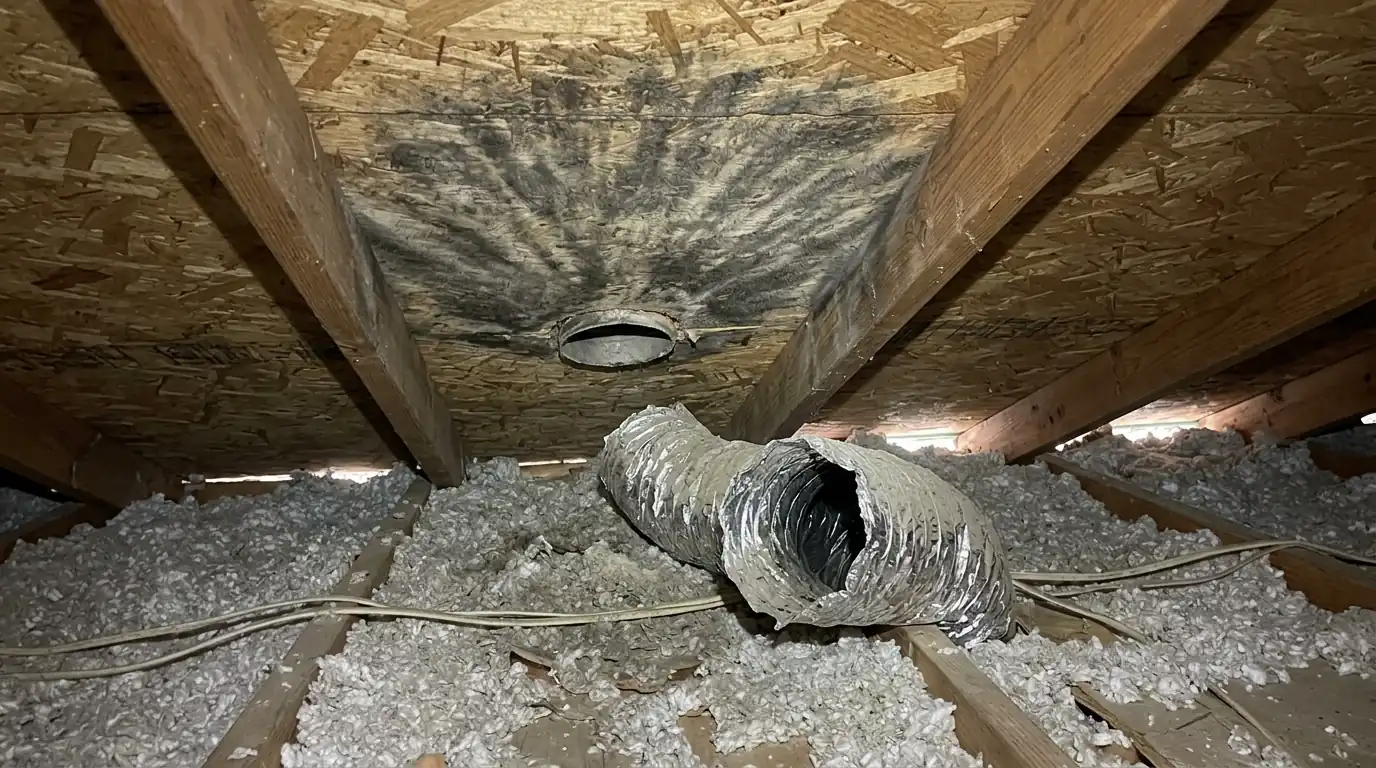
Attic mold shows up as gray or black staining on the plywood or OSB sheathing, often heaviest on the north slope. It rarely comes from a roof leak. It comes from moisture leaving the house: a bath fan ducted into the attic, gaps around light fixtures and the hatch, or a loose dryer vent.
When that moist air hits sheathing colder than its dew point, it condenses. Repeat that every cold night for a season and the wood stays damp enough for mold. Most homeowners find it while up there for something else.
Removal means cleaning the sheathing, treating the wood and replacing decking that has delaminated. The job is not done until the moisture source is fixed, or the stains come back next winter.
What decides the price of attic mold work
Attic jobs vary with how much decking is affected and what it takes to stop the moisture.
- Area of affected sheathing. A stain over one fan is small. Growth across a whole slope is not.
- Cleaning method. Hand scrubbing suits small areas. Larger areas may call for blasting.
- Decking replacement. Soft boards come out from the roof side, adding roofing labor.
- Attic headroom. Low-slope attics with little headroom slow every step.
- Ventilation fixes. Rerouting ducts or adding baffles and vents adds parts and labor.
Published national price ranges
- $1,000-$4,000 (attics) (per job), attic mold removal. How Much Does Mold Remediation Cost? (2026 Guide) (This Old House)
These are planning ranges from national cost guides, not our quote. The price for your house depends on the factors above, and we give you a written scope before repair work starts.
Attic tasks you can handle and the ones that need us
Some attic checks are easy for a homeowner. Working around mold or cutting decking is not.
| Task | What a homeowner can do | When it needs us |
|---|---|---|
| Checking where the bath fan goes | Look from the hatch to see whether the duct reaches a cap. | The duct ends in the attic or the decking is stained. |
| Clearing soffit vents | Note insulation pushed against the eaves. | Baffles are needed along a whole side of the roof. |
| Cleaning a small stain | Leave it alone and note its size. | Any growth, since scrubbing spreads spores into insulation. |
| Replacing soft decking | Nothing from inside the attic. | Any board that flexes or crumbles when pressed. |
Attic jobs usually involve some mix of these three pieces of work.
Roof Sheathing Mold
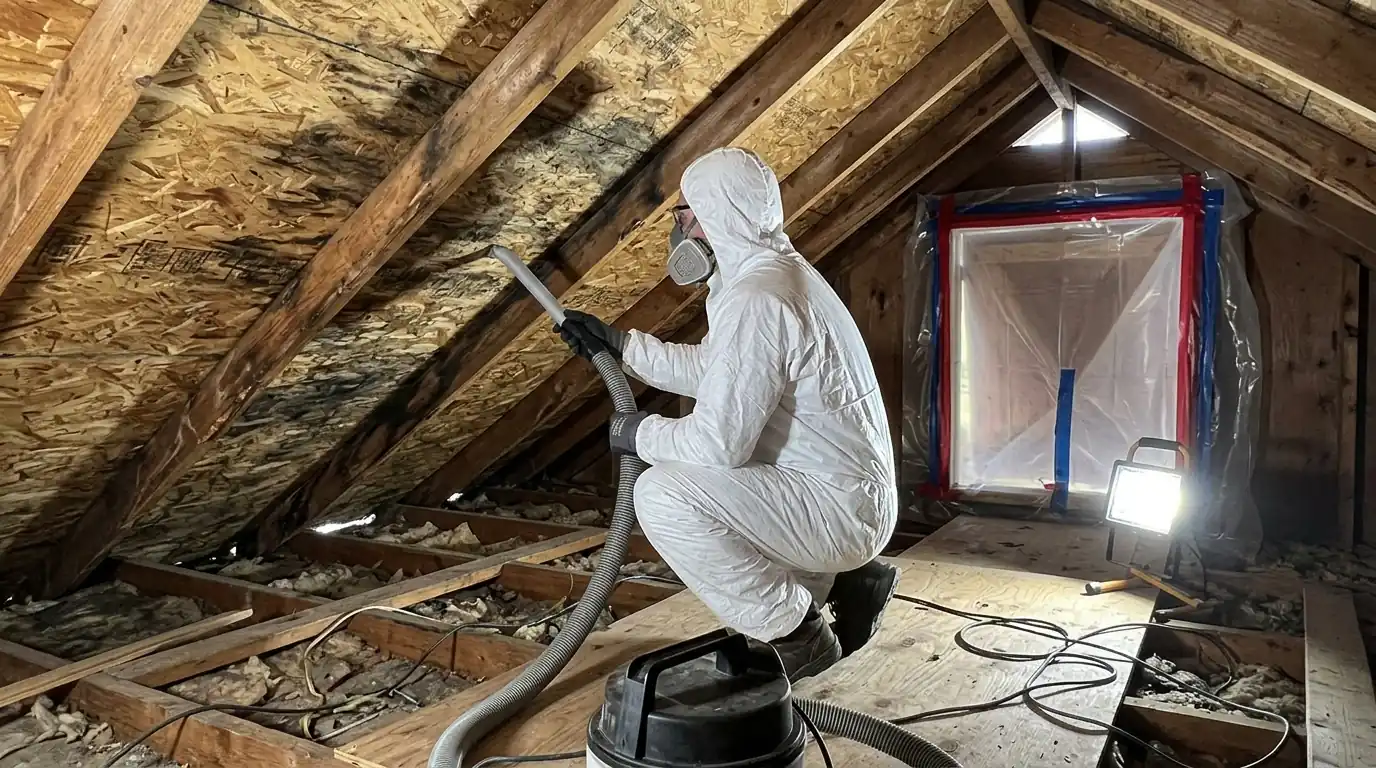
Growth on decking that is still sound gets cleaned in place. We set up containment at the hatch, HEPA vacuum loose material, then scrub or blast the surface and apply a treatment. Staining left after cleaning is cosmetic, but soft or delaminated sheathing has to be replaced from the roof side, which makes it a roofing job as well. We probe the decking with an awl to know which is which.
This Old House puts mold remediation in attics at $1,000 to $4,000.
Mold From Bath Fans Venting Into the Attic
A bath fan that blows into the attic, or into a soffit with no exit, puts a shower's worth of steam onto the sheathing every day. The growth pattern gives it away: a dark fan shape on the decking right above the duct. We clean that area and run the duct out through a roof or wall cap with a damper, sealed at every joint and insulated where it crosses the cold attic.
Ventilation Corrections
An attic needs intake low at the soffits and exhaust high near the ridge. Insulation stuffed into soffit vents, painted-over vents, or a ridge vent and gable fan that short-circuit each other leave dead air over parts of the roof. We check the soffits from inside, add baffles where insulation blocks them and balance intake against exhaust. Sealing air leaks from the rooms below often matters more than adding vents.
Why attics here sweat between November and April
NOAA's 1991 to 2020 normals put Oklahoma City's typical first fall freeze around November 2 and its last spring freeze around April 4. That stretch is when roof sheathing runs coldest and attic condensation forms. In Crown Heights, where the National Register lists Tudor Revival, Colonial Revival and Spanish Revival homes from 1925 to 1949, a house that old may have had its bathrooms remodeled more than once. Each new fan is a chance for a duct to end in the attic, so we trace every one.
From the first look to a dry attic
- We inspect the attic and rooms belowDecking readings plus a check of fans, dryer vent and ceiling gaps.
- We contain the hatchPlastic and HEPA negative air keep debris out of the house.
- We clean and treat the sheathingHEPA vacuum, scrub or blast, then treat the wood.
- We fix what fed the moldDucts go outside, soffits get baffles, gaps from below get sealed.
- We replace failed deckingSoft boards are cut out and replaced, with the roof patched.
Signs your attic has a moisture problem
- Dark staining on the deckingGray or black patches under the roof, often heaviest on the north side.
- Frost on nail tips in winterNails that frost or drip on cold mornings show warm air reaching the sheathing.
- Rust around nail pointsRust streaks around nail tips point to repeated condensation.
- Matted insulationFlattened, clumped insulation near fans or the hatch has been getting wet.
- Musty smell upstairsA damp, earthy smell in upstairs closets often comes from above.
Attic mold questions homeowners ask us
Attic air moves into the house through gaps around lights and the hatch, so growth up there is not sealed off. The bigger concern is usually the moisture causing it, which also wets insulation and can rot decking.
No. New shingles do nothing about warm, wet air rising from the house. New decking installed during a reroof will grow the same stains within a few winters unless the venting and fan ducts are fixed.
Bleach mostly lightens the color on porous wood and adds moisture to the space. It does not remove the growth, and the fumes in a closed attic are a real hazard. Cleaning the wood and fixing the source does the job.
Not first. More exhaust without enough soffit intake can pull conditioned air out of the house and make things worse. We check intake, exhaust and air leaks from below before recommending any new vents.
Only if it is wet, compressed, contaminated or blocking the soffits. Dry insulation can usually stay. Where it has to come out, insulation replacement becomes part of the same job.