
Updated October 2026
Painting after damage in Oklahoma City is mostly preparation: cleaning soot, blocking water stains and sealing odor before any color goes on. Regular latex paint does not stop tannin or smoke stains from bleeding through, so the primer has to match the problem, and the finish coat usually covers the full wall, not just the patch.
Why damage painting is different from a regular repaint
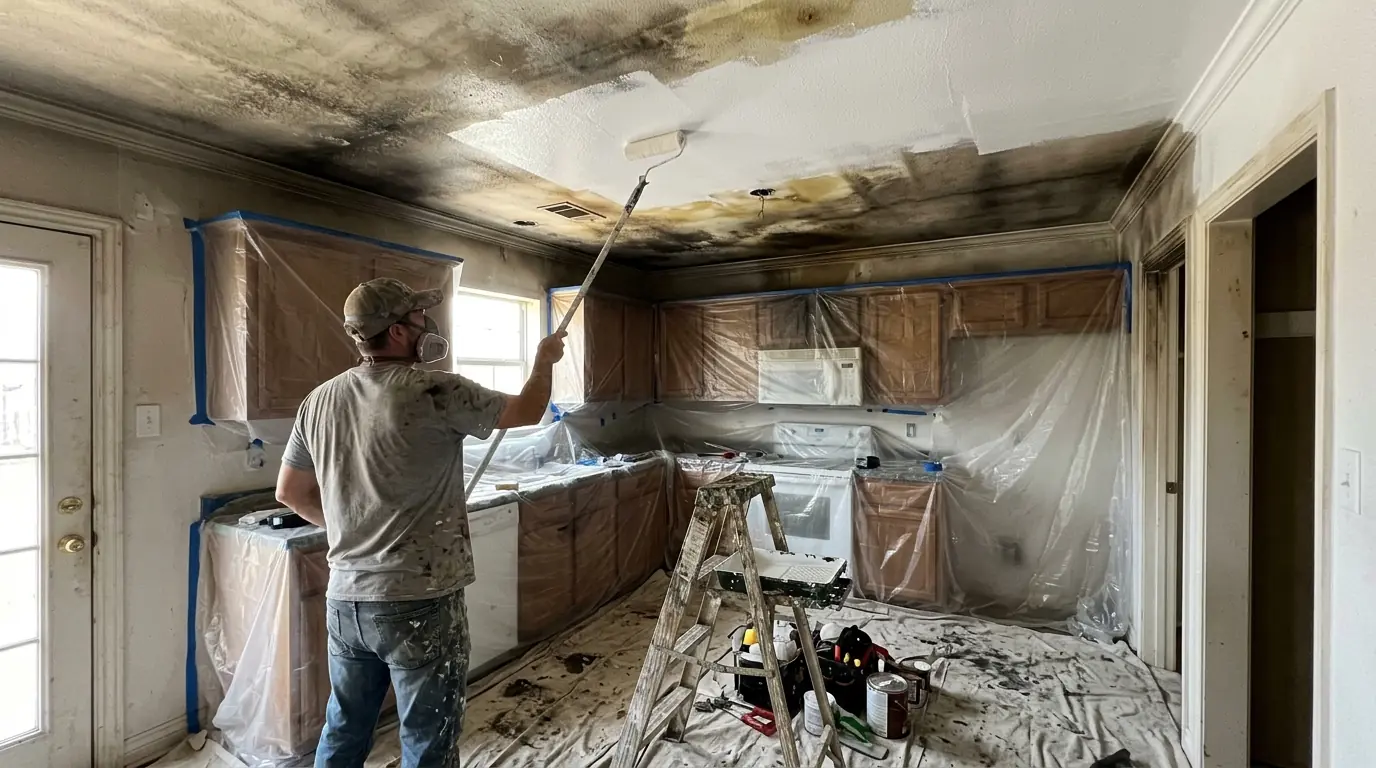
A normal repaint covers a color you are tired of. A damage repaint covers something that wants to come back. Water leaves rings of minerals and wood tannin, and smoke leaves an oily residue and odor that work through ordinary paint.
So the job starts with cleaning, using dry chemical sponges for loose soot and a degreasing wash for residue. Then a primer chosen for the stain goes on: shellac or oil-based for heavy smoke and odor, stain-blocking water-based primers for light water marks.
Last comes color, matched from a sample chip and rolled corner to corner, because a patch painted only over the stain shows as a lighter or shinier square.
What moves the cost of painting after damage
Damage painting is priced on the prep as much as the paint. These are the parts that change the total.
- Type of residue. Light water marks need one primer coat. Heavy smoke needs cleaning, sealing and more coats.
- Ceiling versus walls. Ceilings take longer per square foot and show sheen differences more.
- How far the repaint runs. Painting corner to corner for a clean match covers more area than the stain itself.
- Trim, doors and cabinets. Enamel surfaces need sanding and a different paint system than walls.
- Surface repairs. Drywall patches, texture matching and peeling layers add prep before painting starts.
Which primer fits which kind of damage
Primer choice decides whether the stain stays sealed.
| Primer type | Good for | Limits | When we use it |
|---|---|---|---|
| Water-based stain blocker | Light water rings and marker | Can let heavy tannin or smoke bleed | Small dry ceiling stains |
| Oil-based primer | Water stains, tannin and moderate smoke | Strong fumes and slower drying | Larger stains and wood trim |
| Shellac-based primer | Heavy smoke, soot and odor | Strong fumes and needs ventilation | Fire rooms and lingering smell |
| Standard latex primer | New drywall and clean patches | Does not block stains or odor | Fresh drywall after a rebuild |
Painting jobs you can do and ones to leave to us
Plenty of homeowners paint their own rooms. After damage, a few steps decide whether it lasts.
| Task | What a homeowner can do | When it needs us |
|---|---|---|
| A small dry water ring | Spot prime with a stain-blocking primer and repaint the ceiling. | When the stain is still damp or keeps spreading. |
| Repainting after a rebuild | Paint new drywall once it is primed and the color is matched. | When texture or trim needs matching first. |
| Soot on walls | Leave it alone. Wiping smears oily soot deeper into the paint. | Any soot or smoke film needs dry sponging and sealing. |
| Lingering smoke odor | Ventilate and avoid painting until the source is cleaned. | When the smell returns after cleaning or comes from inside walls. |
Painting after a loss covers three different problems, and each needs its own prep.
Stain-Blocking Primers
Water stains on ceilings and walls bleed through latex paint because the minerals and tannins dissolve back into the wet coat. A stain-blocking primer locks them in place first. We make sure the area is dry by moisture reading before priming, because a stain that is still damp will push through any primer.
Ceilings get special attention since they are flat-finish and show every difference in sheen.
Sealing Smoke-Damaged Surfaces
Smoke leaves a film on walls, ceilings and trim even in rooms the fire never touched. Painting over it without sealing traps the odor, which returns on humid days. After cleaning, we apply a shellac-based or oil-based sealer that blocks both stain and smell, then finish coats in the original sheen. Inside closets and cabinet interiors get sealed too, since odor hides there.
Matching Existing Colors
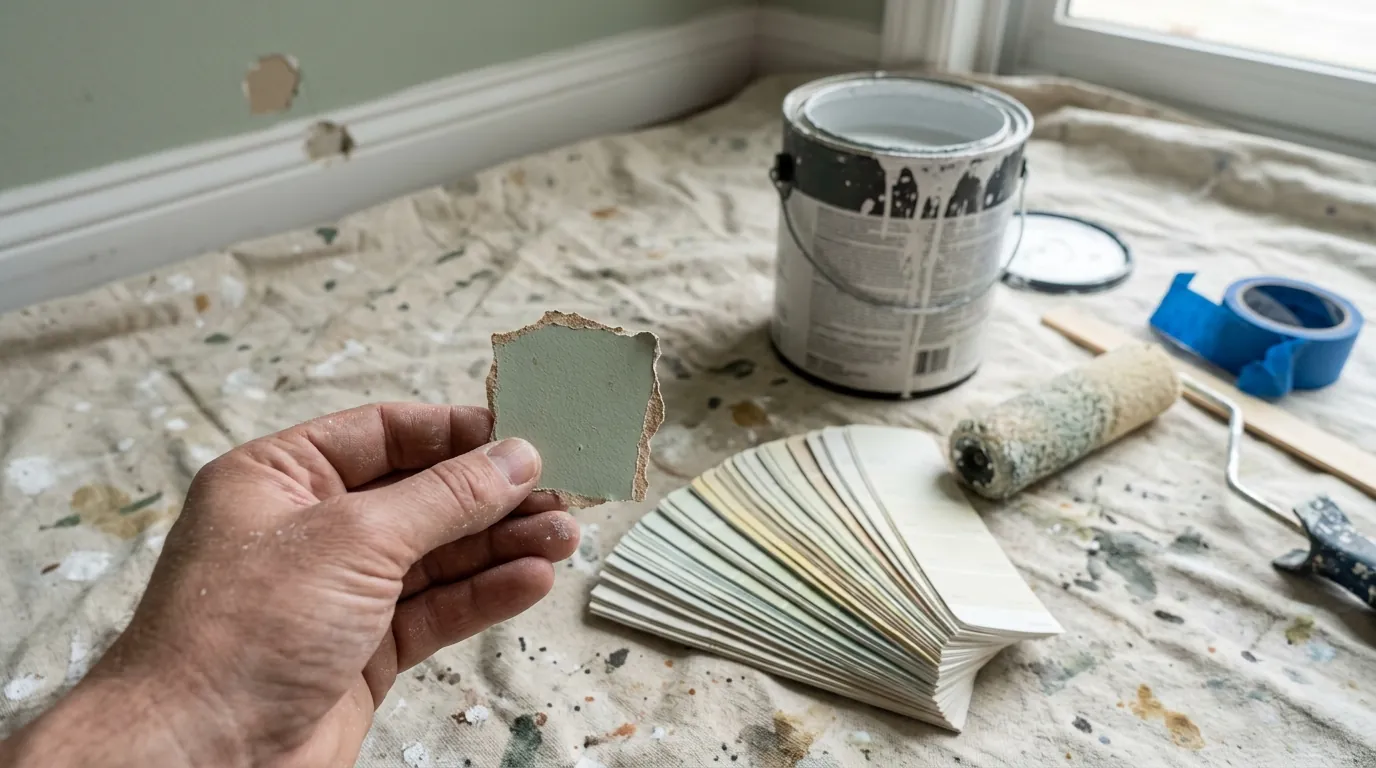
A gallon from the same color name is often a different shade after years on the wall. We take a small chip from an undamaged spot and have it matched, then test a sample patch before rolling the wall. For rooms where the repair crosses a corner or covers most of a wall, we paint the entire room to the corners so the light falls evenly.
How the age of the house changes the prep
The prep for a damage repaint depends partly on how old the walls are. Homes around Military Park sit on an addition Israel M. Putnam first developed in the early 1900s, and walls of that age can carry many layers of paint, so we test adhesion before we seal a stain, since a primer is only as good as the coat under it. Lakehurst in northwest Oklahoma City developed mostly in the 1960s and 1970s, and those houses have usually been repainted several times since, so we match the color on the wall now, not the original.
Brands we install on this work
Our primers and paints come from Zinsser, Sherwin-Williams and Benjamin Moore, chosen by what the surface needs.
Materials we install on rebuilds and roof repairs
How we take a damaged room back to finished paint
- We confirm the surface is dryMoisture readings on stained areas, because priming damp drywall wastes the primer.
- We clean what the damage leftSoot sponging, degreasing washes and light sanding until the surface takes primer.
- We seal for the problemStain-blocking or shellac-based primer goes on, chosen by whether the issue is water, smoke or odor.
- We match and test the colorA chip from the wall is matched and a sample patch checked in daylight.
- We paint and walk the roomFinish coats corner to corner, then a walkthrough with you in natural light.
Questions about painting after water or smoke damage
Water stains carry minerals and wood tannin that dissolve into fresh latex paint and rise back as it dries. Without a stain-blocking primer first, the ring shows through again, often within days.
You can, but it usually shows. Even a matched color looks different when one area is fresh and the rest has years of light and cleaning on it. Painting to the nearest corners hides the repair.
Not alone. Odor has to be cleaned out first, then the surface sealed with a primer made to block it. Regular paint over smoke residue traps the smell for a while, but it tends to return in humid weather.
Ceilings are usually flat paint and catch window light at an angle, so patches show more. We prime the stain, then roll the full ceiling in one direction so the sheen stays even.
Until the drywall reads dry on a moisture meter, which can take a few days after a small leak and longer if insulation above got wet. Painting too soon lets the stain bleed back through.