
Updated October 2026
Subfloor repair in Oklahoma City usually begins at a toilet, tub, dishwasher or water heater, where small leaks soak plywood for months before anyone notices. Rot is not dried back to strength, so the fix is cutting out every soft section, checking the joists below and fastening new subfloor before the finish floor goes down.
Why a soft spot in the floor means opening it up
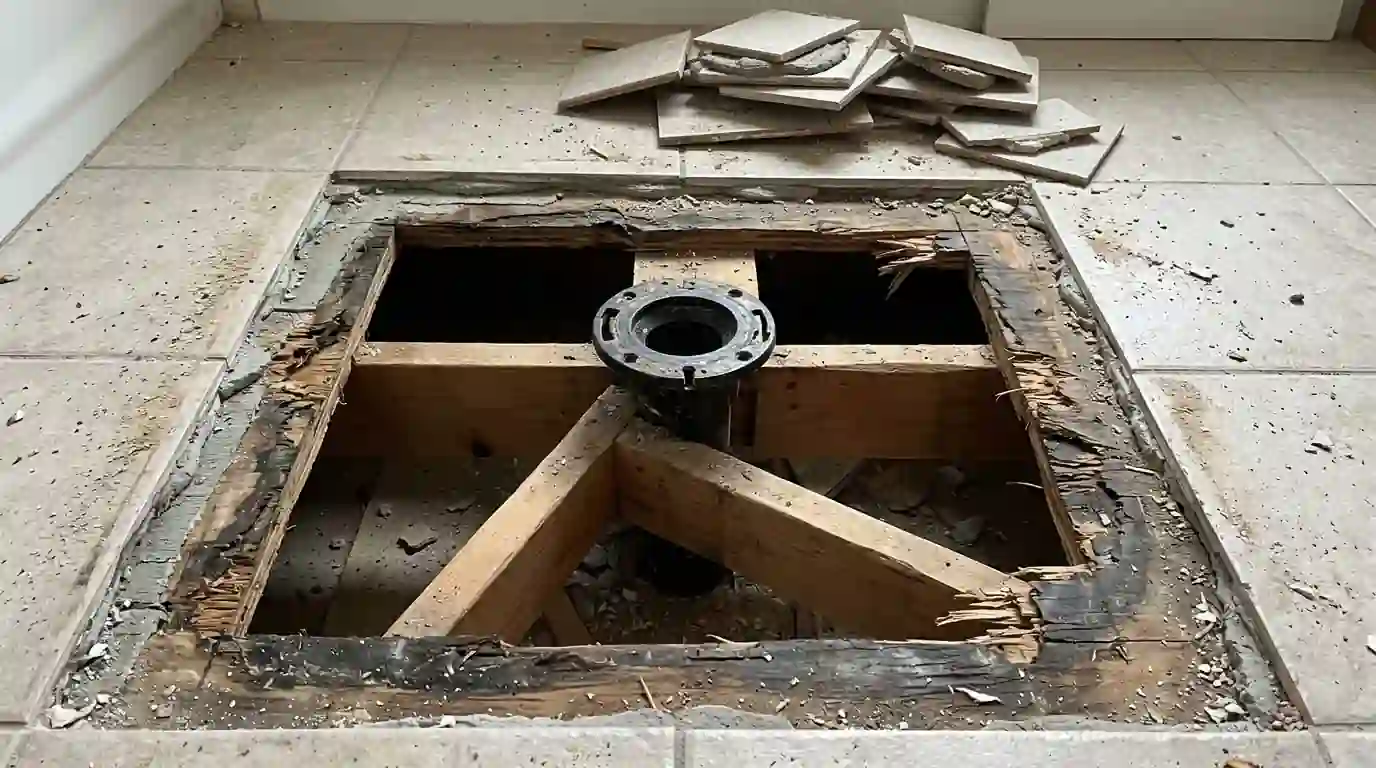
Subfloor is the structural layer under your tile, vinyl or carpet. When water gets into it, plywood delaminates and OSB swells and crumbles, and both lose the stiffness that keeps the floor from flexing.
The visible damage is usually the small part. We pull the finish floor back, probe the wood and take moisture readings outward until we hit solid, dry material, then cut on that line.
The new section is glued, screwed and blocked at every edge. If the leak is still active, it gets fixed first.
What sets the price of a subfloor repair
Subfloor work is priced by how much wood comes out and what sits on top of it. These are the factors that move the number.
- Size of the rotted area. A patch by a toilet is small. Rot under a tub or across a kitchen is not.
- Joist damage. Sistering or replacing joists adds framing labor and sometimes shoring.
- What sits on top. Tile, cabinets, tubs and toilets come out and go back, often costing more than the plywood.
- Access from below. A crawl space helps. A second floor means opening the ceiling below.
- Finish floor replacement. Tile and glued flooring rarely come up whole.
Published national price ranges
- Slab leak repair $630 to $4,400, average $2,280; water damage repair after a slab leak anywhere from $500 for a minor subfloor repair to $15,000 or more for extensive damage (per job), slab leak repair. How Much Does Slab Leak Repair Cost in 2026? (HomeAdvisor)
These are planning ranges from national cost guides, not our quote. The price for your house depends on the factors above, and we give you a written scope before repair work starts.
What you can check on a soft floor yourself
Some first steps help us scope the job. One common shortcut makes the damage worse.
| Task | What a homeowner can do | When it needs us |
|---|---|---|
| Finding the source | Look for drips under sinks, at the toilet base and behind the dishwasher kick plate. | When the water is inside a wall or under a slab. |
| Checking a toilet | Gently rock it and look for water at the base after flushing. | When it rocks with tight bolts or the floor is soft. |
| Probing from below | From a crawl space, look for dark or damp wood under the bathroom. | When the wood is soft or a joist looks damaged. |
| Patching over a soft spot | Nothing. Plywood screwed on top hides the rot and keeps it wet. | Any soft area has to be cut back to sound wood. |
Subfloor work splits into three situations, depending on where the water came from and how far down it went.
Soft Spots in the Floor
A single soft spot in a hallway or kitchen often traces to a slow leak from an appliance line or a past spill that never dried. We remove the finish floor in that area, map the wet and soft wood, and replace the subfloor between joists with matching thickness so the patch sits flush.
Thickness matters. A patch even slightly thinner than the old sheet telegraphs through vinyl and cracks tile.
HomeAdvisor says water damage repair after a slab leak runs anywhere from $500 for a minor subfloor repair to $15,000 or more for extensive damage.
Bathroom Subfloors
Bathrooms are where most rot starts, at a failed wax ring, a tub drain or a shower pan. Fixing it means pulling the toilet and often the vanity, cutting back the subfloor and sometimes removing tile beyond the soft area. We reset the toilet flange at the right height for the new floor so the seal works, and we look at the tub drain from below when we can reach it.
Sistering Damaged Joists
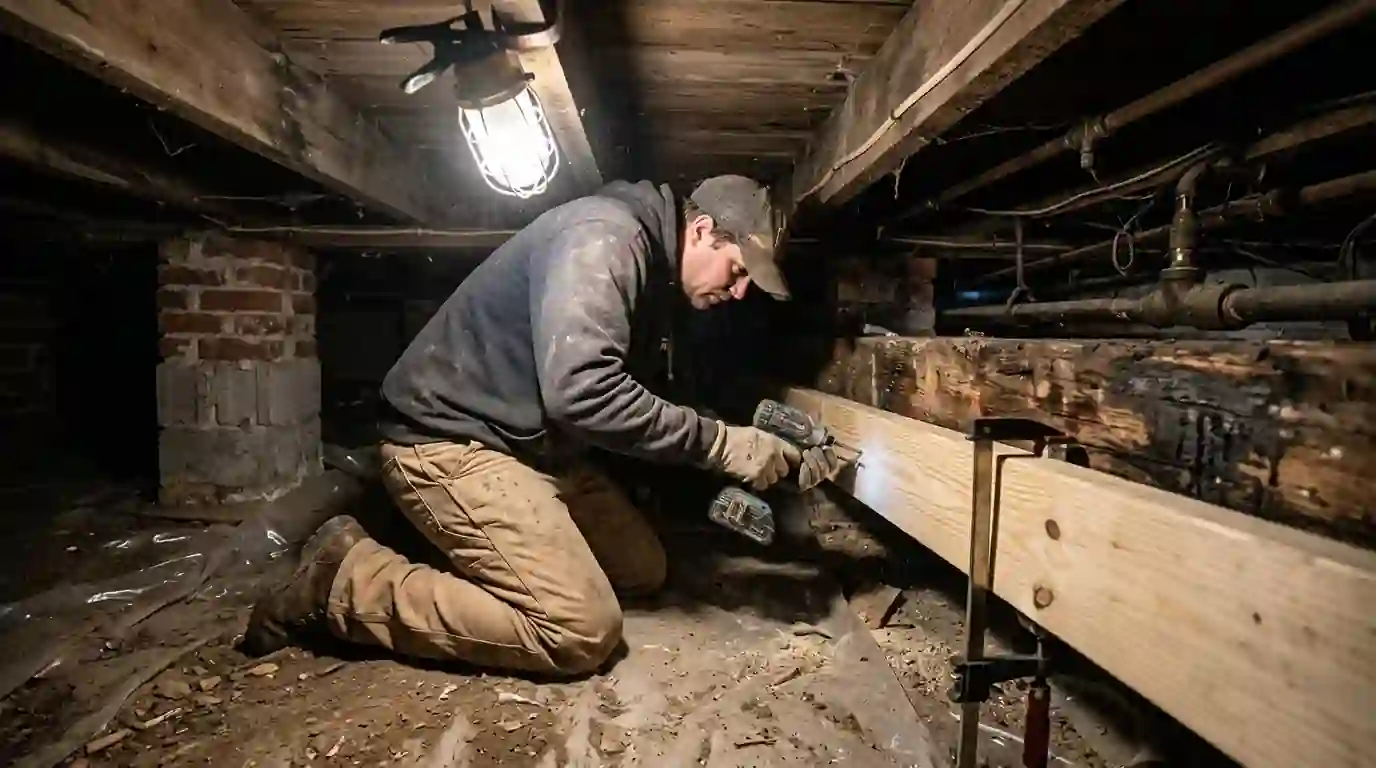
When rot reaches a joist, the floor needs more than new plywood. A joist that has lost part of its depth gets a full-length or long new joist fastened alongside it, called sistering, so the load carries past the weak section. Joists that are cut through, cracked or soft across their full depth may need replacement, which can mean temporary shoring while the work is done.
Not every uneven floor here is a leak
Before we blame water for a sloping floor in Oklahoma City, we look for movement. An Oklahoma foundation specialist told News 9 that long droughts dry the soil, which can shrink about a quarter-inch away from a house, and the rain afterward moves it again; uneven floors and sticking doors are both on the warning list. Age matters too. Classen-Ten-Penn grew up in the early 1900s along the city's streetcar lines, and a floor that old may have seen many plumbing changes, so we look for earlier patches as well as new rot.
How we repair a rotted subfloor
- We find and stop the leakThe source is repaired before new wood goes down.
- We open and mapWe pull flooring and take readings until we reach sound wood.
- We cut back and drySoft subfloor comes out and the joists below are dried and checked.
- We rebuild the structureJoists get sistered where needed, then new subfloor goes down.
- We reset the roomFlooring, toilet, vanity and trim go back, with the flange at the new height.
Signs the floor underneath is failing
- Give near a fixtureA spot by the toilet, tub or dishwasher that flexes underfoot.
- Rocking toiletA toilet that shifts with tight bolts often sits on soft wood.
- Cracked grout or tileTile cracks in a line when the wood under it bends.
- Lifting vinyl seamsSeams rise when the wood under them swells.
- Stains on the ceiling belowUpstairs, the ceiling under a bathroom shows leaks first.
Subfloor repair questions from Oklahoma City homeowners
Often, if caught early. Plywood that got wet once and dries within a few days usually keeps its strength. Wood that stayed wet for weeks, feels soft when probed, or has started to delaminate has to be replaced.
Briefly, for a small spot, but it only gets worse. A toilet on rotting wood can rock, break its seal and leak more with each use. If you can push a screwdriver into the floor, stop using that spot.
Not always. If the rot is near one edge, we can often cut out a section and blend in new tile. When the old tile is no longer made, a new floor may look better than a patch.
Water damage shows near fixtures, with soft wood and stains. Foundation movement shows as slopes across a room, cracks in brick and sticking doors. If the wood reads dry and solid, we tell you to have the foundation checked.
Sudden water damage is often covered, but rot from a slow leak over months is frequently excluded as wear or neglect. Policies differ, so read yours or ask your agent. We document the source either way.