
Updated October 2026
Water damage restoration in Oklahoma City means removing the water, drying the building materials to a measured target, and replacing what cannot be saved. The EPA advises drying within 24 to 48 hours to prevent mold, so extraction and air movers should start the day the water is found, not after the insurance call.
What water damage restoration actually involves
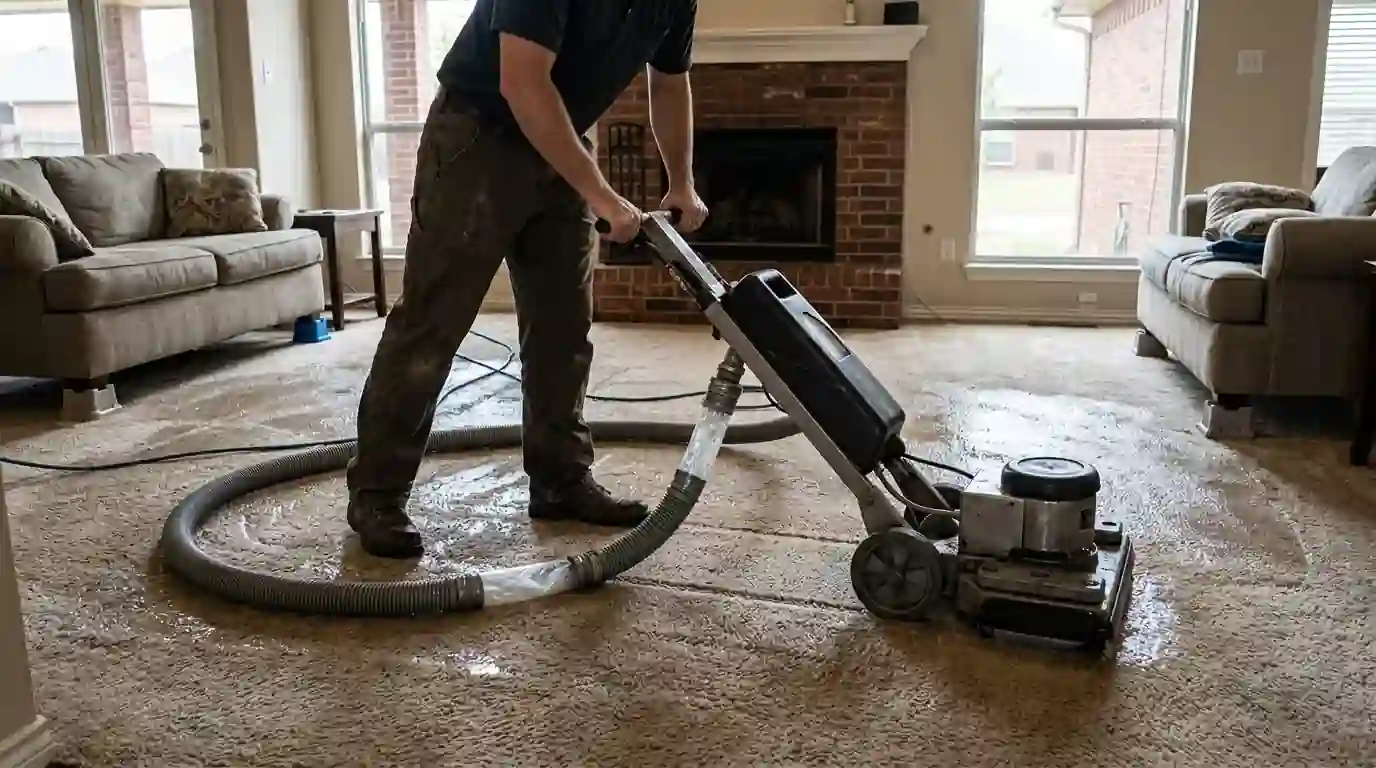
Every job starts with the source. A split supply line, a failed water heater or a roof leak has to be stopped before any drying makes sense. Then we map where the water went, because it wicks up drywall and spreads through carpet pad well past the visible wet spot.
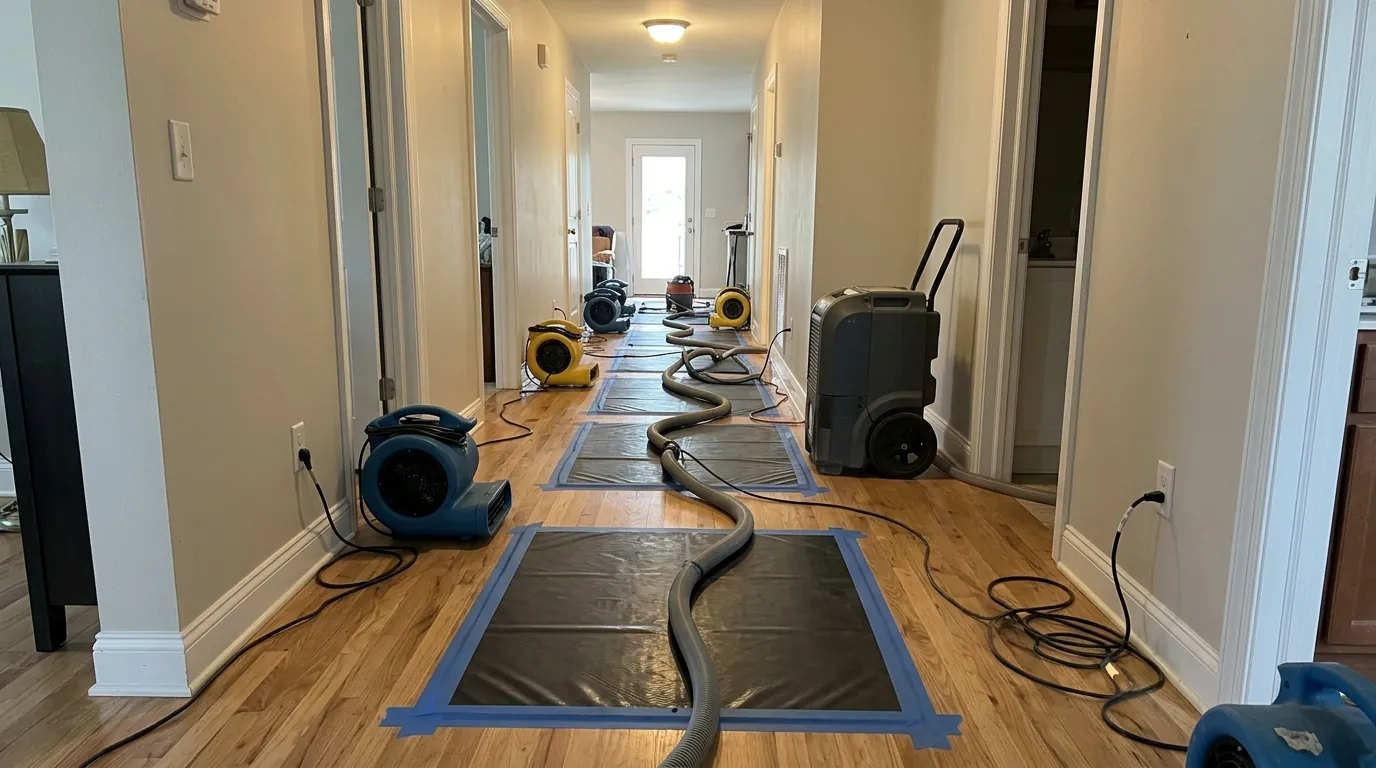
Extraction comes next, using truck-mounted or portable units, followed by air movers and dehumidifiers sized to the room. We check the materials every day with moisture meters and log the readings, so the decision to close a wall or reinstall a floor rests on numbers rather than a guess.
When the readings hit the dry target, the rebuild starts: new drywall where we made flood cuts, new pad and sometimes new carpet, baseboards, trim and paint. Same company, same records, start to finish.
Signs water has spread farther than you think
- Baseboards pulling awaySwollen MDF baseboards or caulk lines that have split usually mean water got into the wall behind them.
- A musty smell a day laterThat smell is moisture sitting somewhere warm. It shows up before any mold you can see.
- Carpet that feels dry but squishesThe face dries first. The pad underneath can stay soaked for days.
- Floors that feel spongy or cuppedHardwood cups and laminate swells at the seams when water gets under it.
Most water jobs fall into three stages, and each one has its own equipment and its own way of going wrong when it is rushed.
Water Extraction
Extraction removes the water that is still liquid: on the floor, in the carpet and in the pad. A weighted extraction tool pulls far more out of carpet than a wet vac ever will. Where the pad is saturated or the water came from a dirty source, we pull the pad and sometimes the carpet so the floor underneath can dry.
HomeGuide puts the average water damage restoration job at $2,000 to $6,000, with the full range running from $150 to $100,000 depending on how far the water spread.
Structural Drying
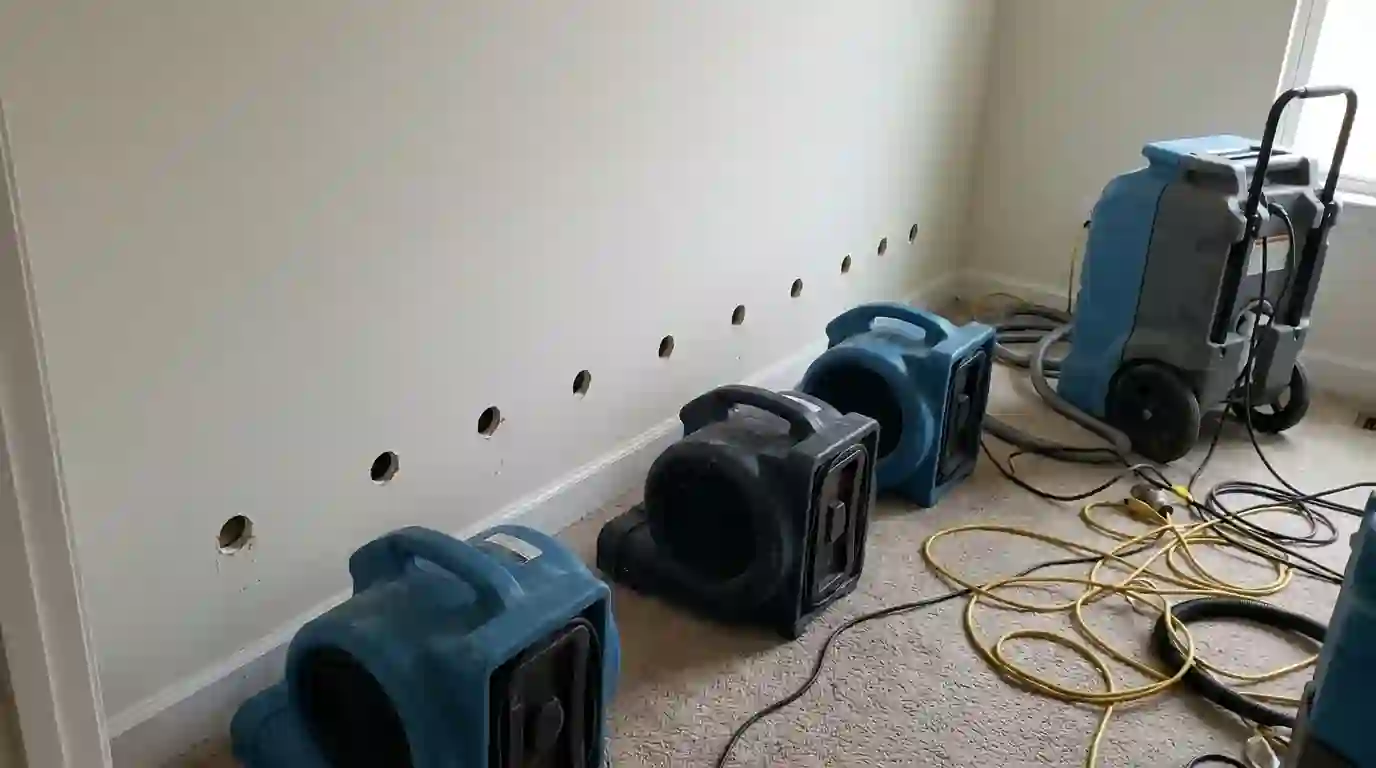
Structural drying is the long part. Air movers push air across wet surfaces while dehumidifiers pull the moisture out of the room, and the setup changes as materials dry. Wall cavities sometimes need small holes at the base so air can reach the inside of the drywall and the bottom plate.
Drying usually takes three to five days for a clean water loss, longer for hardwood or plaster.
Moisture Mapping
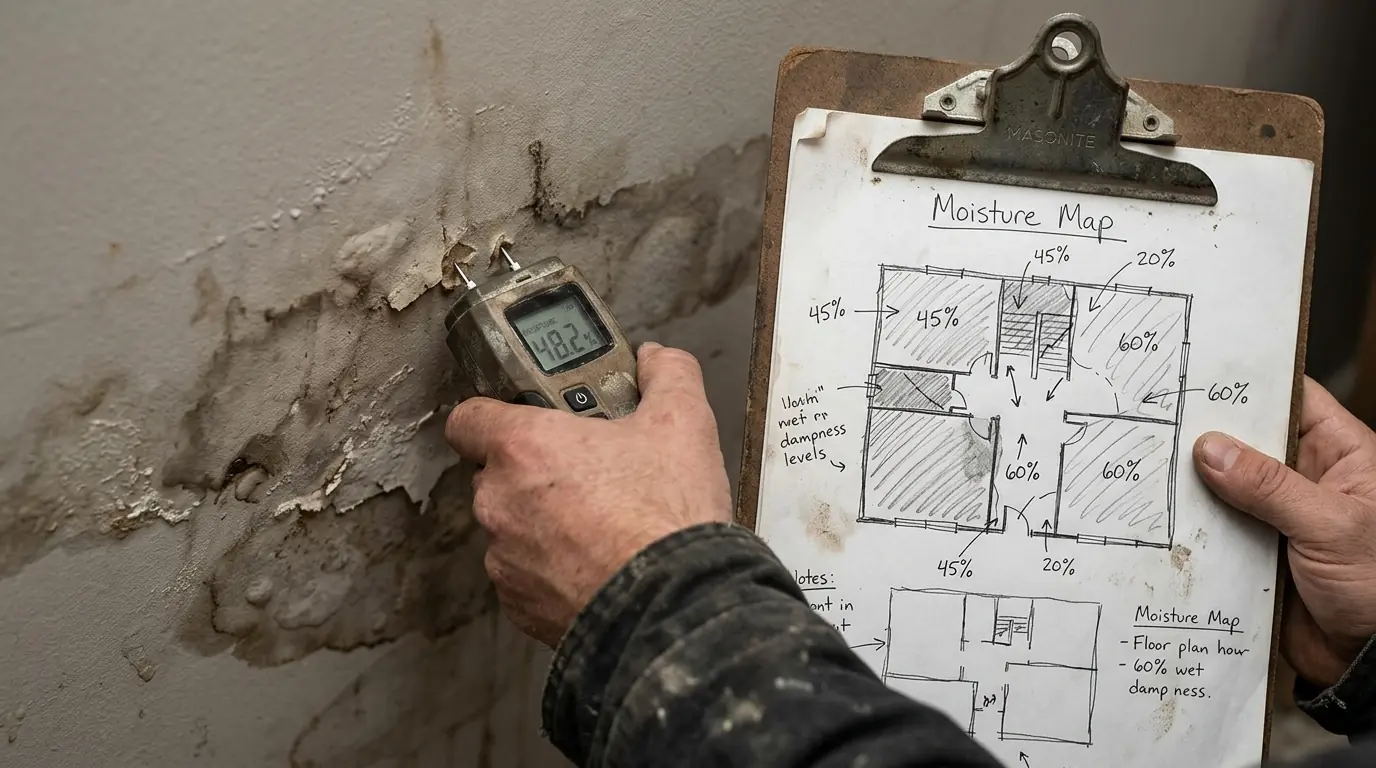
Moisture mapping is how we find the edge of the damage. Pin and pinless meters, plus a thermal camera for cold spots, show where water traveled behind walls and under floors. We mark the readings on a sketch of the room on day one, which also gives your adjuster a dated record.
How long the drying takes in a typical house
A clean water leak caught the same day is often dry in three to five days. Water that sat over a weekend, soaked into hardwood or reached the subfloor can take a week or more, and the rebuild adds time after that.
What happens from the first call to the last coat of paint
- We find and stop the sourceIf the water is still running, we walk you to the shutoff on the phone and confirm the leak is stopped on arrival.
- We document before we touch anythingPhotos of each room, the source and the waterline, plus first moisture readings.
- We extract and set equipmentWater comes out of floors and carpet, then air movers and dehumidifiers go in where the map says they are needed.
- We monitor every dayDaily readings until the materials reach the dry target, with equipment moved as rooms dry out.
- We rebuild and walk it with youDrywall, pad, flooring, trim and paint go back, and you walk the finished rooms with us.
Why water jobs here often start with weather
Oklahoma City averages a little over 36 inches of rain a year under NOAA's 1991 to 2020 normals, but it rarely arrives gently. The evening of May 31, 2013 is the example people here remember: flash flooding killed 13 people in Oklahoma County and knocked out power to at least 100,000 homes and businesses. A storm like that can mean outside water and a dead sump at the same time, so a storm call can need pumping and temporary power before the drying even starts.
What moves the price of a water damage job
No two water jobs cost the same, because the bill follows how far the water went and what it soaked. These are the things that decide it.
- How long the water sat. A leak caught in an hour is a drying job. One that sat over a weekend often means pulled pad, flood cuts and more equipment days.
- Where the water came from. Clean supply water can be dried in place. Sewage or floodwater means removing porous materials, which adds labor and disposal.
- What it soaked. Carpet and drywall dry or replace cheaply. Hardwood, plaster and cabinets cost more to save and more to replace.
- How many rooms and floors. Water that ran through a ceiling into a second room doubles the setup and the rebuild.
- Equipment days. Air movers and dehumidifiers are billed by the day, so the drying time shows up on the invoice.
Published national price ranges
- $1,305 to $5,707, with a national average of $3,455 (per project), water damage restoration. How Much Does Water Damage Restoration Cost? (Bob Vila)
- $2,000 to $6,000 on average; full range $150 to $100,000 (per project), water damage restoration. How Much Does Water Damage Restoration Cost? (2026) (HomeGuide)
These are planning ranges from national cost guides, not our quote. The price for your house depends on the factors above, and we give you a written scope before repair work starts.
Water damage restoration questions we hear in Oklahoma City
For a small spill on tile, yes. Once water has soaked carpet pad or gotten into the bottom of a wall, household fans cannot pull enough moisture out in time, and the EPA advises drying within 24 to 48 hours to prevent mold.
Not always. Drywall that got wet from clean water and dries fast can often stay. We cut it when water came from a dirty source, when insulation behind it is soaked, or when the readings show it will not dry in place.
Sudden leaks like a burst pipe or a failed supply line are often covered, while floodwater from outside usually is not covered by a basic policy. You decide whether to file. If you do, we give your adjuster the photos and moisture logs.
For a clean water loss in a few rooms, most families stay. The equipment is loud and warm. Sewage, heavy contamination or a loss that takes out the kitchen can mean a few nights elsewhere.
We compare readings in the wet areas against a dry reference spot in the same house. When they match, the materials are dry, and that is when the rebuild starts.