
Updated October 2026
Crawl space mold removal in Oklahoma City means cleaning growth from joists, beams and the underside of the subfloor, then fixing the moisture behind it. Bare dirt, a torn vapor barrier, a plumbing leak or poor drainage around the foundation all keep the space damp. Cleaning without fixing the moisture only buys a season or two.
What crawl space mold work involves
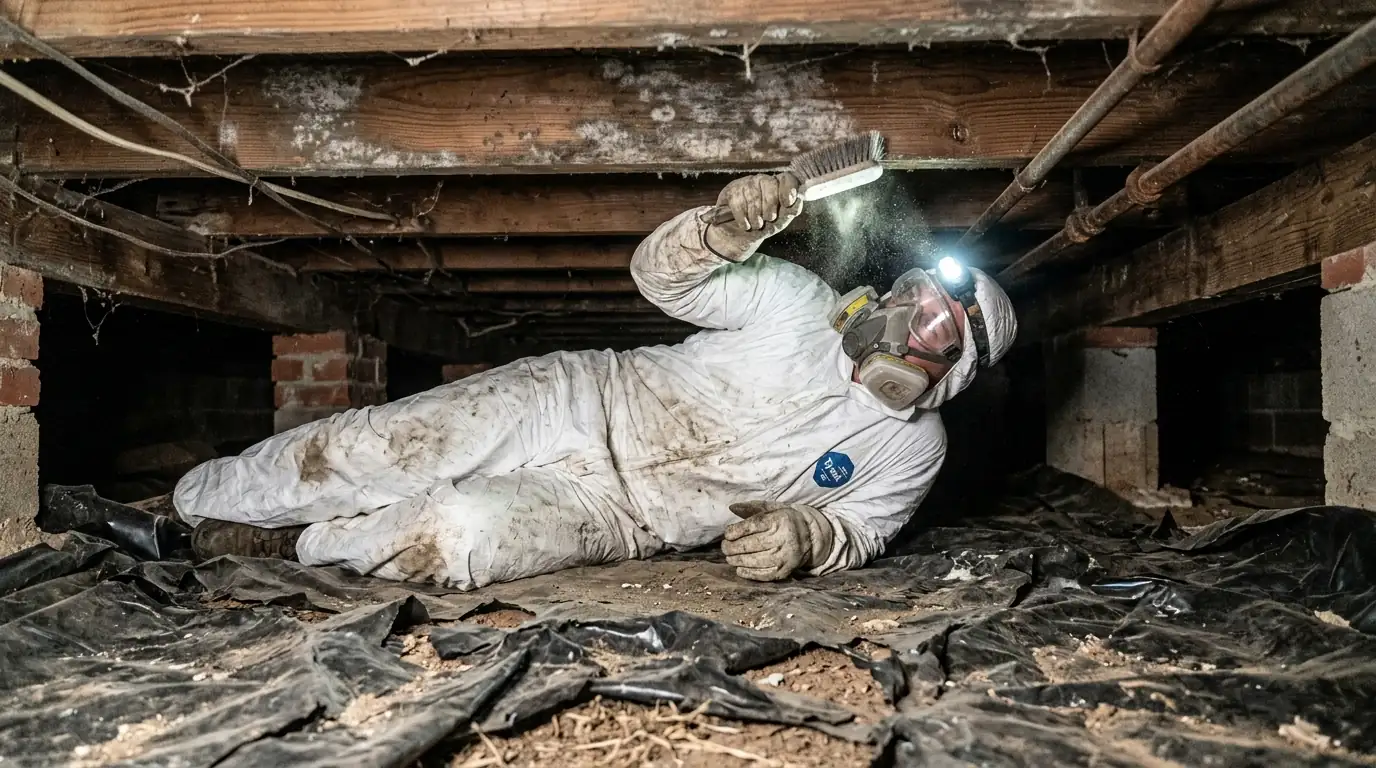
Crawl space mold grows on wood that stays damp: joists, rim boards, beams and the bottom of the subfloor. It looks like white fuzz or dark spotting, and the first sign upstairs is usually a musty smell or cupping floors.
We start by finding the water: a drain line leak, rain running toward the foundation, a gap in the vapor barrier or humid air pouring through vents in summer. Then we remove wet insulation and debris, clean the framing and treat the wood. Each source needs a different fix, so the plan follows the finding.
Last comes the part that keeps it from returning: a sound vapor barrier, sealed gaps and, where it fits the house, a dehumidifier sized to the space.
What moves the cost of crawl space mold removal
Crawl space jobs are priced by the area affected and what it takes to keep the space dry afterward.
- Area affected. Cleaning is priced largely by the framing and subfloor with growth on it.
- Clearance under the house. Low, tight spaces slow cleaning and removal.
- Insulation removal. Wet batts across the whole floor add bagging and disposal.
- Rotted framing. Wood that fails a probe test needs structural repair.
- Vapor barrier scope. Patching a barrier costs far less than a new one up the walls.
Published national price ranges
- $1,500 to $9,000, with a national average of $3,500; $10 to $30 per square foot (per project / per sq ft), mold remediation. Mold Remediation Cost | Mold Removal Cost (Fixr)
These are planning ranges from national cost guides, not our quote. The price for your house depends on the factors above, and we give you a written scope before repair work starts.
Most crawl space mold jobs combine these three kinds of work.
Mold on Joists and Subfloor
Framing that is stained but solid gets cleaned in place: HEPA vacuuming, scrubbing or soda blasting in tight spots, then a treatment on the wood. We probe each joist and the subfloor from below. Wood that has gone soft from rot is beyond cleaning, and the work moves to sistering joists or replacing subfloor sections. Low clearance under a house slows every one of these steps, so we plan the order of work before anyone goes in.
Fixr puts mold remediation at $10 to $30 per square foot, with a national average of $3,500 per project.
Wet Crawl Space Insulation
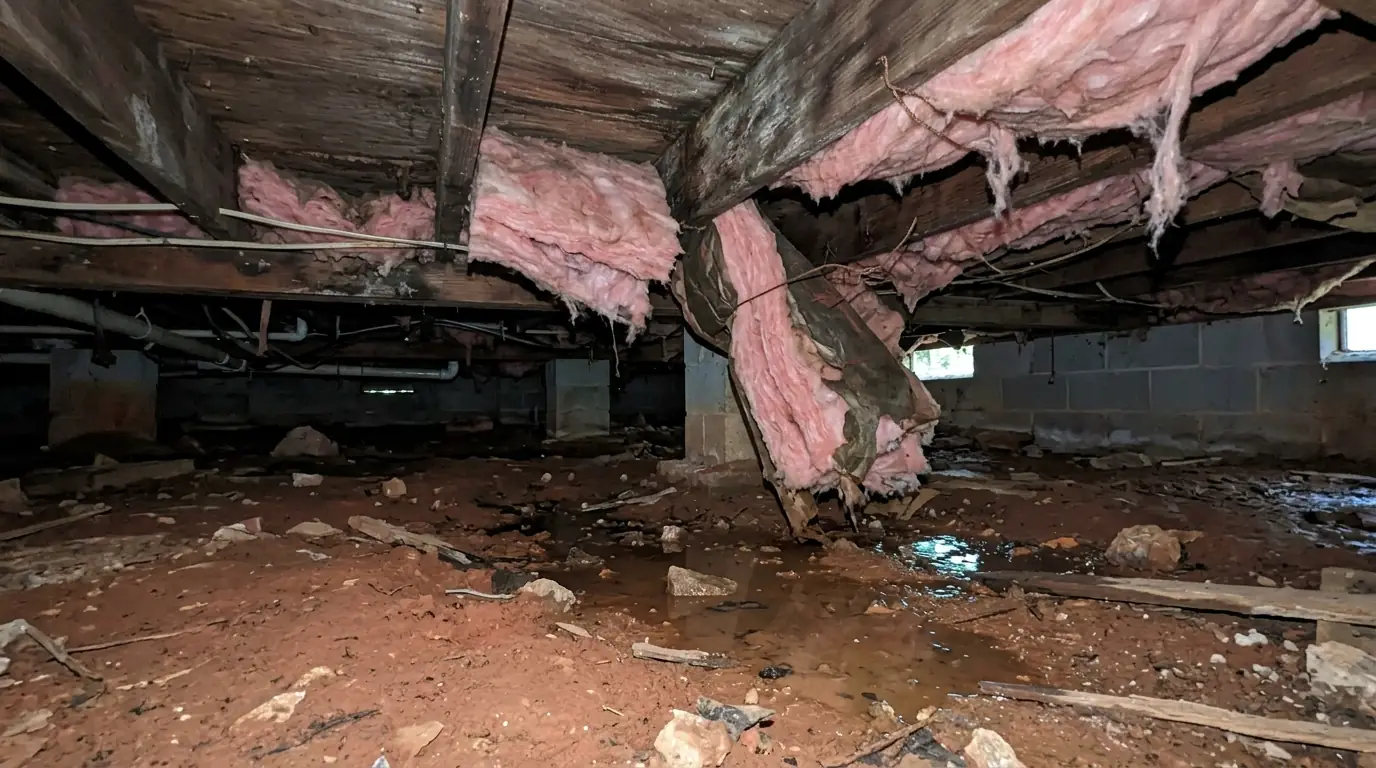
Fiberglass batts between floor joists soak up moisture and sag or fall, and wet batts held against the subfloor keep the wood damp. Once insulation in a crawl space has gotten wet or grown mold, it comes out. We bag it under the house and remove it through the access door. New insulation goes in only after the framing is clean and dry, and only where the plan for the space calls for it.
Vapor Barrier and Drying Corrections
Bare soil releases moisture into the crawl space all year. A heavy plastic vapor barrier, lapped and taped at the seams and run up the foundation walls, cuts that off. We repair or replace torn barriers, seal gaps around piers and pipes, and check that gutters and grading move rain away from the foundation. Some houses also need a dehumidifier sized for the space, draining to a line instead of a bucket.
What a complete crawl space mold scope includes
Quotes vary a lot in what they leave out. A complete scope lists each of these.
- Moisture readings on framing before work starts
- Repair or isolation of plumbing leaks found
- Removal and disposal of wet or moldy insulation
- HEPA vacuuming and cleaning of affected framing
- Probe testing, with rotted sections listed for repair
- Vapor barrier repair or replacement with taped seams
- Final readings showing the framing is dry
Older houses north of downtown and what sits under them
Jefferson Park's National Register nomination says about 80 percent of its properties were built between 1914 and 1931, the oldest around 1905. Edgemere Park's period of significance runs from 1900 to 1949, mainly Bungalow and Craftsman homes. When a house of that age sits over a crawl space, its framing has spent close to a century above soil, through every wet spring Oklahoma City has had. On those homes we look hardest at sill plates and rim joists, where moisture and old repairs tend to meet.
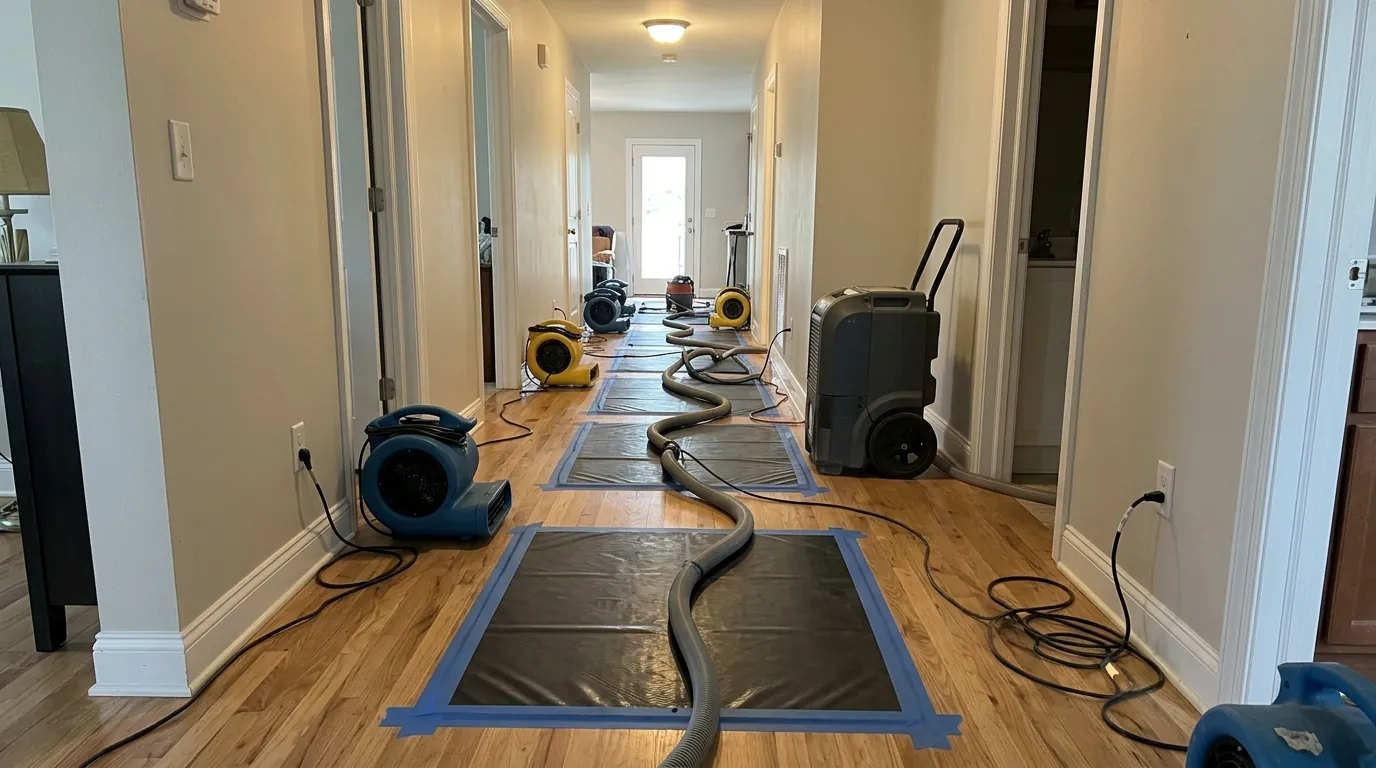
How we clear and dry a crawl space
- We map the moistureReadings on framing plus a look at plumbing, drainage and the barrier.
- We stop active leaksDrain and supply leaks are fixed or isolated first.
- We pull wet materialWet insulation, debris and failed barrier come out in bags.
- We clean and treat the framingHEPA vacuuming, scrubbing or blasting, then treatment.
- We seal and dry the spaceSound barrier, sealed gaps and drying equipment where needed.
Signs of mold under your floors
- Musty smell on the ground floorStrongest in closets and near floor registers, worse on humid days.
- Cupping or soft spotsWood floors that cup or feel soft can mean damp framing below.
- Sweating ductworkCondensation on ducts under the house signals humid air.
- Sagging insulationBatts hanging down or lying on the soil have taken on water.
- Standing water after rainPuddles under the house mean drainage is sending water inward.
Crawl space mold questions we hear
Yes. Air from a crawl space rises into the living space through gaps around pipes, ducts and floor edges. A musty odor on the ground floor is often the first thing homeowners notice.
It depends on the house. Vents let humid summer air in, but closing them without a vapor barrier and a drying plan can trap moisture instead. We look at the whole space before recommending it.
Almost always. Efflorescence, the white mineral salt left when water evaporates, forms on concrete and block, not on wood. White fuzz growing on a joist is mold and should be cleaned once the moisture is fixed.
We probe joists, beams and subfloor with an awl. Wood that resists is sound even if stained. Wood the tip sinks into has rot and needs repair or reinforcement before the floor above can be trusted.
It comes back if the moisture does. That is why the work ends with the vapor barrier, sealed gaps and drainage checks rather than with cleaning. Clean, dry framing over a sound barrier stays clean.