
Updated October 2026
Mold remediation in Oklahoma City means fixing the moisture source, sealing off the affected area, removing moldy porous materials like drywall and insulation, and cleaning the framing behind them. Killing mold with bleach is not the goal. Removing it is, because dead mold can still trigger allergic reactions.
What happens during a mold job
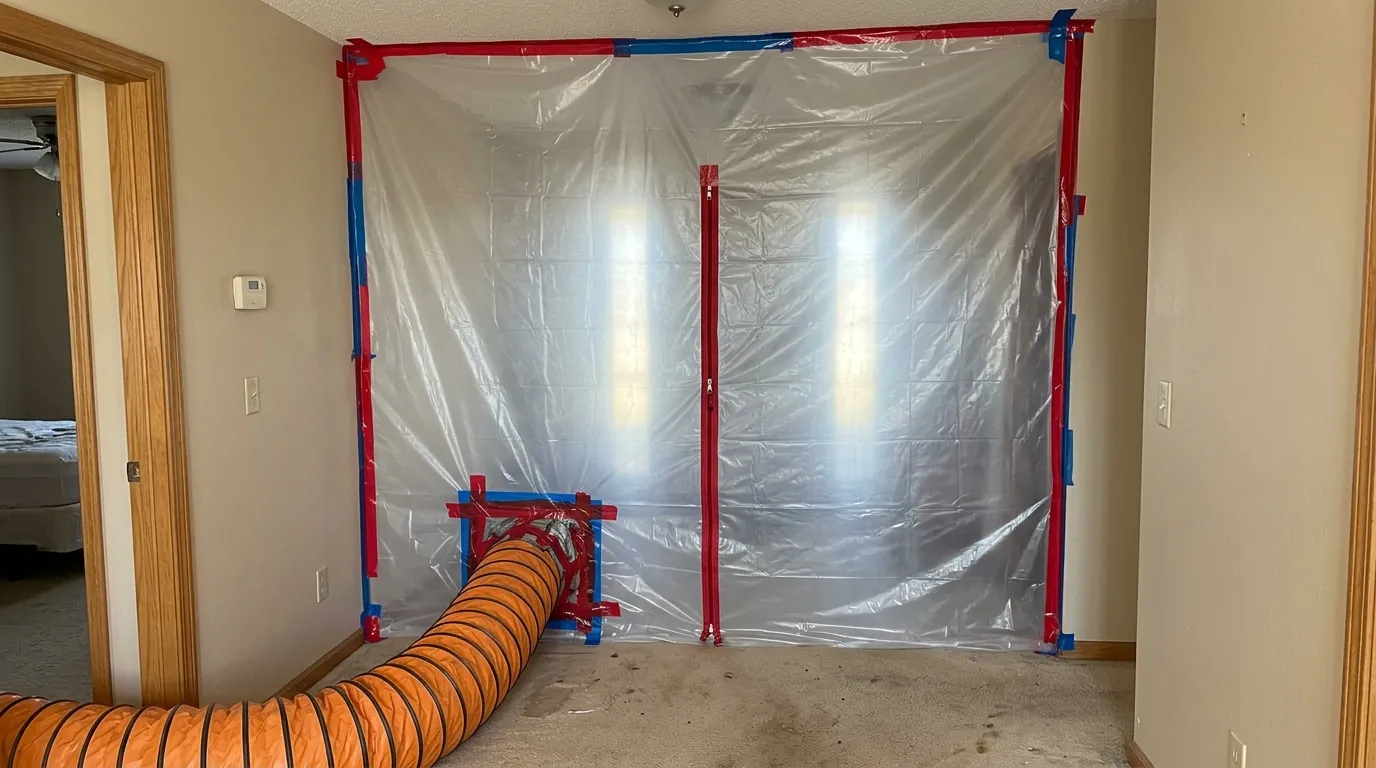
Every mold job starts by finding the water: a slow plumbing leak, a roof leak, condensation, or an old leak that never fully dried. Moisture meters and a thermal camera trace it, because the visible patch is often the edge of a larger wet area.
Then we contain the area with plastic sheeting and a zip door and run a HEPA air scrubber to hold negative pressure, so spores move into the filter rather than the rest of the house. Porous materials with growth are bagged and removed.
Framing gets HEPA vacuumed, scrubbed and dried, then drywall, insulation and paint go back once the readings confirm it is dry. If you want independent proof before the walls close, mold testing can confirm the result.
What drives the cost of mold remediation
Mold jobs are priced by area, access and how much has to come out.
- Size of the area. Cost scales with square footage, and hidden growth often makes the area larger than it looks.
- Where it is. Open walls are simpler than attics, crawl spaces or HVAC systems.
- What it grew on. Framing can be cleaned. Drywall, insulation and pad get removed and replaced.
- The moisture repair. The leak or ventilation problem has to be fixed, and that can be its own job.
- Rebuild after removal. New drywall, insulation, texture and paint add to the total.
Published national price ranges
- $1,200-$3,750, with an average price of $2,300 (per project), mold remediation. How Much Does Mold Remediation Cost? (2026 Guide) (This Old House)
These are planning ranges from national cost guides, not our quote. The price for your house depends on the factors above, and we give you a written scope before repair work starts.
Mold you can clean yourself and mold that needs us
Small surface growth is often a homeowner job. Here is where it crosses over.
| Task | What a homeowner can do | When it needs us |
|---|---|---|
| Spots on grout or caulk | Scrub with detergent, dry the area and run the exhaust fan. | It returns within weeks, or the grout crumbles. |
| A small patch on drywall | On a dry wall, clean it wearing gloves and an N95 mask. | The drywall is soft, stained through or damp. |
| Mold under a kitchen sink | Fix the leak, dry the cabinet and clean the surface. | The cabinet floor is swollen or growth reaches the wall. |
| Mold on window sills | Wipe condensation daily and clean spots with detergent. | Growth spreads into the wall or the sill is soft. |
Most mold jobs fall into one of three types, and each one has its own method.
Containment and Air Filtration
Disturbing mold releases spores, so containment comes before removal. Plastic sheeting seals the work area, a zip door controls entry, and a HEPA air scrubber exhausts air so the pressure inside stays lower than the rest of the house. HVAC registers in the area get sealed so the system cannot carry spores out. The setup stays up until the area is cleaned, dried and checked, which keeps the rest of the house out of it.
Fixr puts mold remediation at $1,500 to $9,000, with a national average of $3,500.
Removing Moldy Building Materials
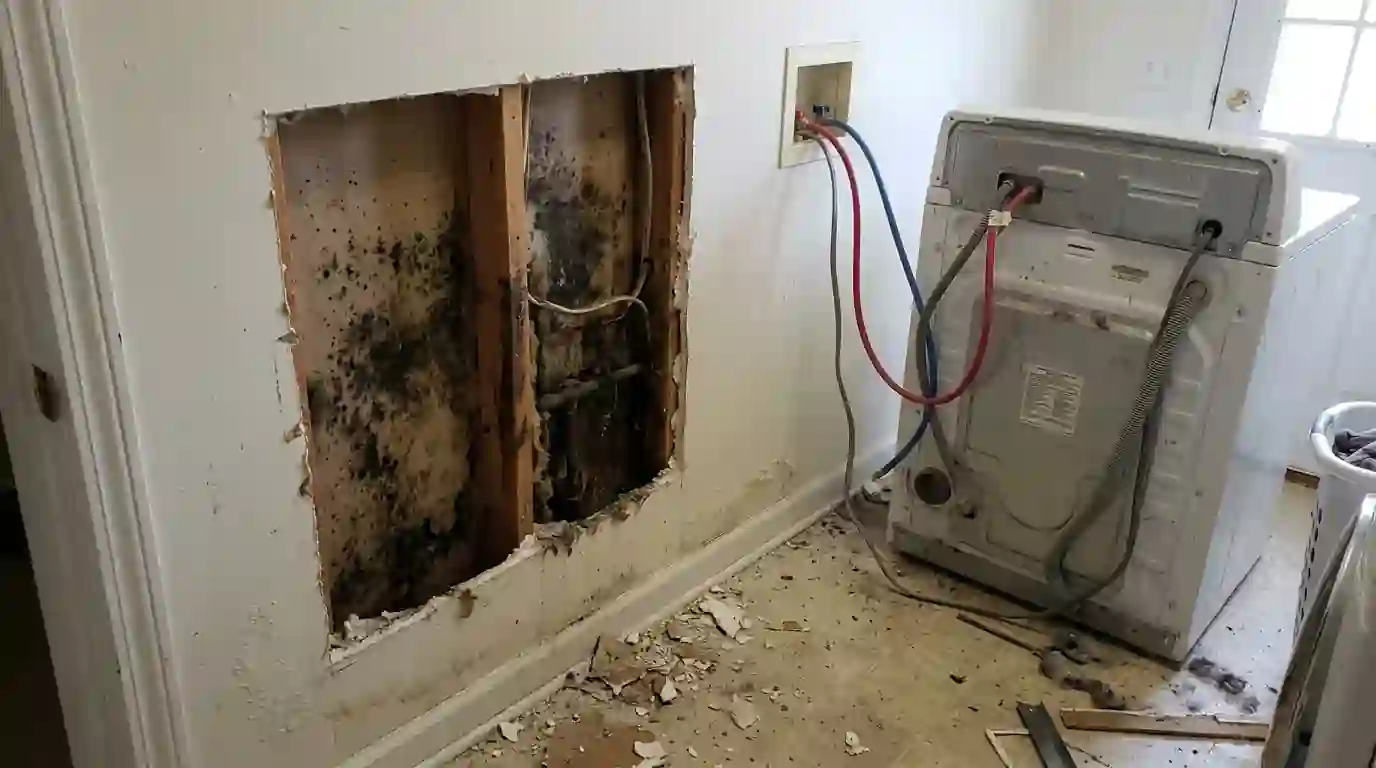
Drywall, insulation, carpet pad and ceiling tile with growth cannot be cleaned reliably, so they come out. We cut drywall well past the visible growth, bag it inside the containment and carry it out sealed. Studs, joists and subfloor are HEPA vacuumed and scrubbed until clean. Wood that has gone soft from rot gets replaced as part of the repair rather than cleaned, and new framing goes in dry before anything closes.
Bathroom and Laundry Mold
Bathrooms and laundry rooms grow mold from constant humidity and small leaks: a failed tub seal, a worn toilet wax ring, a washer drain line. Surface spots on tile and grout clean up. Growth behind the tile, inside the wall or under the vinyl usually means opening things up, fixing the leak and replacing the wet materials. An exhaust fan that does not move air is part of the fix.
Where the EPA draws the line on mold you can clean yourself
EPA guidance says that if a moldy area is less than about 10 square feet, homeowners can usually handle the cleanup themselves, while growth beyond that calls for professional remediation guidance. We use the same line when Oklahoma City homeowners call. A few spots on a bathroom ceiling are a weekend job with a scrub brush and a fan. A patch the size of a door, or mold that keeps coming back, means the water source and the hidden side of the wall need a look.
How a mold remediation runs, step by step
- We find the moistureMeters and a thermal camera trace the water source and the full wet area.
- We set containmentPlastic barriers, a zip door and a HEPA air scrubber holding negative pressure.
- We remove moldy materialsDrywall, insulation and pad with growth are cut out, bagged and carried out sealed.
- We clean and dryFraming is HEPA vacuumed, scrubbed and dried to normal moisture readings.
- We rebuildOnce the area is dry and clean, drywall, insulation and paint go back.
Signs of mold you may not see yet
- A musty smell in one roomOdor often shows up before visible growth, from inside a wall or under flooring.
- Peeling or bubbling paintMoisture behind paint lifts it, and mold often grows on the drywall paper underneath.
- Dark spots in ceiling cornersCool corners with poor airflow collect condensation and grow mold first.
- Soft or stained baseboardsSwelling at floor level points to a slow leak behind the wall.
- Symptoms that ease outsideStuffiness that improves when you leave the house can point to indoor growth.
Mold remediation questions Oklahoma City homeowners ask
Bleach can lighten mold on hard surfaces like tile, but it does not reach growth inside drywall or wood. Dead mold can still cause allergic reactions, so the goal is removing it and fixing the moisture.
Usually, yes. Containment and negative pressure keep the work area separate from the rest of the house. People with asthma, allergies or weakened immune systems may prefer to stay elsewhere on removal days.
Not when growth is visible. Testing helps when you smell mold but cannot find it, or when you want proof after the work that the area is back to normal. Visible growth simply needs removal.
Not if the moisture is fixed. Mold returns when the leak, condensation or humidity that fed it is still there, which is why the water source repair is part of every remediation scope we write.
Less than most people expect. Any mold growing indoors gets handled the same way: removed, with the moisture behind it fixed. Testing can name the species, but it rarely changes the cleanup.