
Updated October 2026
Damage assessment in Oklahoma City means documenting what happened before cleanup changes the evidence: dated photos, moisture readings and a written scope of repairs. You decide whether to file a claim, and your insurer decides coverage. We do not bill insurers directly or promise approval, but we give you and your adjuster a clear record to work from.
What a damage assessment gives you and your adjuster
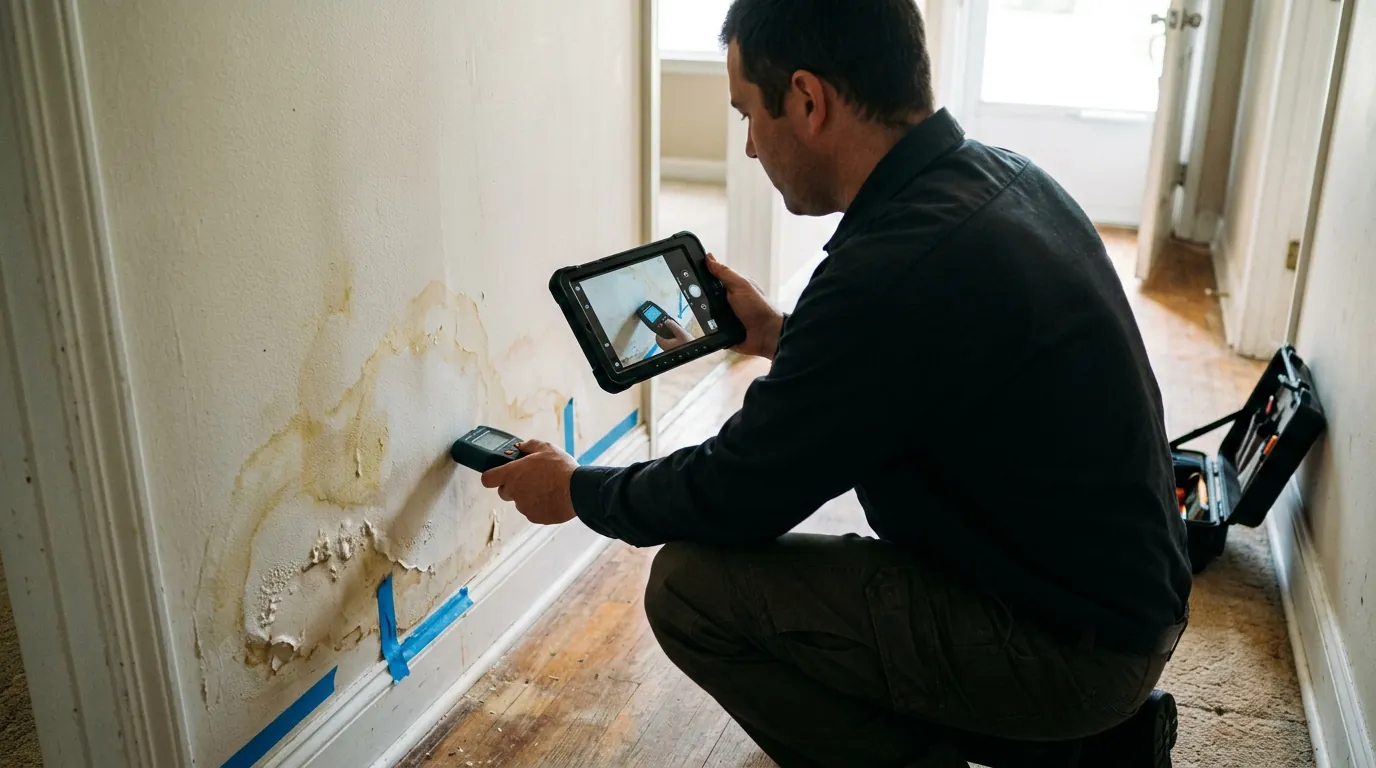
After a leak, fire or storm, the first hours change the evidence. Water spreads, wet drywall gets cut out and tarps go on. If nobody records the damage before that, the claim rests on memory and a few phone photos.
Our assessment covers the whole affected area, not only the obvious spot. We photograph each room wide and close, take moisture readings past the visible edge, check attics and crawl spaces where the damage could have traveled, and note the source and cause where we can identify it.
Everything goes into a file with dates and a line-item scope: what has to be removed, what can be dried or cleaned, and what has to be rebuilt. You keep a copy, and with your permission we share it with your adjuster.
What a useful claim file should contain
Adjusters review a lot of files. These are the items that make one easy to follow and hard to dispute.
- Date and time the damage was found, and what caused it
- Wide and close photos of every affected room before cleanup
- Photos of the source, such as the failed pipe or roof opening
- Moisture readings with locations and a dry reference point
- A list of removed materials with quantities
- A line-item scope of repairs by room
- Receipts for emergency costs like tarps or hotel stays
- Model and serial numbers of damaged appliances
The documentation we produce comes in three parts, and each answers a different question an adjuster will ask.
Photo and Video Logs
Photos are taken before anything is moved or removed, room by room, with wide shots for context and close shots of the damage. We photograph the source, the waterline or burn pattern, model numbers on damaged appliances and anything that will be thrown out. Video walkthroughs help adjusters who cannot visit right away. Every image is dated and organized by room, so it can be matched to the scope line it supports.
Daily Moisture Logs
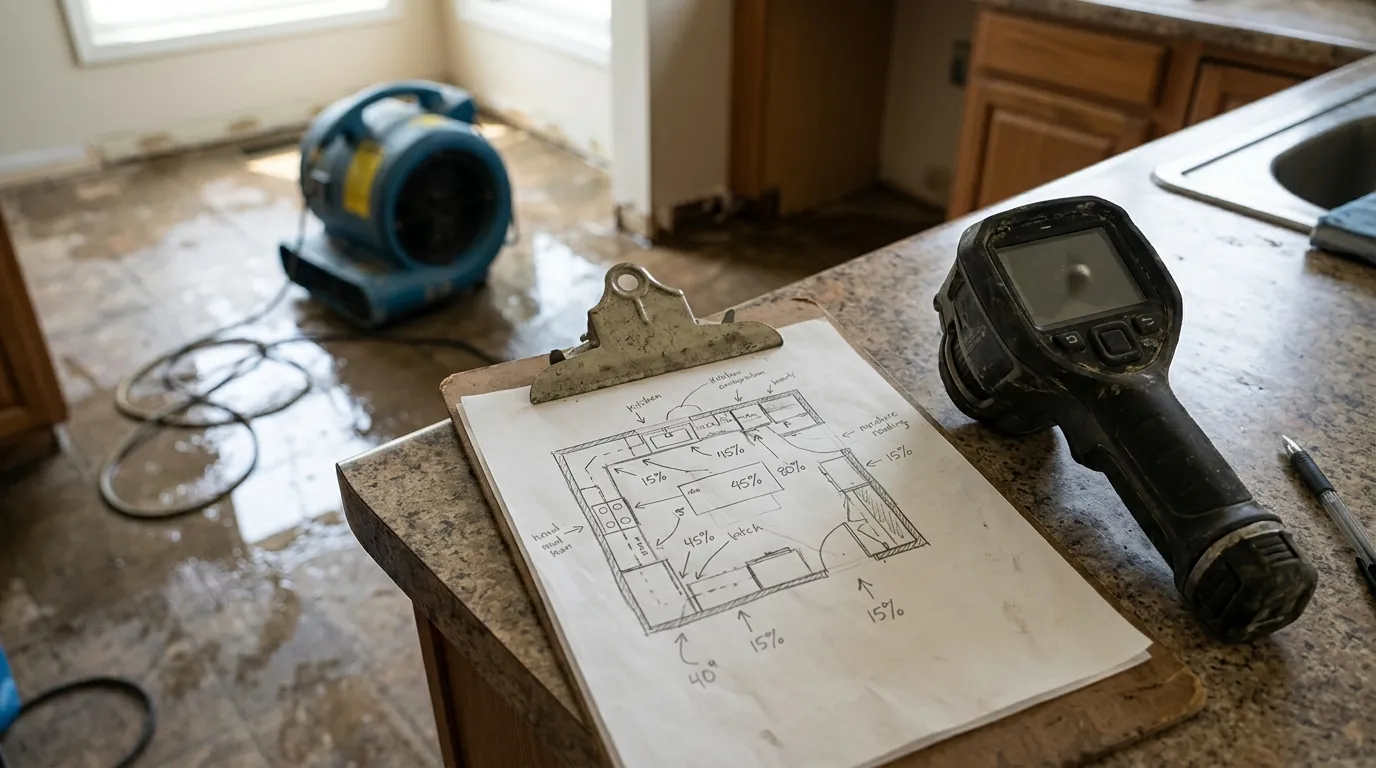
On water losses, moisture readings are the evidence for drying. We record readings at marked points on day one and every day after, along with a dry reference reading from an unaffected area of the same house.
The log shows when each area reached a dry target, which explains why equipment stayed as long as it did and why some materials had to come out.
Line-Item Scope of Repairs
The scope lists each repair as its own line: square feet of drywall to remove and replace, linear feet of baseboard, carpet pad, paint by room, framing repairs and cleaning. Adjusters compare scopes line by line, so a detailed one is easier to review than a single total. It also helps you compare our numbers with another contractor's on the same items.
Why documentation matters for Oklahoma claims
Claims are common enough here that the paperwork carries real weight. Citing a 2025 Bankrate report, The Oklahoman said Oklahoma ranks 47th of 50 states for homeowners insurance rates, and the state insurance commissioner pointed mainly to extreme weather, high claim frequency and higher repair costs. For a homeowner in Oklahoma City, that means adjusters may be working through many files at once after a big storm. A file that already holds dated photos, moisture readings and a line-item scope gives them something concrete to review instead of a phone description of a wet ceiling.
How long documentation takes, and why to start early
The first photo set and moisture readings usually take an hour or two for a typical water or storm loss, done on the first visit before cleanup starts. The full line-item scope follows once the extent is clear, often within a few days.
On water jobs, the moisture log keeps going until the house reaches a dry target, so the record grows with the job.
What affects the cost of a damage assessment
An assessment is usually part of a larger repair job, but its size depends on the loss. These are the factors that change the work involved.
- Size of the affected area. One wet bathroom takes far less documentation than a fire that touched every room.
- Hidden spaces to check. Attics, crawl spaces and wall cavities take time and sometimes small inspection holes.
- Type of damage. Water losses need daily moisture logs. Fire and storm losses need more photo and contents records.
- Contents inventory. Listing damaged furniture, appliances and belongings adds time beyond the structure itself.
- Revisions and supplements. Damage found after tear-out often means updating the scope with new photos.
How we document damage from the first visit to the final scope
- We record before touching anythingWide and close photos of every affected room, the source and the extent of damage.
- We measure past the visible edgeMoisture readings and a thermal camera show where water traveled behind walls and under floors.
- We check hidden spacesAttics, crawl spaces and cabinets get looked at, since damage often travels there first.
- We write the line-item scopeEach repair is listed by quantity and room, with the photo that supports it.
- We update as work reveals moreIf tear-out uncovers more damage, we photograph it and add it before closing anything up.
Questions about damage assessment and claim records
If water is still spreading or the roof is open, stopping further damage comes first, and most policies expect you to do that. Take your own photos, then call. Many homeowners have us document the damage before they decide whether a claim is worth filing.
We give your adjuster the photos, moisture logs and scope, and we answer their questions about the repairs. The claim stays between you and your insurer. We do not bill insurers directly, and we cannot promise what they will approve.
Compare the two line by line. Differences usually come from missed areas, different quantities or items left out. We can show the photos and readings behind each line, and you can ask your adjuster to review those items.
Sometimes not. If the repair is close to your deductible, a claim may not pay much and can still go on your record. A written scope tells you roughly what the repair involves, which helps you make that call before filing.
Yes, though the record is less complete than one made on day one. We photograph what is there now, take moisture readings and note any repairs already made. Your own photos and receipts from the time of the damage help fill in the gaps.