
Updated October 2026
Drywall replacement after damage in Oklahoma City starts once drying is finished and moisture readings confirm the framing is dry. Closing a wall over wet studs traps moisture behind new board. We cut back to sound material, hang new drywall, tape, match the existing texture and prime with a stain blocker before paint.
What happens to a wall after the water or smoke is gone
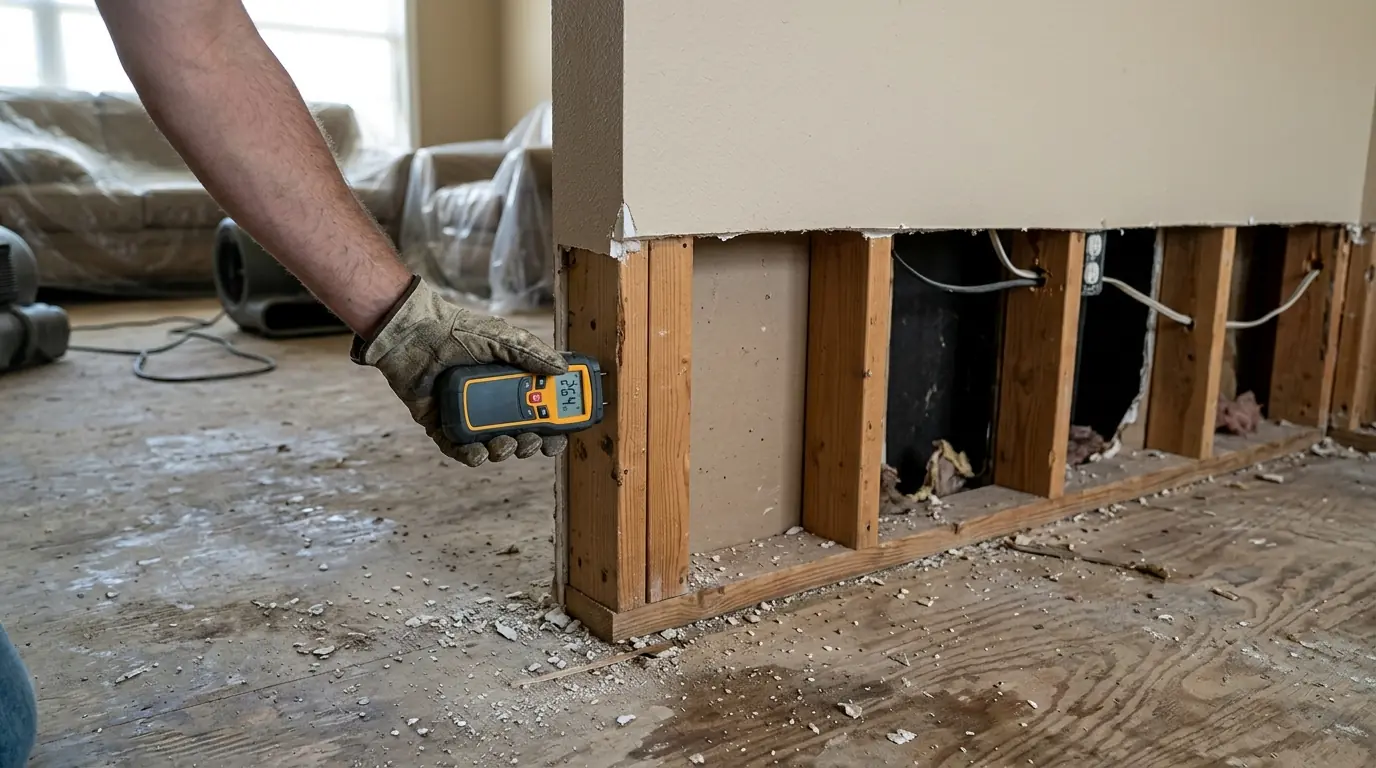
Drywall is gypsum between paper faces. Wet it long enough and the gypsum softens, the paper delaminates and the back side can grow mold. Smoke leaves soot and odor in the paper, and heat can crack the joints. Some of that can be sealed. Much of it has to be replaced, and guessing wrong means doing the wall twice.
We cut damaged board back to a level line above the waterline on walls, or out to the framing on ceilings. New board goes in with screws, the joints get taped and coated three times, and we feather the edges onto the old wall.
The part people notice is the finish. Texture, sheen and color have to match, or the patch shows in raking light from a window.
What changes the cost of drywall replacement
Drywall pricing follows the area replaced and how much finishing it takes to hide the repair.
- Square footage replaced. A two-foot flood cut costs far less than full-height walls.
- Ceilings versus walls. Ceiling board is heavier overhead work.
- Texture type. Hand textures take more skilled labor to match.
- Paint scope. An even sheen may mean repainting the whole wall or room.
- Stain sealing. Shellac or oil-based primers add a coat and drying time.
Published national price ranges
- Drywall replacement (including removal) $2 to $6 per square foot (per sq ft), drywall repair. How Much Does It Cost to Repair a Burst Pipe? (2026) (HomeGuide)
These are planning ranges from national cost guides, not our quote. The price for your house depends on the factors above, and we give you a written scope before repair work starts.
Drywall repairs you can do and the ones to leave to us
Small cosmetic repairs are weekend work. Anything tied to water, smoke or mold is a different job.
| Task | What a homeowner can do | When it needs us |
|---|---|---|
| Nail pops and dings | Reset the fastener, skim and touch up. | Rarely, unless they appeared after a leak. |
| A dry water stain | Seal with stain-blocking primer once the leak is fixed. | The board is soft or the stain keeps growing. |
| A fist-sized hole | Use a patch kit or a backed piece of board. | The cavity behind it is still wet. |
| Wall or ceiling replacement | Clear the room and protect furniture. | Anything larger than a sheet, any ceiling, or board near smoke or mold. |
Drywall work after damage falls into three patterns, each with its own way of going wrong.
Flood Cuts
A flood cut removes the bottom of the wall in a straight line above the waterline, often at two or four feet so standard sheets fit back cleanly. It opens the cavity so wet insulation can come out and the studs and bottom plate can dry. We make the cut only after moisture readings show how high the water wicked. Cutting too low leaves wet board behind, and cutting too high adds work for nothing.
HomeGuide puts drywall replacement, including removal, at $2 to $6 per square foot.
Water-Stained Walls
A brown ring on a wall or ceiling does not always mean replacement. If the board is firm and dry and the leak has been fixed, a shellac or oil-based stain-blocking primer seals the stain before paint. Latex paint alone lets it bleed back through within days. Board that is soft, sagging, peeling at the paper or still reading wet gets cut out instead. We test before deciding, so replacement happens only where needed.
Texture Matching
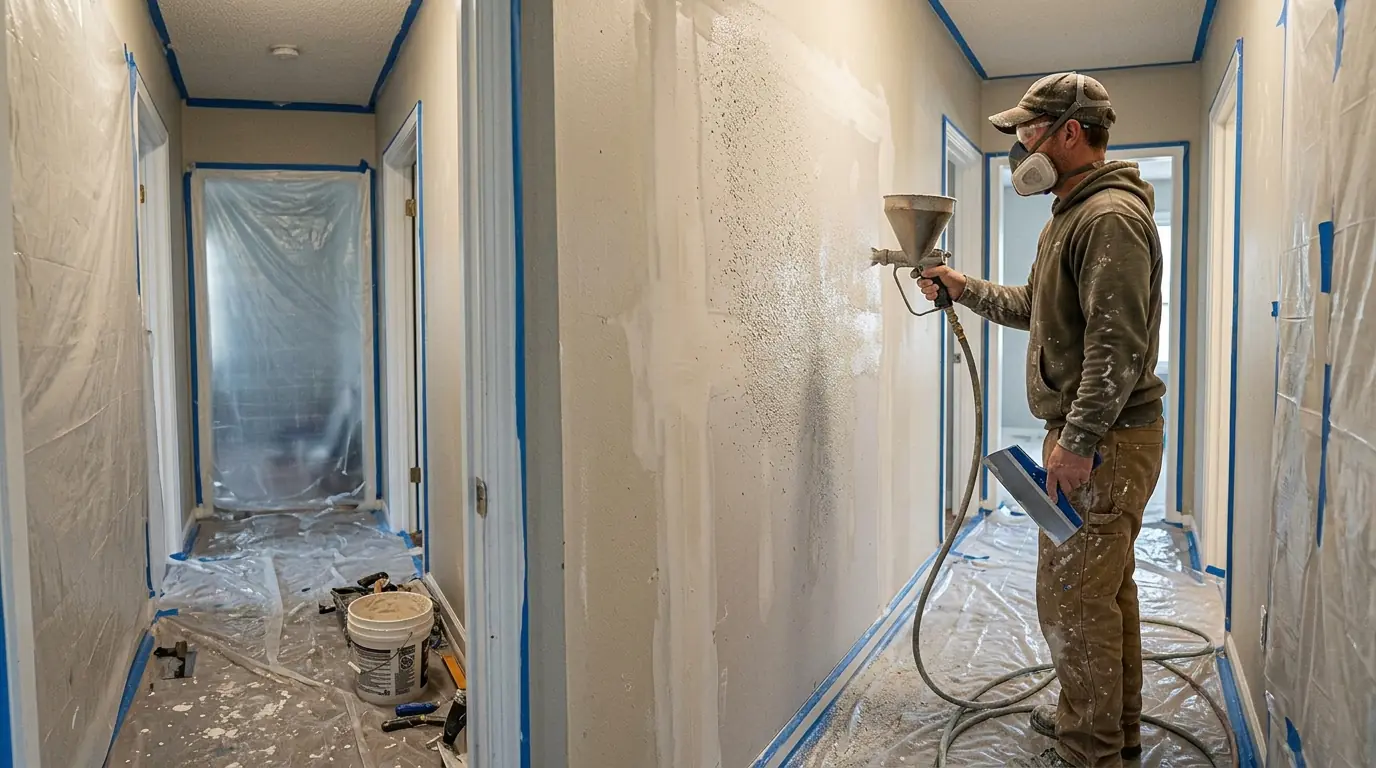
Most walls carry some texture, usually orange peel, knockdown or a hand-applied finish. We match by spraying test boards, adjusting the mix and tip size, and comparing them in the light the room actually gets. Hand textures are reproduced by hand, with the same tools. When a repair lands in the middle of a large wall, we often texture and paint corner to corner so the sheen reads evenly across the whole surface.
Matching walls across Oklahoma City's housing stock
The Census Bureau's 2024 estimates count 314,255 housing units in Oklahoma City, with walls ranging from recent drywall to finishes several generations old. In Gatewood, platted in 1922 with most homes built during the oil boom of the 1920s, a repaired section sits next to surfaces that may have been patched and repainted many times. So we test the existing wall before choosing compound and primer, and match whatever finish is already there, troweled by hand or sprayed.
Brands we install on this work
For this work we hang USG Sheetrock board, seal stains with Zinsser primers and finish with Sherwin-Williams or Benjamin Moore paint matched to your walls.
Materials we install on rebuilds and roof repairs
Steps from open wall to finished paint
- We confirm the framing is dryReadings on studs and plates before new board goes up.
- We cut back to sound boardLevel cuts at the right height so sheets fit cleanly.
- We hang, tape and coatScrewed board, taped joints, three coats sanded between.
- We match the textureTest boards first, then texture blended past the repair.
- We prime and paintStain-blocking primer where needed, then matched paint.
How long drywall replacement takes
Hanging the board is fast. The finishing takes the time, because each coat of compound has to dry before the next. A single room with a flood cut usually runs three to five days from first cut to final paint, longer in humid weather or when texture is built up in layers.
Drywall repair questions after a leak or fire
Sometimes. Board wet from clean water that dried quickly and stayed firm can remain once readings confirm it is dry. Board that sat wet for days, touched dirty water or has peeling paper usually needs replacement.
Water stains carry minerals and tannins that bleed through latex paint, often within a day or two. A stain-blocking primer seals them first. If the board under the stain is soft, primer only hides a returning problem.
Each coat of joint compound has to dry before the next, and humidity slows that. A typical wall repair takes two to four days from hanging to primer. Quick-setting compound can shorten that on small patches.
It should not, if texture and sheen match. Most visible patches come from mismatched texture or paint touched up only on the patch. We blend texture past the repair and paint to a corner.
If it got wet, yes. Wet batts behind a flood cut come out so the cavity can dry, and new insulation goes in before the board. Insulation that stayed dry can remain in place.