
Updated October 2026
Fire damage restoration in Oklahoma City has three parts: securing the house, cleaning or removing what fire, smoke and water touched, and rebuilding. Soot is acidic and starts staining surfaces within days, and the water used to fight the fire needs drying like any other water loss, so the first week matters most.
Securing, sorting and rebuilding after a fire
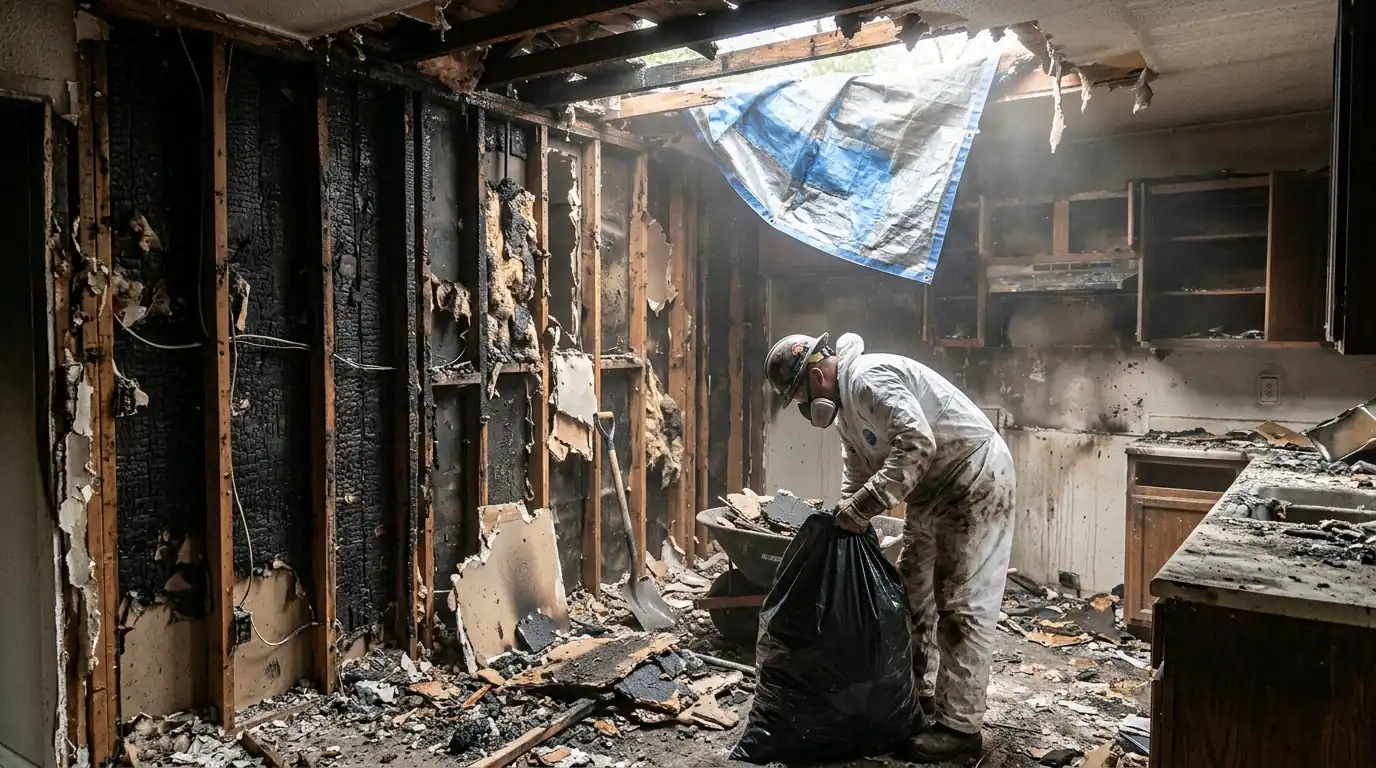
The first visit is about stopping more damage. We board the openings, tarp the roof where it burned through and start pulling out the water left by the hoses. Then we document every room before anything is moved, because the claim depends on it.
Next comes sorting. Charred framing, insulation and drywall come out. Surfaces that only took smoke are cleaned with dry chemical sponges, degreasers or HEPA vacuums, depending on the residue. Contents worth saving are packed out and cleaned. Smoke odor in the framing is sealed with a shellac-based primer before walls go back.
The rebuild covers framing, roofing, drywall, cabinets, flooring and paint. One scope and one set of records run from the first photo to the final walk-through.
Where the fire started changes what the job looks like, and every fire leaves water behind.
Structure Fires
A fire in a living space burns contents and framing in the room where it started and pushes smoke and heat through the rest of the house. Rooms far from the flames can still need cleaning or full drywall replacement. We remove burned material back to sound wood, clean or replace framing, and treat every room the smoke reached, not only the one that burned. Closets and cabinet interiors get checked too.
HomeAdvisor puts the normal range for fire and smoke damage repair at $3,083 to $52,031, with an average of $27,477.
Garage and Attic Fires
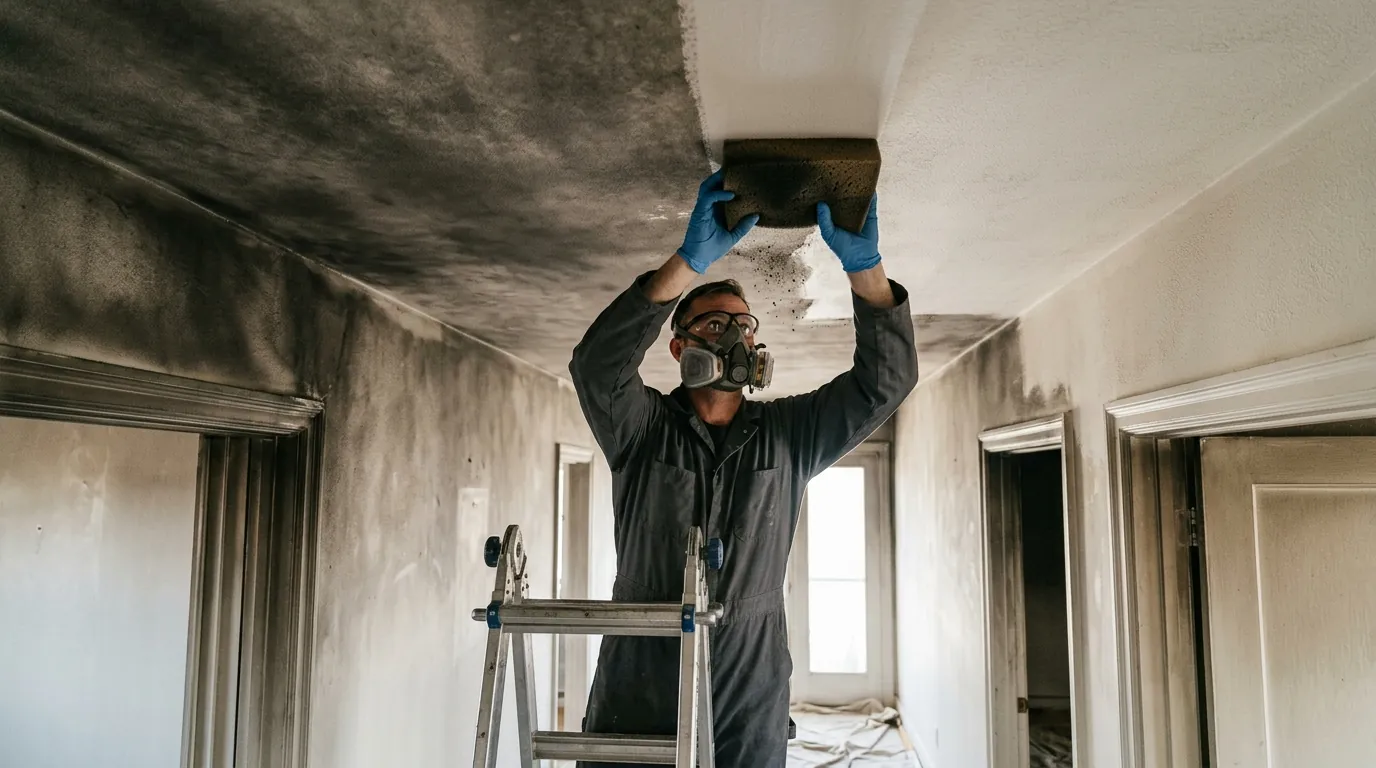
Garage fires burn hot because of fuel, chemicals and vehicles, and smoke reaches the house through the shared wall and the attic. Attic fires often start with wiring or a lightning strike and burn up through the roof deck. Both usually mean replacing roof framing, decking and insulation, with a tarp over the opening until the roof is rebuilt. Anything stored in the garage is sorted for cleaning or disposal.
HomeGuide puts fire damage restoration at $4 to $7 per square foot, or $8,000 to $18,000 on average.
Water Left Behind by Firefighting
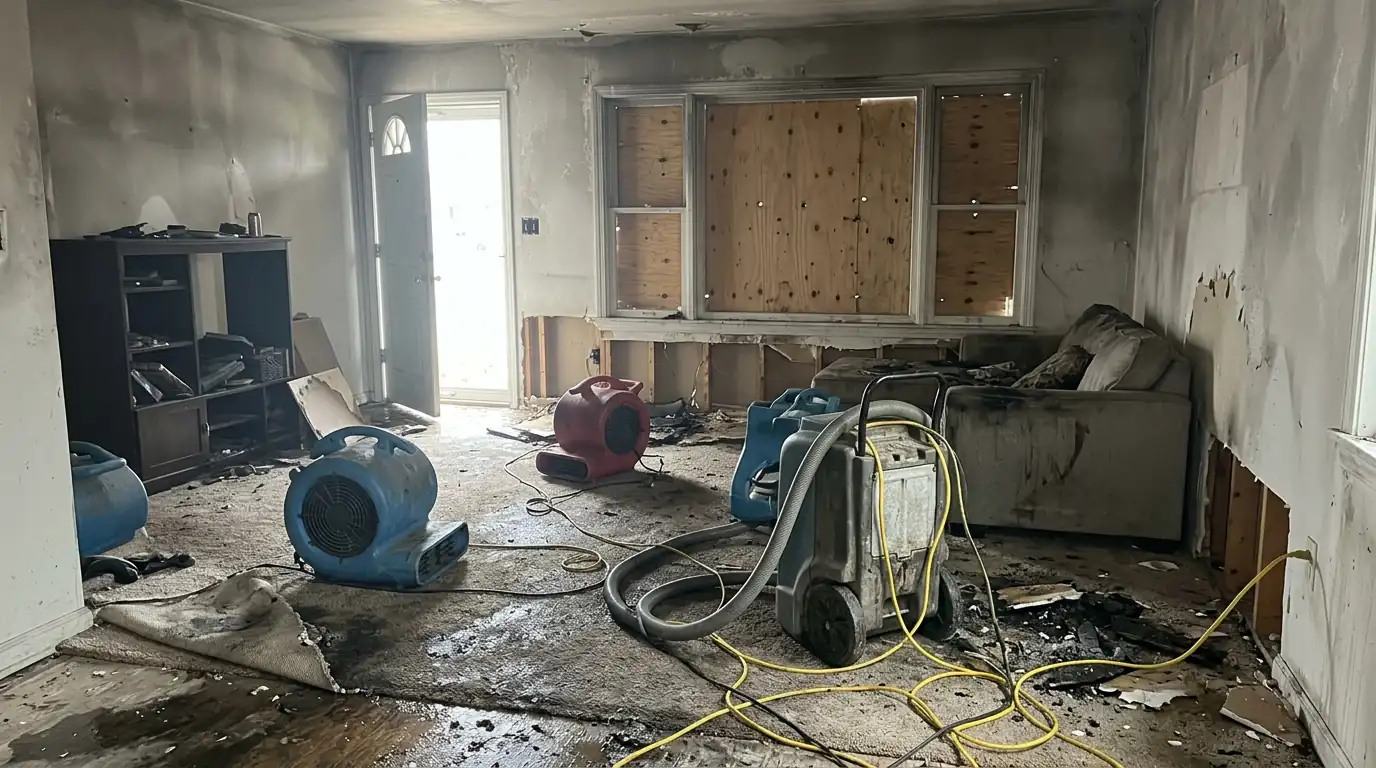
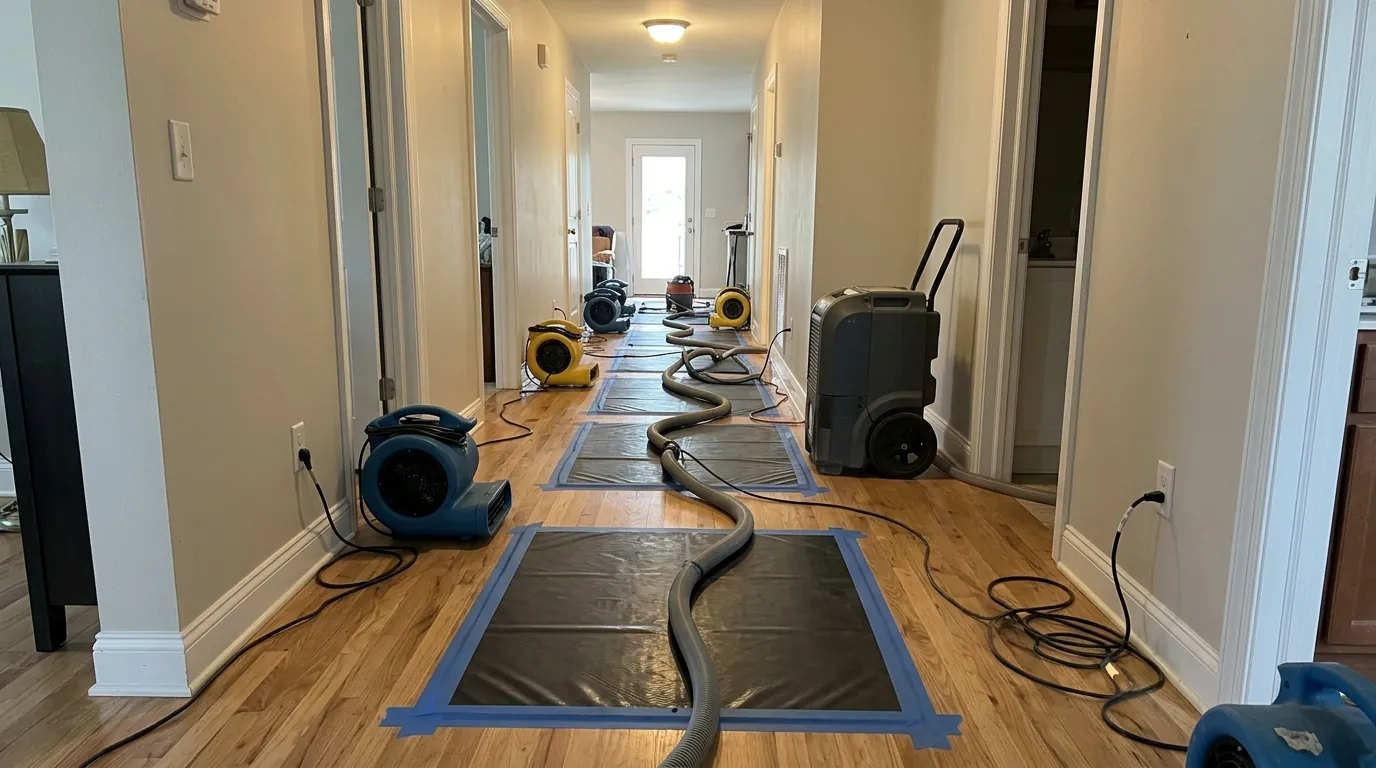
Fire hoses put a large volume of water into a house in minutes. It runs through ceilings, soaks insulation and drywall and pools under flooring, often in rooms the fire never touched. We extract it, set drying equipment and log moisture readings every day, the same as a water loss, so mold does not start while the fire claim is being settled. Wet insulation in the ceilings always comes out.
How long fire restoration takes
Board-up, tarping and water extraction happen in the first day or two. Cleanup and demolition after a single-room fire usually take one to two weeks. A fire that burned through the roof or spread across several rooms brings design choices, permits and material orders, and that rebuild can run for several months. Contents cleaning runs alongside the structure work, so belongings are ready when the rooms are.
From the night of the fire to move-back day
- We secure the houseBoard-up, a roof tarp and a check that utilities are off where the fire reached.
- We document everythingRoom-by-room photos, inventories and moisture readings before anything is moved.
- We dry and removeWater extracted, drying set up, and burned materials torn out to sound framing.
- We clean and sealSoot cleaned from surfaces and contents, and odor sealed in the framing.
- We rebuildFraming, drywall, flooring, cabinets and paint go back, then a final walk-through with you.
When a storm is what starts the fire
During the October 2020 ice storm, power lines in Oklahoma City sagged under ice casings sometimes 2 inches thick, and Oklahoma City Fire reported numerous house fires, smoke investigations and downed lines falling onto homes and buildings. House fires here are not only a kitchen or dryer problem. A storm can start one, then knock out power, leave the roof open and bring freezing weather while the house is still wet from the hoses. We tarp, board and set up drying in the same visit.
What drives the cost of fire restoration
Fire jobs range from one smoky room to a full rebuild. These are the things that set the scale of yours.
- How far smoke traveled. Smoke in every room means cleaning or sealing every room, even unburned ones.
- Structural damage. Charred framing, roof deck or floor joists add demolition and rebuild work.
- Firefighting water. Wet ceilings, insulation and floors add drying and replacement.
- Contents. Pack-out, cleaning and storage of belongings is its own scope.
- Type of residue. Greasy protein smoke from cooking takes more labor than dry smoke.
- Permits and code updates. Rebuilding burned areas can trigger permits and current code requirements.
Published national price ranges
- Normal range $3,083 to $52,031; average $27,477 (per job), fire damage restoration. How Much Does Fire and Smoke Remediation Cost in 2026? (HomeAdvisor)
- $4 to $7 per square foot, or $8,000 to $18,000 on average (per sq ft / per job), fire damage restoration. How Much Does Fire Damage Restoration Cost? (2026) (HomeGuide)
These are planning ranges from national cost guides, not our quote. The price for your house depends on the factors above, and we give you a written scope before repair work starts.
Fire restoration questions from Oklahoma City families
Not until the fire department releases it and the utilities are checked. Even then, soot and smoke residue irritate the lungs. Short trips for essentials are usually fine, but staying overnight often is not until the cleaning is done.
More than most people expect. Dishes, metal and many hard furnishings clean well, and clothing often responds to specialized laundering. Items that burned, melted or soaked up heavy smoke, along with opened food and medicine, are usually thrown out.
Smoke works into framing, insulation and ductwork. Cleaning the surface removes the residue, but the odor returns on humid days unless the framing is cleaned and sealed and the ducts are cleaned too. That is why we seal before drywall goes back.
No. You choose who repairs your home. Your insurer may suggest companies, but the policy pays for the covered repair whoever does the work. We work from the adjuster's scope and document any differences we find along the way.
Light dry soot on a hard surface can be vacuumed with a HEPA vacuum. Wiping it with a wet rag usually smears it deeper into the paint. For anything beyond a small area, leave it for us, because the wrong cleaner sets the stain.