
Updated October 2026
Smoke damage cleanup in Oklahoma City starts with a residue test, because wiping soot with the wrong product smears it deeper into paint and texture. Dry residue comes off with HEPA vacuums and dry chemical sponges first. Oily residue needs degreasing cleaners. Anything that still stains after cleaning gets a sealing primer before it is repainted.
Why smoke cleanup takes longer than it looks
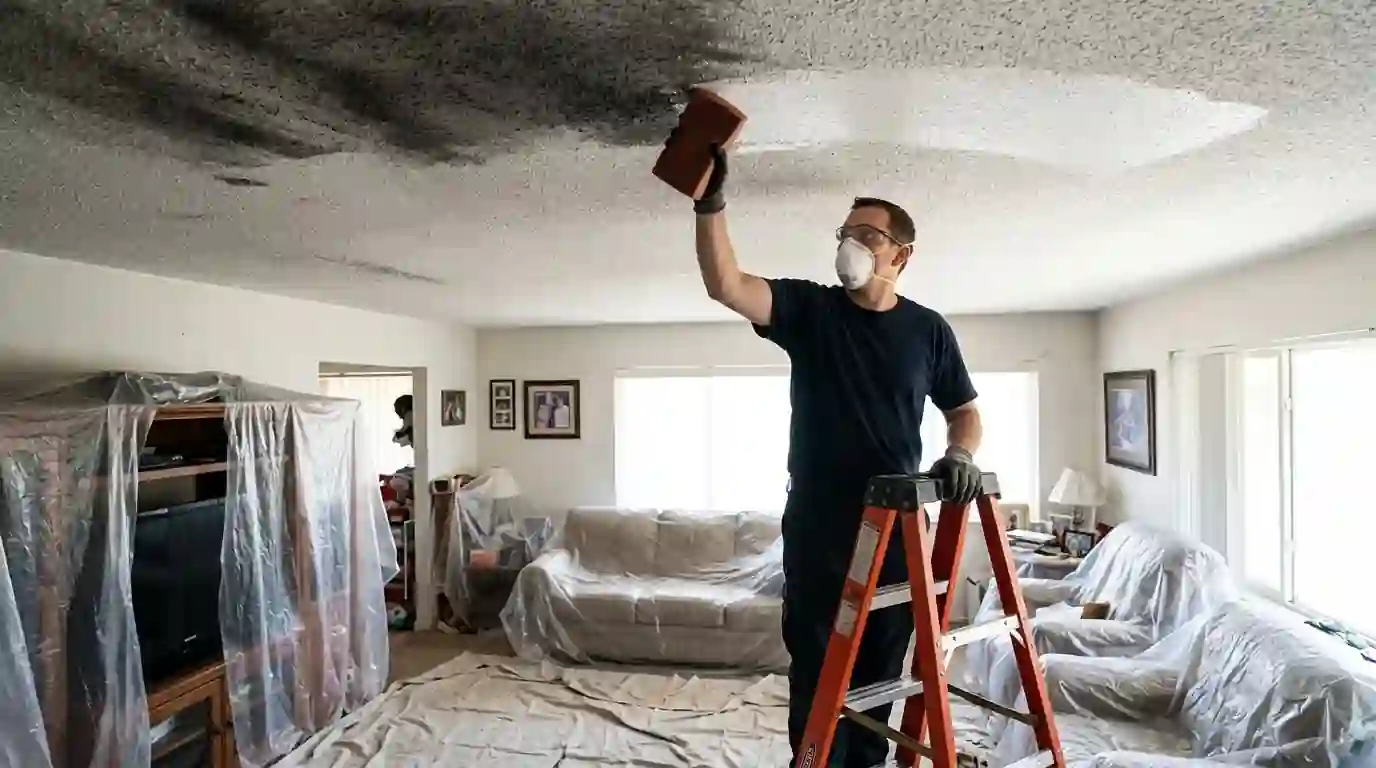
Soot particles are tiny, acidic and often oily. They settle on every horizontal surface, cling to cool exterior walls and get pulled through gaps around outlets and light fixtures. Left alone, the acids start pitting chrome, staining grout and yellowing plastics within days, so the clock starts when the fire goes out.
We work top down: ceilings, then walls, then cabinets and floors, so falling residue never lands on a surface we already cleaned. Each room gets a dry sponge swipe test first to see whether the residue lifts dry or smears across the paint.
Cleaning alone rarely ends the job. Smoke odor sits in drywall paper, insulation and the HVAC system, so most smoke jobs also need odor removal and a sealing primer before paint.
Signs smoke reached rooms the fire never touched
- Gray outlines around outletsSoot gets pulled through the gaps around outlets and switch plates on exterior walls.
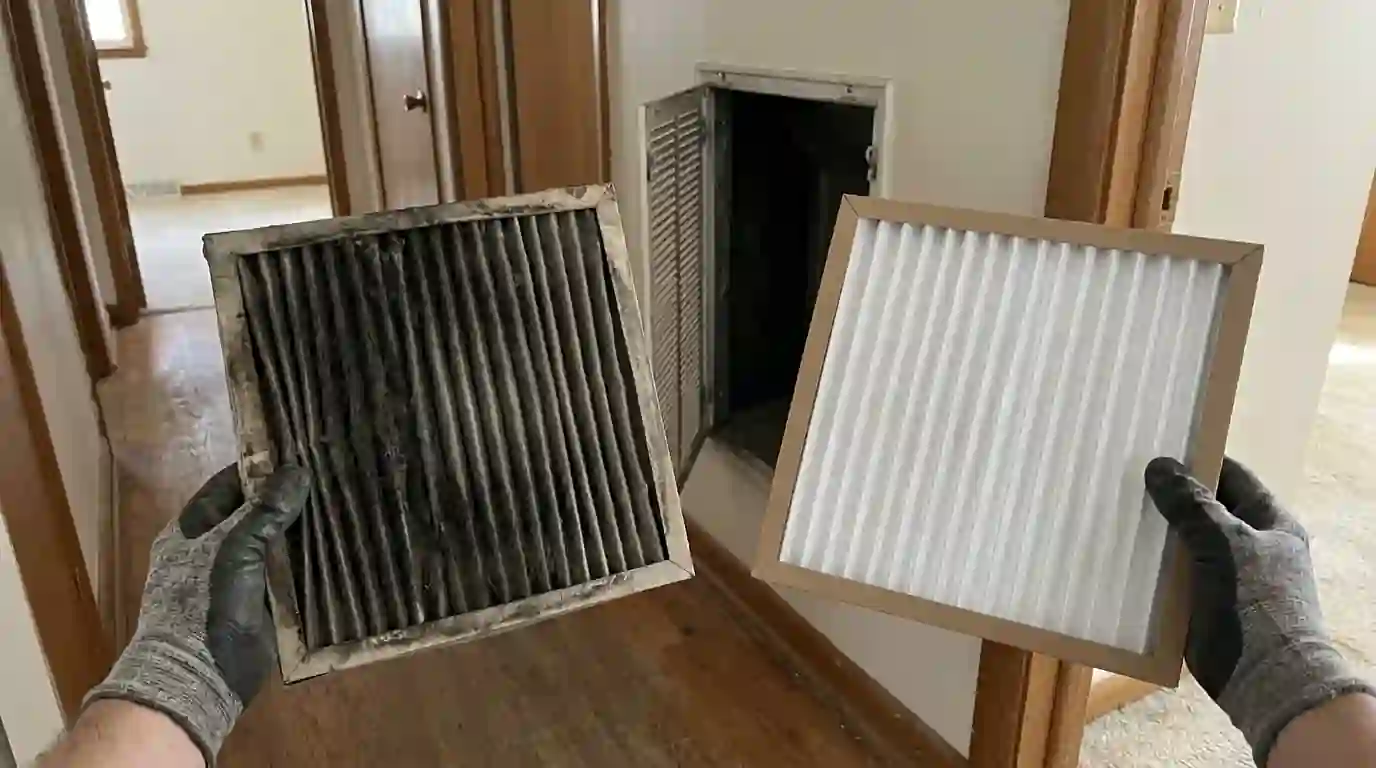
- A dark HVAC filterA gray or black filter means the system moved smoke through the house.
- Smell inside closetsClosed closets and drawers trap odor, and clothing holds it.
- Soot webs in cornersSoot tags look like cobwebs and form when oily smoke strings together.
- Yellowed switch platesOily and protein residues discolor plastic first, even across the house.
The fire that made the smoke decides the cleanup. These are the three residues we see, and they do not clean the same way.
Dry Smoke Residue
Fast, hot fires that burn paper and wood leave a dry, powdery soot. It looks bad but lifts well if it is vacuumed with a HEPA unit and wiped with dry chemical sponges before any water touches it. Wet a dry soot and it turns into a gray paste that soaks into flat paint and popcorn texture, which turns a cleaning job into a painting job. Dry residue rewards patience more than chemicals.
HomeAdvisor puts smoke damage cleanup at $200 to $1,200 per room.
Wet and Protein Smoke Residue
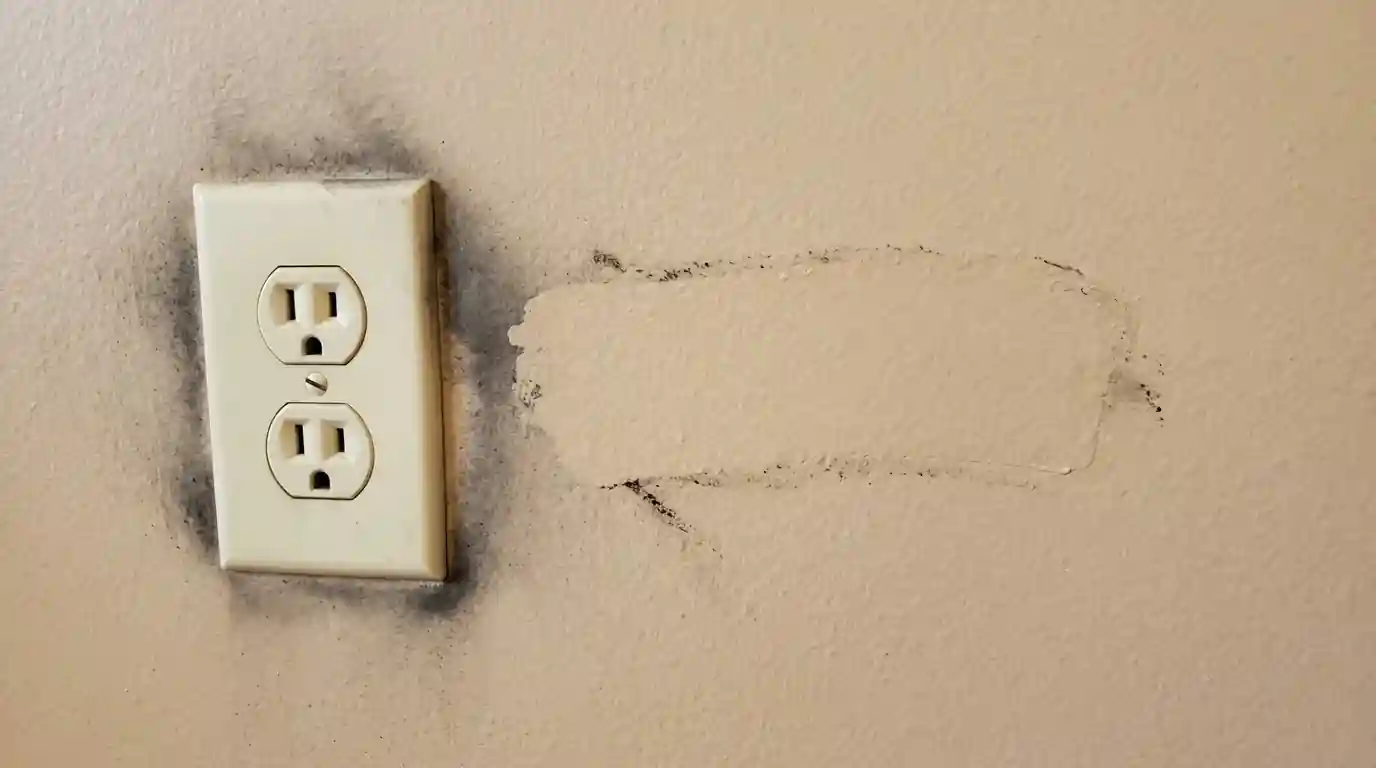
Slow, smoldering fires that burn plastics or foam leave a sticky black residue that smears on contact. A pot left on a burner leaves protein residue instead, which is nearly invisible but yellows paint and carries a sharp, lingering smell. Both need degreasing cleaners and more passes, and painted walls often need a sealing primer afterward, because wiping alone tends to leave a thin film behind that yellows again within months.
Soot on Walls and Ceilings
Ceilings take the heaviest load because hot smoke rises and spreads across them. Textured and popcorn ceilings usually cannot be wiped clean, so we either seal them or scrape and retexture. Faint soot lines that trace the framing behind the drywall, called ghosting, show where cold spots let soot settle. They help us judge how far the smoke reached and which rooms need the full cleaning rather than a light wipe-down.
How a smoke cleanup moves through the house
- We test the residueDry sponge swipes in each room show whether the soot is dry, oily or protein based.
- We protect what is cleanFloors get covered, the HVAC gets shut down and unaffected rooms get sealed off.
- We clean top downCeilings, then walls, cabinets, fixtures and floors, so nothing falls on a finished surface.
- We treat the odorClean surfaces get deodorized, and the ducts get cleaned if smoke reached them.
- We seal and repaintAnything still stained gets a stain-blocking primer before the finish coats.
What the 2020 ice storm showed about smoke calls here
Smoke rarely stays in the room that burned. In Oklahoma City most houses move air through one forced-air system, so a fire in a kitchen or garage can push fine soot through the returns and out of registers on the far side of the house. That is why we test walls and ceilings in rooms that look untouched, not only the ones that smell, and why the HVAC stays off until the ducts have been checked.
What a full smoke cleanup should include
Smoke scopes vary between contractors more than most jobs. Check that yours covers these items.
- Residue testing in every affected room, not only the one that burned
- HEPA vacuuming before any wet cleaning
- Ceilings, walls, trim, doors and cabinet interiors
- Light fixtures, ceiling fans, outlets and switch plates
- HVAC filter change and duct cleaning where smoke ran
- Stain-blocking primer on anything that still bleeds through
What moves the price of smoke cleanup
Smoke cleanup is priced by how far the residue traveled and what type it is, not by the size of the fire.
- Residue type. Dry soot cleans fastest. Oily and protein residues need degreasers, extra passes and often primer.
- Rooms reached. Smoke follows the airflow, so a small fire can reach every room on the same return.
- Ceiling texture. Smooth ceilings clean up. Popcorn and heavy texture often need sealing or retexturing.
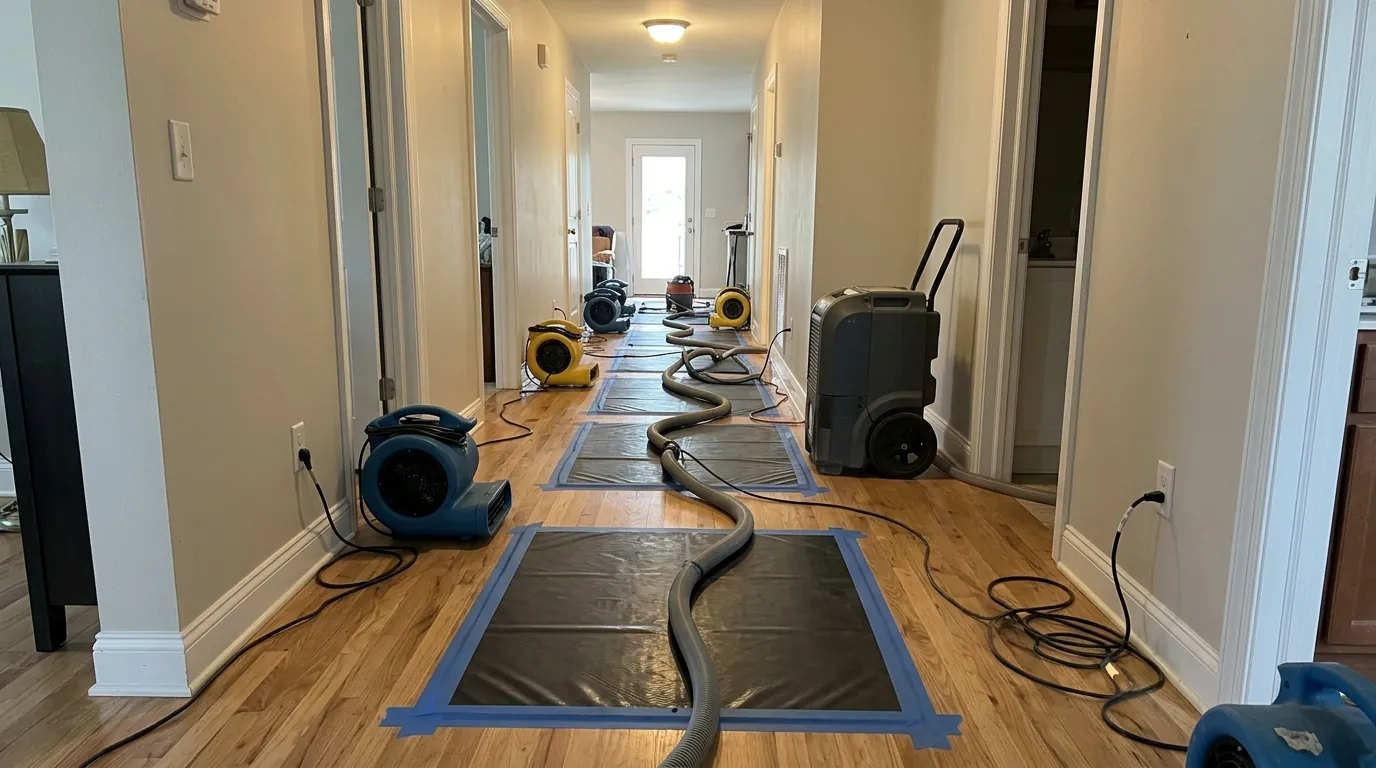
- HVAC exposure. If the system ran during the fire, ducts and registers need cleaning too.
- Primer and paint. Walls that still stain after cleaning need a sealing primer and fresh paint.
Published national price ranges
- $200 to $1,200 per room (per room), smoke damage cleanup. How Much Does Fire and Smoke Remediation Cost in 2026? (HomeAdvisor)
These are planning ranges from national cost guides, not our quote. The price for your house depends on the factors above, and we give you a written scope before repair work starts.
Smoke and soot questions Oklahoma City homeowners ask
Light dry soot on a small area can be lifted with a dry chemical sponge, wiped in one direction. Skip water and all-purpose sprays. Moisture turns dry soot into a smear that sets into flat paint.
Smoke odor lives in porous materials like drywall paper, insulation, carpet pad and ductwork. Surface cleaning removes the residue you see, but the odor needs deodorizing, and sometimes sealing, before it leaves.
Soot is fine particulate, and burned plastics add chemical residue to it. Wear a fitted N95 mask if you must go in, keep children and pets out, and leave the HVAC off until it is checked.
Regular latex paint will not. Smoke stains bleed through it within weeks, often with the smell. Surfaces need cleaning, then a stain-blocking, odor-sealing primer, and only then the finish paint.
As soon as the fire department releases the house. Soot is acidic, and within days it can pit chrome, yellow plastics and stain grout. Starting early means more gets cleaned instead of replaced.