
Updated October 2026
Ceiling water damage repair in Oklahoma City has to start above the ceiling, because the stain only shows where water finally soaked through. The leak, whether a roof, a bathroom, an attic unit or a supply line, gets found and stopped first. Then wet insulation and drywall are dried or replaced and the texture is matched.
Fixing the cause before the ceiling
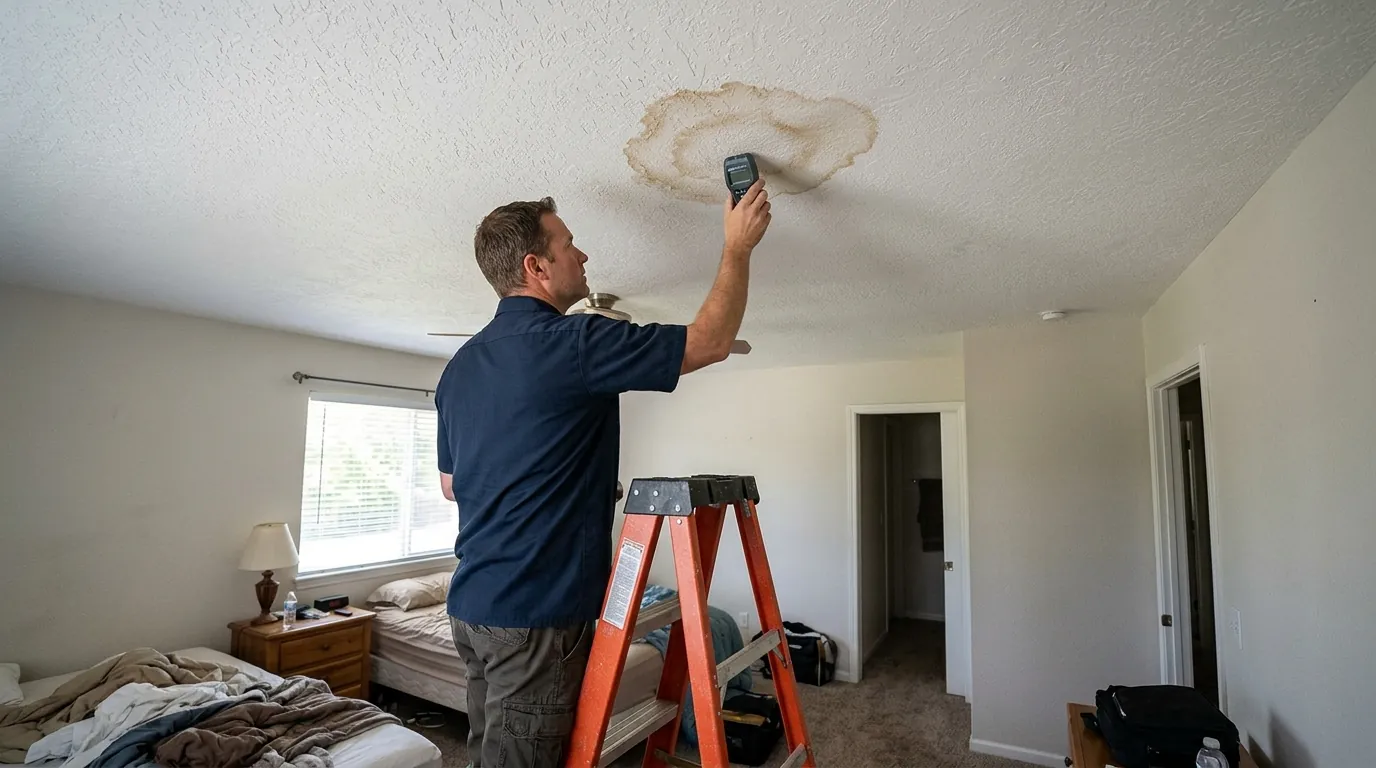
Painting over a stain without finding the leak is the most common mistake we see. The water keeps coming, the new paint browns within weeks, and the drywall gets weaker each time. So the first visit is about the source: the roof above, a toilet or tub upstairs, an HVAC drain pan in the attic or a supply line in the ceiling.
With the leak stopped, we check how wet the drywall and the insulation above it are. Small, dry stains get sealed with a stain-blocking primer and painted. Wet or soft drywall comes down, wet insulation comes out, and the cavity dries before new drywall goes up, gets taped, textured and painted to match the rest of the room.
What changes the price of a ceiling repair
Most of the cost is set by what is above the ceiling and how much has to be opened.
- Source of the leak. The roof or plumbing fix comes first, and its cost depends on what failed.
- Size of the damage. A sealed and painted stain costs far less than a section cut out and rehung.
- Insulation above. Wet blown-in insulation is pulled and replaced over the soaked area.
- Plaster or drywall. Plaster on lath takes more skill and drying time than drywall.
- Texture and height. Popcorn testing, texture matching and vaulted ceilings all add labor.
Published national price ranges
- $500 to $2,500 on average to fix the water leak and repair the drywall (per job), ceiling water damage repair. How Much Does It Cost to Replace or Repair a Ceiling? (2026) (HomeGuide)
These are planning ranges from national cost guides, not our quote. The price for your house depends on the factors above, and we give you a written scope before repair work starts.
Seal, patch or replace: matching the repair to the damage
It depends on whether the ceiling is sound once dry.
| Condition | Repair | What it involves | When it fits |
|---|---|---|---|
| Dry stain, firm drywall | Seal and paint | Stain blocker, full-ceiling paint | Leak fixed fast |
| Small soft area | Patch | New drywall, tape, texture | A few square feet |
| Sagging or wide damage | Section replacement | Open to joists, new insulation and drywall | Water pooled for days |
| Loose plaster on lath | Plaster repair or overlay | Reattach, patch or drywall over | Older plaster ceilings |
Ceiling damage comes in three degrees, and the repair grows with each one.
Ceiling Stains
A dry brown ring with firm drywall underneath is the mildest case we see. Once the leak is fixed and a moisture meter confirms the drywall is dry, the stain gets sealed with a shellac or oil-based stain blocker, because ordinary latex paint lets the brown bleed back through. Then the whole ceiling plane is painted so the repair does not stand out when low afternoon light rakes across it.
HomeGuide puts the average cost to fix the water leak and repair the drywall at $500 to $2,500.
Sagging Ceiling Drywall
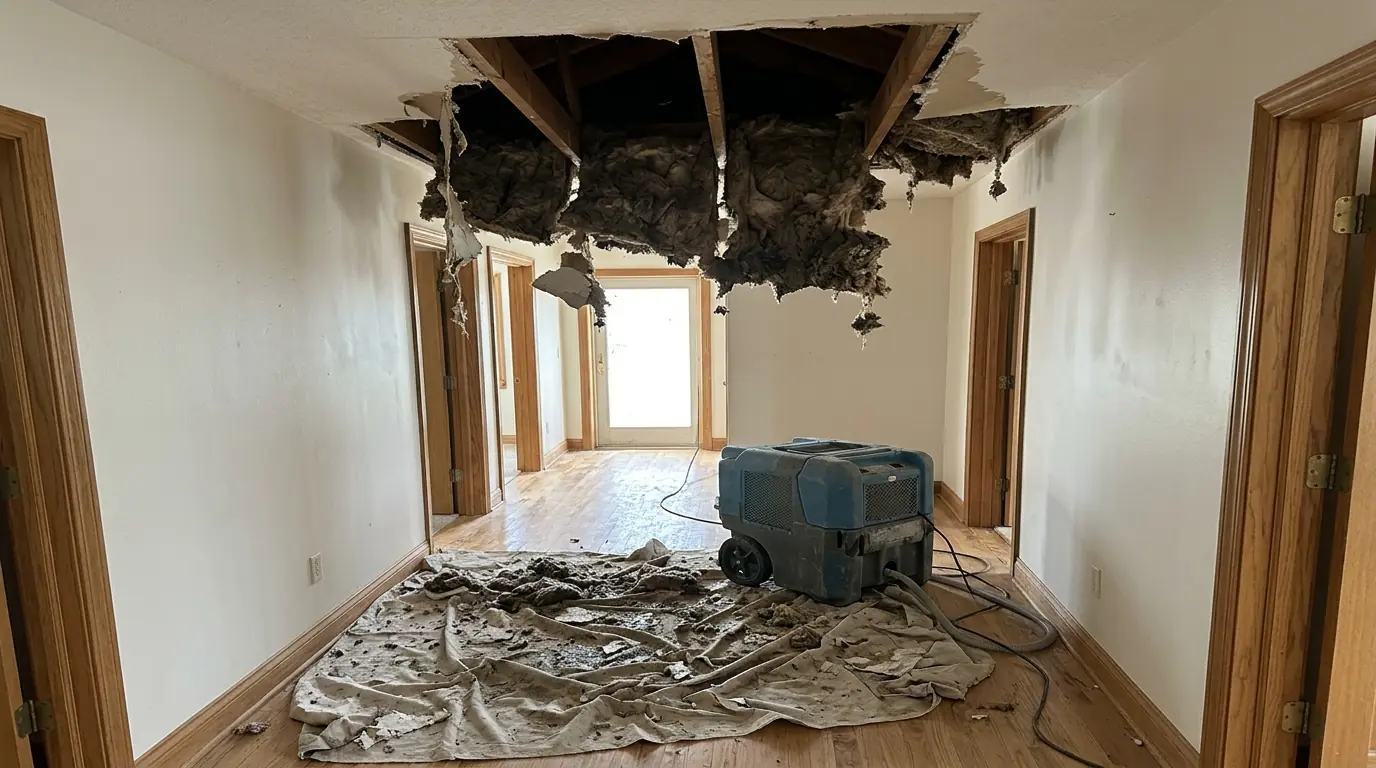
A ceiling that bulges or sags is holding water or has lost its strength, and it can come down without warning. Stay out from under it. If water is pooling, a small hole at the low point with a bucket below drains it under control. We remove the damaged section back to the framing, pull the wet insulation above it, dry the joists to a measured reading and hang new drywall.
Textured and Popcorn Ceilings
Texture makes patches obvious, so matching matters as much as the repair. Knockdown and orange peel can be sprayed and blended. Popcorn ceilings applied before the 1980s may contain asbestos, so that texture should be tested by a lab before it is scraped or cut. Depending on the result and the size of the damage, we patch and match the texture or retexture the full ceiling so it reads as one surface.
Plaster ceilings in Oklahoma City's older districts
Water damage reads differently in the city's older neighborhoods. Development of Putnam Heights began in 1908, with representative homes from about 1906 to 1929, and most Gatewood homes went up during the oil boom of the 1920s. Houses of that age in Oklahoma City often still have plaster ceilings on wood lath rather than drywall. Wet plaster can lose its grip on the lath and hang loose long after the stain dries, so we check it by hand and repair plaster with plaster where it can be kept.
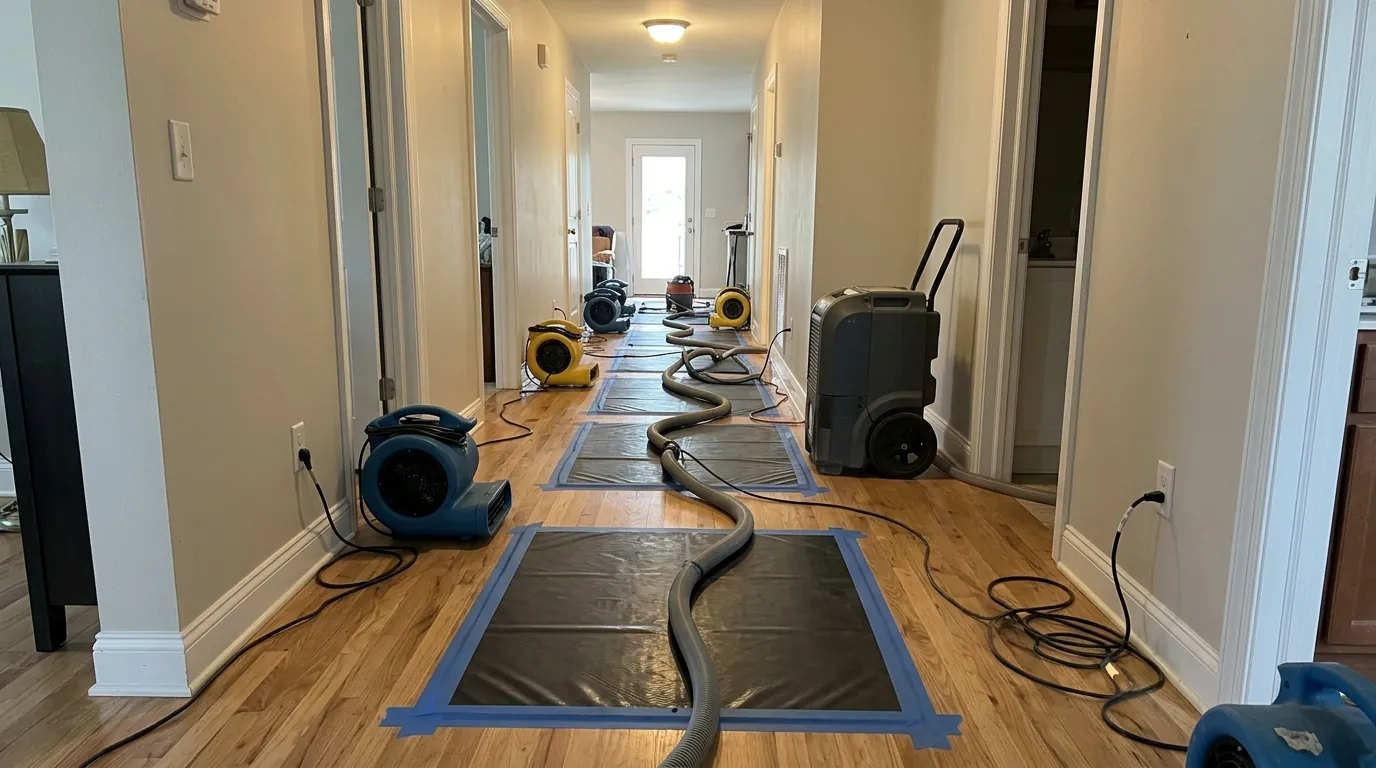
How a ceiling repair moves from leak to paint
- We trace the leakMoisture meters and a thermal camera follow the water back from the stain to its source.
- We stop the sourceThe roof, plumbing or HVAC drain gets repaired or temporarily stopped before ceiling work starts.
- We open and dryWet drywall and insulation come out, and the joists and cavity dry to a measured target.
- We hang and finishNew drywall or plaster repair, tape, mud and texture matched to the rest of the room.
- We prime and paintStain blocker first, then paint across the full ceiling plane so no outline shows.
Signs a ceiling leak is worse than a stain
- A stain that keeps growingIf the outline spreads after rain or a shower upstairs, the leak is still active.
- Bubbling paintPaint lifts when water is trapped behind it.
- A soft or sagging spotGive or a bulge when pressed with a broom handle means weakened drywall.
- Drips at light fixturesWater following wires is an electrical hazard. Turn that circuit off.
- Cracks in old plasterNew cracks or loose areas can mean plaster is letting go of the lath.
Ceiling water damage questions from Oklahoma City homeowners
Only after the leak is fixed and the drywall reads dry, and only over a stain-blocking primer. Regular ceiling paint lets the brown bleed back through within days. If the drywall is soft or sagging, paint will not fix it.
If water is pooling and the bulge is growing, a small hole at the lowest point with a bucket underneath drains it under control. Turn off power to nearby fixtures first and keep everyone out from under it.
Timing tells a lot. Stains that grow after rain point to the roof or flashing. Stains that grow after someone showers or flushes upstairs point to plumbing. A thermal camera and moisture readings confirm it.
Not if the texture is matched and the whole ceiling plane is painted. Touching up only the patch usually leaves a visible square, because older paint has faded. We repaint the affected ceiling wall to wall.
Damage from a sudden leak, like a burst supply line or storm damage to the roof, is often covered. A slow leak that ran for months usually is not. Your policy wording decides, and we photograph the source either way.