
Updated October 2026
Commercial water damage restoration in Oklahoma City has to work around a schedule as well as a building. The EPA advises drying wet materials within 24 to 48 hours to prevent mold, so extraction should start before the next business day, while the plan for which rooms stay open gets worked out alongside it.
How a commercial water loss differs from a house
The drying science is the same: stop the source, extract, dry to a measured target, rebuild. What changes is everything around it. A commercial loss usually has more than one person to answer to, such as a tenant, a property manager, an owner and an adjuster, and each wants the same facts in a different form.
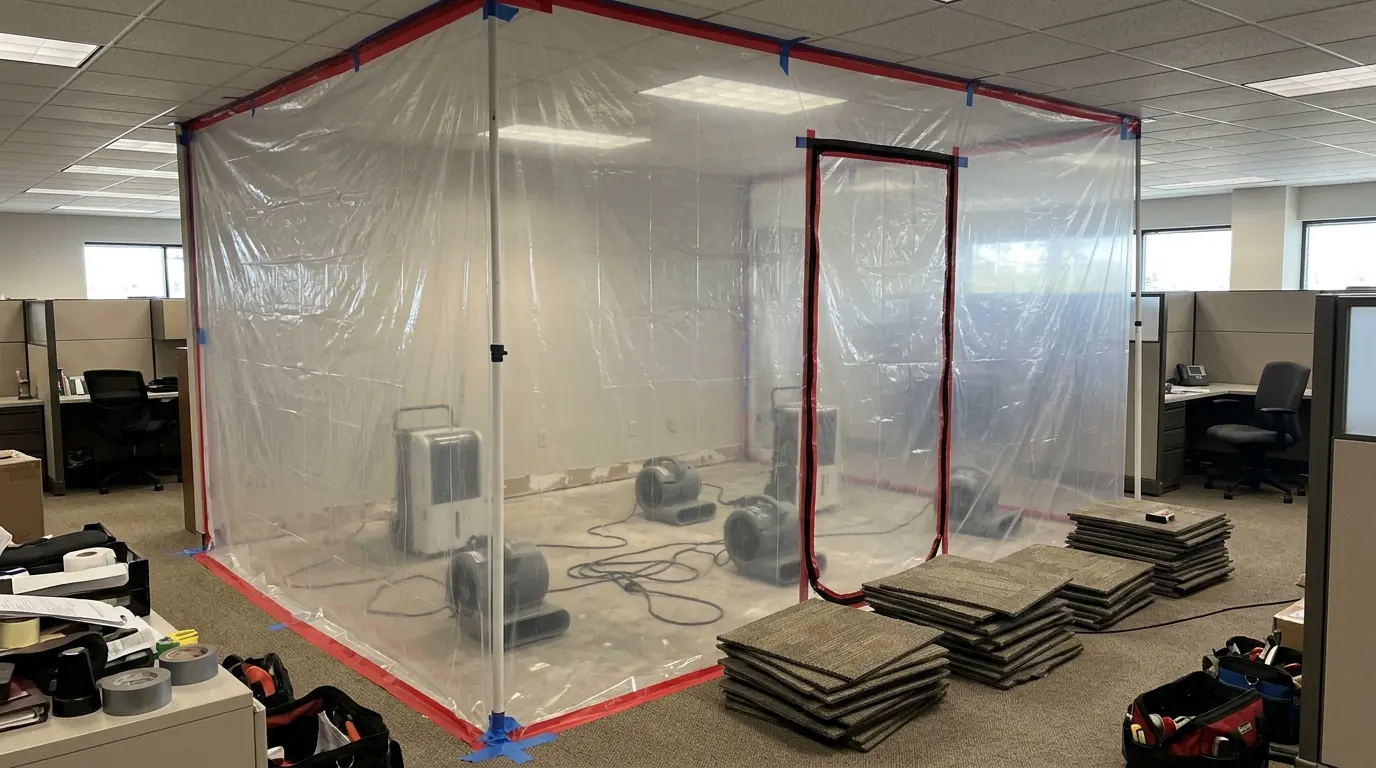
We start by mapping the water against the floor plan and agreeing on what can close. Wet areas get sealed off with plastic walls and zipper doors so a front counter or a row of desks can keep working beside them. Loud equipment and demolition can run after closing when that is what keeps the business open.
Every room gets dated photos and daily moisture readings, logged in one place, so the building owner and the tenant's carrier are both reading from the same record.
Signs water is spreading inside a commercial space
- Ceiling tiles sagging or stainedDrop-ceiling tiles soak up water fast and show where a roof drain or line above is leaking.
- Carpet tiles lifting at the seamsWater under glued carpet tiles loosens the adhesive and the edges curl.
- Wet bottoms on wall partitionsMetal-stud drywall walls wick water up from the floor, often behind furniture.
- Water at the base of storage racksPallets and cardboard on a slab hide pooled water until stock is moved.
- A musty smell when the HVAC startsMoisture in ducts or a wet wall cavity often shows up as smell before stains.
The building type sets the plan. An office, a storefront and a warehouse all get wet the same way, but they dry, close and reopen differently.
Offices
Office water usually comes from above: a roof drain, a restroom supply line or a sprinkler head. It spreads under carpet tiles and into the bottom of partition walls, often across several suites. We pull wet carpet tiles, drill or cut the base of affected walls, and set drying equipment so the work does not block exits. Electronics and files get moved first, and wet suites can be walled off so the rest of the floor keeps working.
Retail and Restaurants
In a store or restaurant the front of the house earns the money, so the goal is to keep it open if the water allows. A leak in a back room, stockroom or kitchen can often be contained behind plastic and dried while the sales floor runs.
Food-service spaces bring extra steps. Wet areas near food prep have to be cleaned and dried before the space goes back into use, and we schedule the loud work after closing.
Warehouses
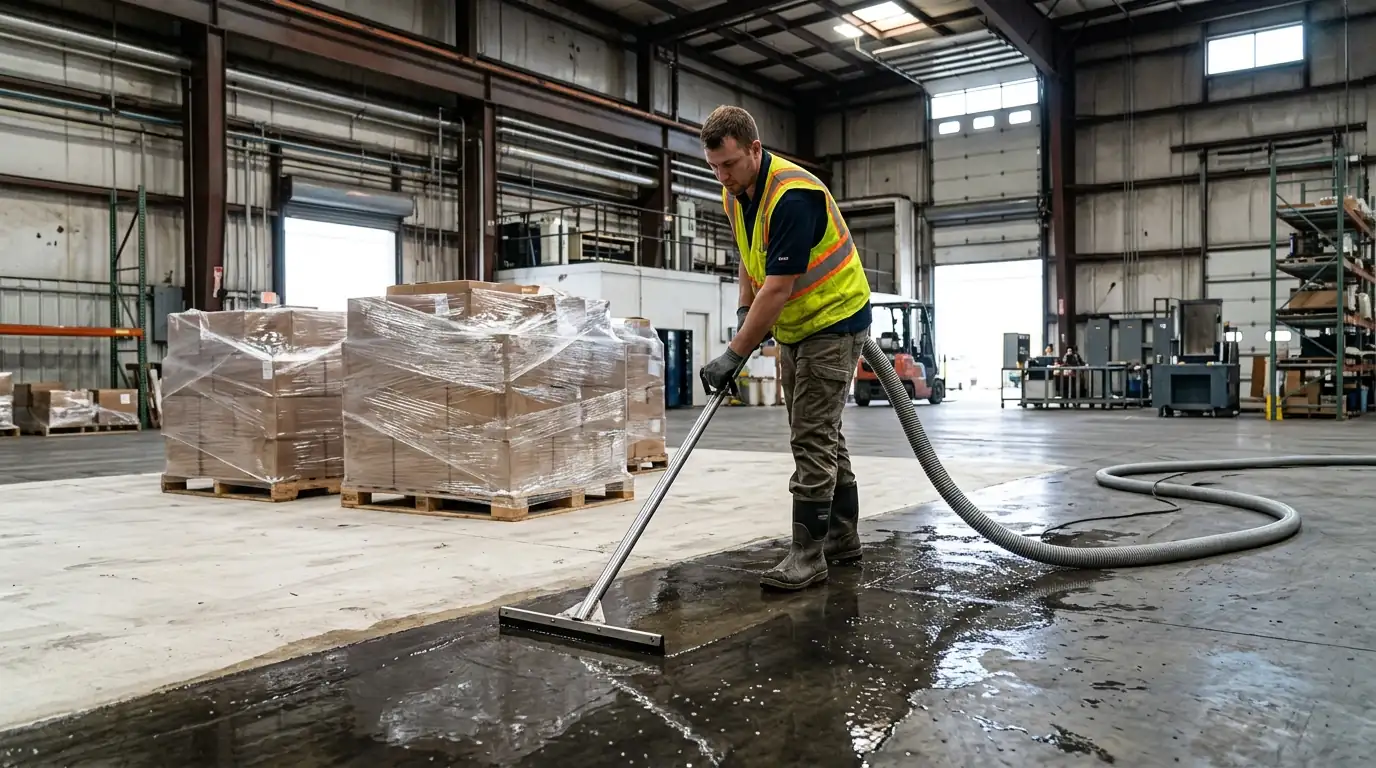
Warehouses are mostly open slab, tall walls and stock. Water spreads across the floor and wicks into anything cardboard sitting on it. We extract the slab, move or stage wet pallets, and dry the bottom of the perimeter walls and any office build-out inside. Large open volumes need more dehumidification than a house does, so we size the equipment to the space and keep readings on the wall bases and the office areas every day.
From the first call to the space reopening
- We find and stop the sourceWe confirm the line, drain or roof leak is shut off and note who handles the plumbing or roof repair.
- We walk the space with the managerTogether we mark what must stay open, what can close and when loud work can run.
- We document and containDated photos and first readings, then plastic walls and zipper doors around the wet areas.
- We extract and dryWater comes off floors and out of carpet tiles, then equipment runs with readings logged daily.
- We rebuild and hand back the spaceDrywall, flooring and finishes go back, and the manager walks each area before it reopens.
Why ice storms matter to empty commercial buildings here
NOAA's review of the October 2020 ice storm found more than 375,000 Oklahomans lost power at the peak, and more than 40,000 of those outages lasted ten days. A home without heat usually has someone inside noticing a drip. A closed office, a vacant suite or a warehouse often does not. In Oklahoma City that means a long outage can leave a split line or a sprinkler leak running unseen, so the first walk-through after power comes back is worth doing floor by floor.
What a commercial water scope should spell out
Commercial scopes vary more than residential ones. Before work starts, the written scope should answer these points.
- Which areas stay open and which are sealed off
- Work hours, including any after-closing demolition
- How the source was stopped and who repaired it
- Where drying equipment sits and how exits stay clear
- Daily moisture readings and who receives them
- What happens to wet stock, files and furniture
- Who signs off that the space is dry before rebuild
What drives the cost of a commercial water job
Commercial water losses are priced from the scope, not from a published average. These are the parts of the job that move the total.
- Square footage that got wet. Drying is set up per area, so a leak that crossed three suites costs more than one that stayed in one.
- Floor and wall materials. Carpet tiles and drywall partitions replace easily. Wood flooring, millwork and plaster cost more to dry or rebuild.
- After-hours work. Night and weekend demolition keeps the business open but can add labor time to the job.
- Containment needed. Plastic walls, zipper doors and air filtration to protect open areas add setup and materials.
- Water source. Clean supply water dries in place more often. Sewage or floodwater means removing porous materials.
- Stock and contents. Moving, staging or discarding wet inventory and furniture adds labor beyond the building itself.
Commercial water damage questions from Oklahoma City owners and managers
Often, yes, for part of it. If the water stayed in a back room, stockroom or a few offices, we can seal those areas off and run equipment behind containment. Restrooms, exits and fire lanes have to stay usable, which shapes where equipment can sit.
Yes. Demolition, carpet tile removal and other noisy work can be scheduled after closing so customers and staff are not working beside it. Drying equipment itself runs around the clock, so some noise during open hours is hard to avoid.
Usually both, plus any adjuster. We keep one dated log of photos and readings for the whole loss and share it with whoever the lease and the claim name, so the tenant's and owner's carriers are reading from the same numbers.
Most stained or sagging ceiling tiles get replaced, because they are cheap and rarely dry flat. The bigger question is what is above them. We check the grid, the insulation and any ductwork on top before closing the ceiling back up.
We move what can be moved before drying starts and photograph what was wet. Whether stock is cleaned, dried or discarded is a decision for the owner and their carrier, and our photos help make it.