
Updated October 2026
Insulation replacement in Oklahoma City is needed when insulation gets wet, absorbs smoke or harbors mold, because damaged insulation loses its value and can hold moisture against framing. We remove it by vacuum or by hand, confirm the cavity is dry and clean, seal air leaks, then install new insulation to the depth the space calls for.
When insulation has to come out
Fiberglass and cellulose both trap air to slow heat flow, and water collapses those air pockets. Wet cellulose mats down and can take weeks to dry, and wet batts sag and hold water against studs or subfloor. Smoke leaves odor that cleaning cannot get out of loose fill, and rodent contamination calls for removal too.
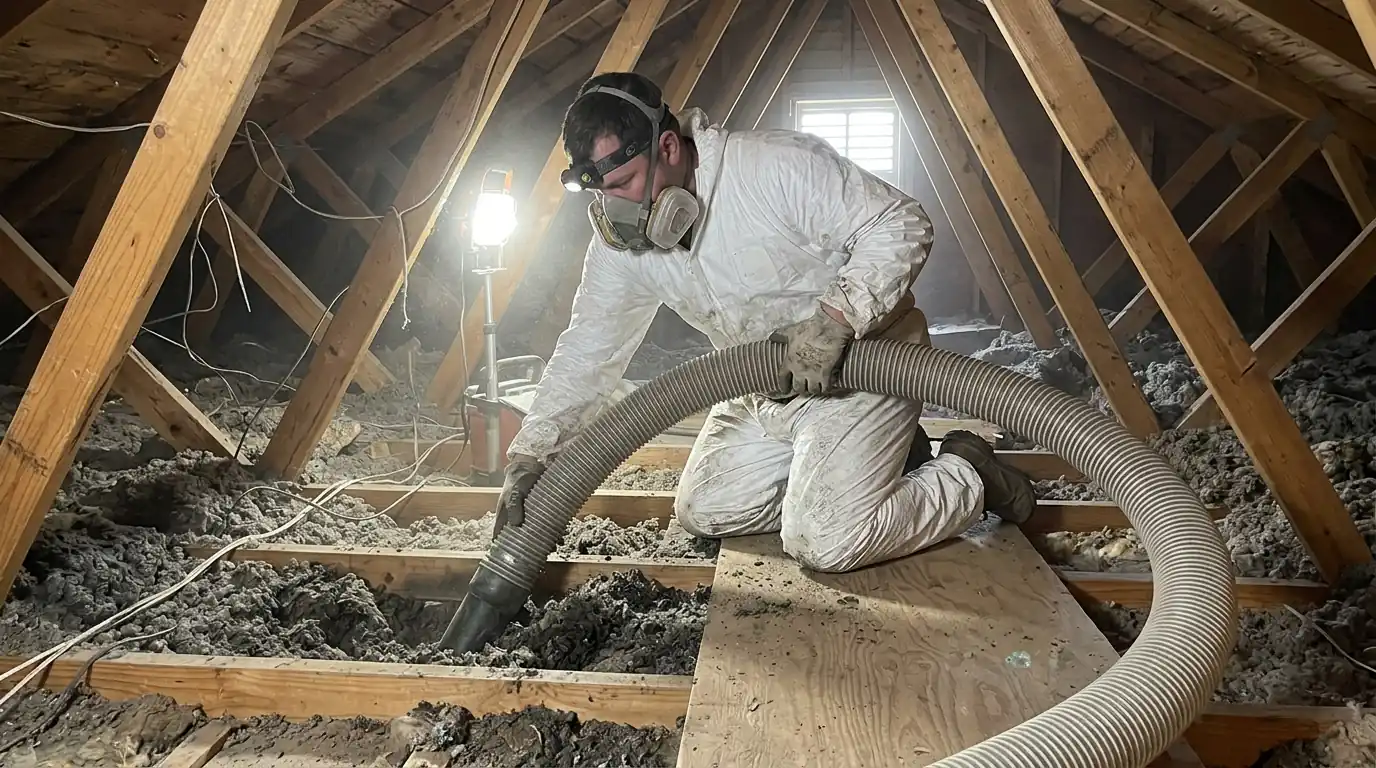
Blown-in attic insulation comes out through a large vacuum hose into bags outside. Batts are pulled by hand and bagged. Either way, we contain the work so debris stays out of the rooms below.
Before anything new goes in, we confirm the framing is dry and seal gaps around wiring, plumbing and light fixtures, since air moving through those gaps carries moisture into the new insulation.
What sets the price of insulation replacement
Insulation jobs are priced by the area, the type coming out and what goes back in.
- Area and depth. A full attic of deep loose fill takes longer than one wall cavity.
- Type removed. Loose fill needs vacuum equipment; batts bag faster by hand.
- Contamination. Smoke, mold or rodent waste adds containment and disposal steps.
- Air sealing. Sealing the attic floor adds labor but makes new insulation work.
- New insulation type. Blown fiberglass, cellulose and batts differ in cost and install time.
Published national price ranges
- Insulation replacement $1.00 to $4.50 per square foot (per sq ft), insulation replacement/removal. How Much Does It Cost to Repair a Burst Pipe? (2026) (HomeGuide)
These are planning ranges from national cost guides, not our quote. The price for your house depends on the factors above, and we give you a written scope before repair work starts.
Insulation work homeowners can do and when to call us
Removal after damage stirs up dust, soot and mold.
| Task | What a homeowner can do | When it needs us |
|---|---|---|
| Checking for wet insulation | Look from the hatch or crawl space access with a flashlight. | It is matted, stained, sagging or musty. |
| Pulling a few wet batts | Bag a little clean-water fiberglass from an open wall, with gloves and a mask. | The water was dirty, mold is visible or the area is large. |
| Removing blown-in insulation | Leave it in place. | Any amount, since loose fill needs vacuum equipment. |
| Adding insulation over old | Top up dry, clean attic insulation yourself. | The old layer was wet, smoky or contaminated. |
Where the insulation sits decides how it comes out and what goes back.
Blown-In Attic Insulation
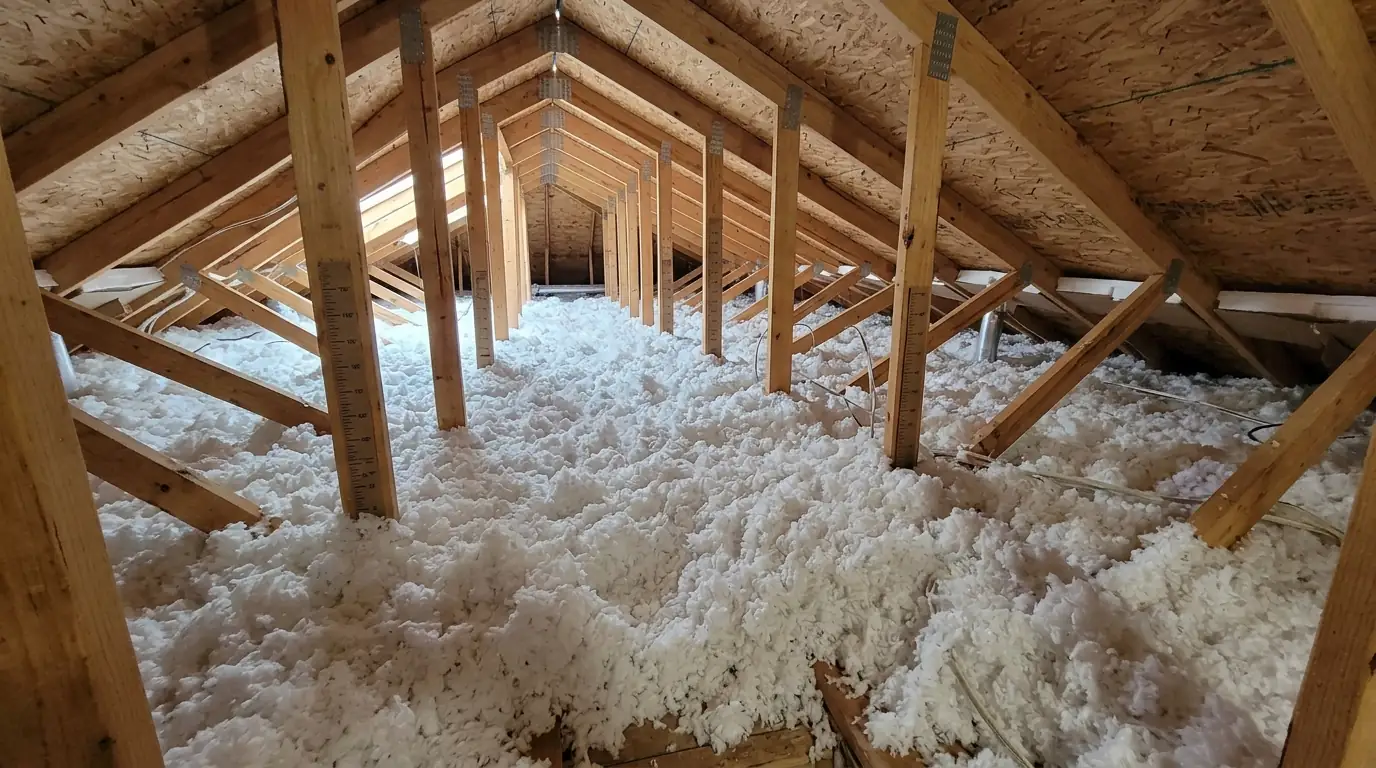
Blown cellulose or fiberglass in the attic gets wet from roof leaks and condensation, and it absorbs smoke after a house fire. We remove it with a high-power vacuum that pulls debris into bags outside rather than through the house. Once the attic floor is clear, we seal gaps at the top plates, wiring and fixtures, add baffles at the soffits and blow in new insulation to a measured depth, with markers across the attic.
HomeGuide puts insulation replacement at $1.00 to $4.50 per square foot.
Wall Batts
Wall batts get wet when floodwater rises or a leak runs down inside a wall. Once the drywall is cut, the batts come out so the studs and bottom plate can dry. Fiberglass wet from clean water that dries quickly is sometimes saved, but batts that soaked up dirty water or sat wet for days are replaced. We fit new batts snugly around wiring and boxes, without compressing them, before the wall closes.
Crawl Space Insulation
Batts between floor joists over a crawl space soak up humid air and sag or fall, and wet batts hold moisture against the subfloor. They come out first, before any mold cleanup or framing repair. Whether new batts go back depends on the plan for the space: a vented crawl space with a sound vapor barrier can take new batts held tight with supports, while some houses do better with insulation on the foundation walls.
What an insulation replacement quote should include
Two quotes for the same attic can describe very different jobs. Check for these.
- The existing insulation type, including any vermiculite
- Removal method and where debris is bagged
- Protection for rooms below the work area
- Moisture readings on framing before new insulation
- Air sealing at top plates, wiring holes and fixtures
- Baffles at soffit vents in a vented attic
- New insulation type and installed depth or R-value
Insulation in some of Oklahoma City's oldest neighborhoods
The Miller's Boulevard Historic District holds more than 600 resources, mostly Tudor Revival and Craftsman houses built from the 1910s through the early 1940s. The Paseo Neighborhood Historic District lists 1907 and 1908 as its significant years, with Bungalow, Craftsman and Prairie School homes. Houses from those decades went up long before modern energy codes, so their insulation was likely added later, sometimes in more than one round. When one of those Oklahoma City homes takes on water, we identify each layer before removal, because each type comes out differently.
Brands we install on this work
We install Owens Corning and CertainTeed insulation, close walls with USG Sheetrock board and seal stains with Zinsser primer.
Materials we install on rebuilds and roof repairs
How insulation replacement runs
- We identify what is thereType, depth and condition, plus a vermiculite check.
- We contain and removeVacuum or hand removal into bags, rooms below protected.
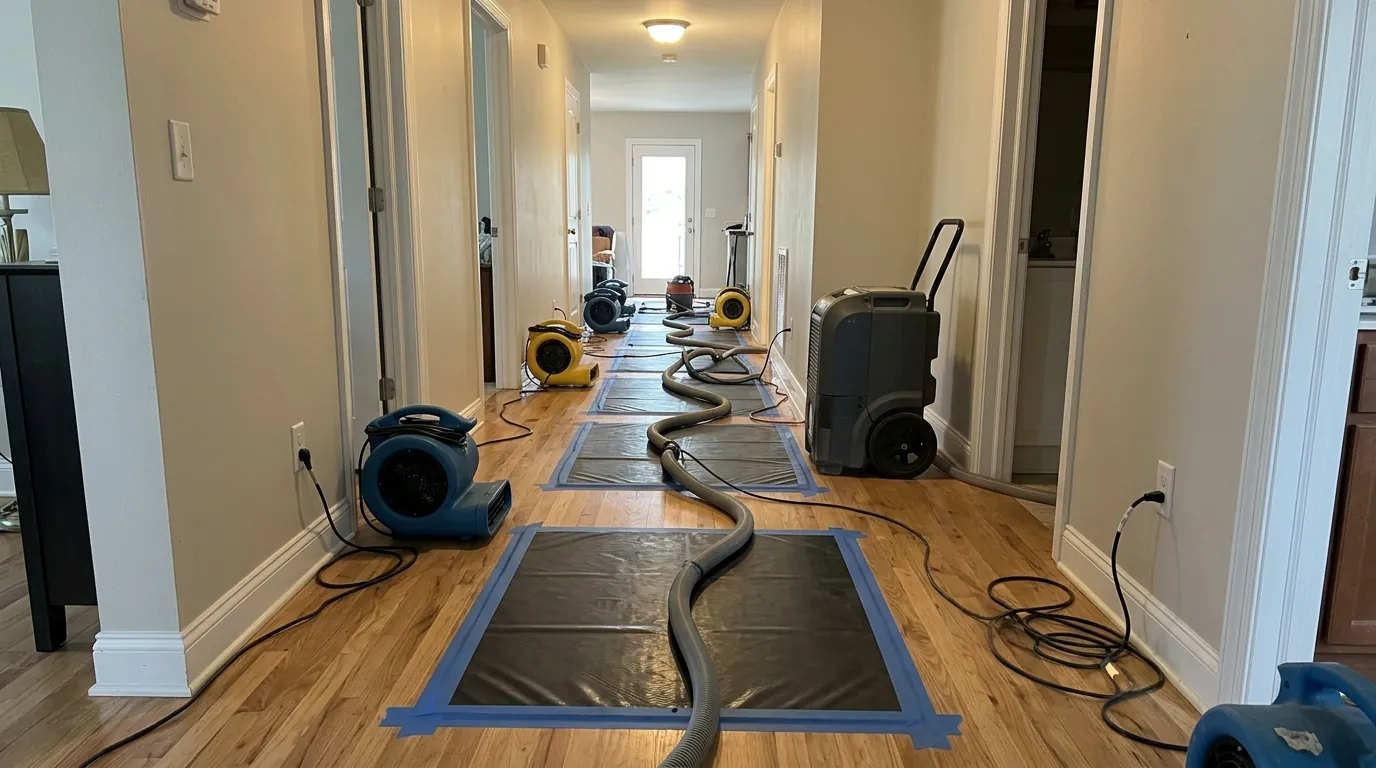
- We dry and clean the cavityReadings on framing and cleanup of soot or droppings.
- We seal air leaksTop plates, wiring holes and fixtures sealed first.
- We install and measureNew insulation to the planned depth, with attic markers.
Insulation replacement questions
Fiberglass batts wet with clean water and dried quickly can sometimes stay. Wet cellulose tends to mat down and lose much of its value, and insulation exposed to dirty water, mold or heavy smoke should be replaced.
Vermiculite looks like small gray-brown or silvery pebbles. Some of it contains asbestos, so it should be tested before anyone disturbs it. If we find it, we stop and recommend testing before removal goes ahead.
Yes, often for a long time. Loose fill acts like a filter and traps smoke particles and odor. After fires that reached the attic or walls, the insulation is usually replaced as part of smoke damage cleanup.
It depends on the material and the R-value you are aiming for. We agree on a target with you, set depth markers across the attic and install to that depth, so the result can be checked rather than estimated.
It should not. Blown-in insulation is vacuumed through a hose to bags outside, the hatch is sealed off and rooms below are covered. Wall and crawl space batts are bagged before they move through the house.