
Updated October 2026
Leak detection in Oklahoma City is about finding where water is getting in before cutting into anything. A thermal camera shows cool, damp areas behind drywall, and moisture meters confirm them, so a ceiling stain or a musty closet can be traced to its source and measured instead of guessed at.
What a moisture inspection finds that your eyes cannot
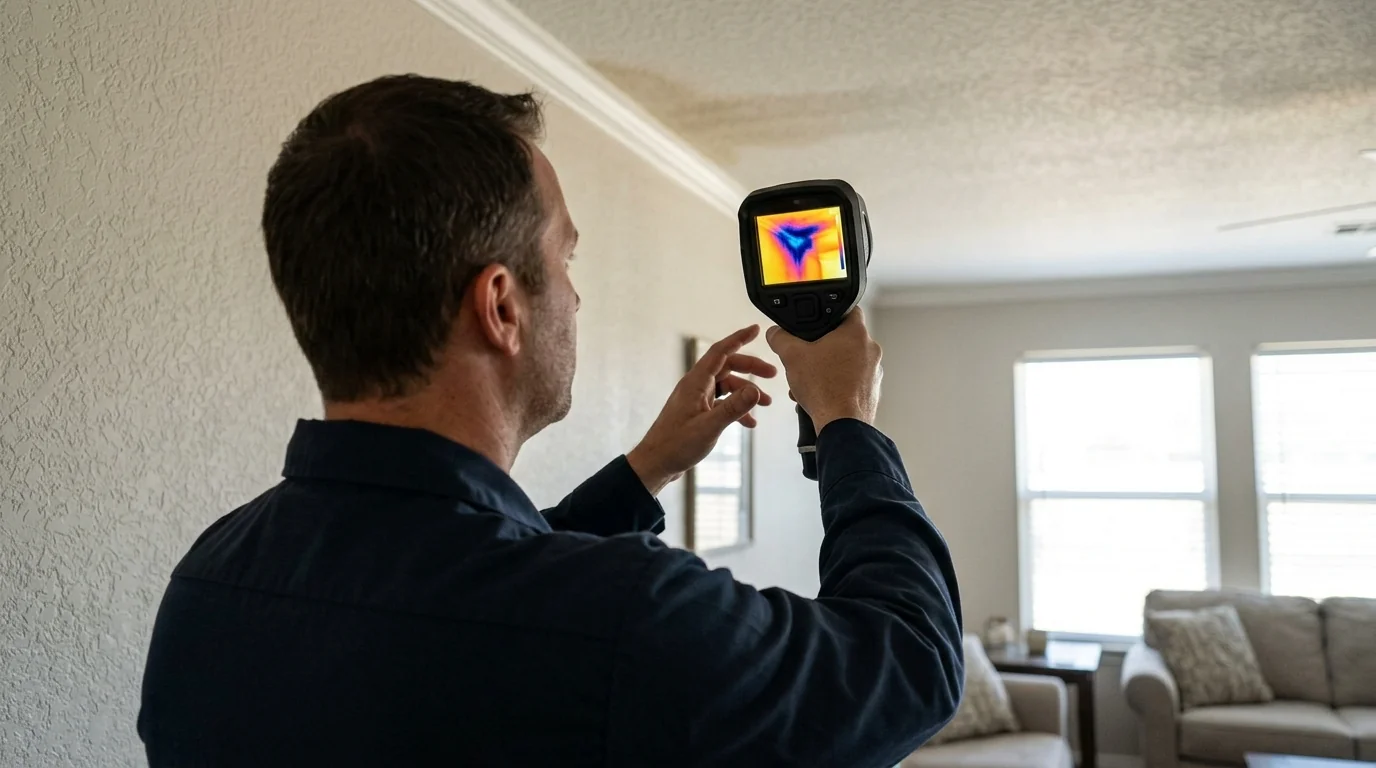
A stain on a ceiling is rarely directly under the leak. Water runs along rafters, pipes and the top of drywall before it shows, so the spot you see can be several feet from where it started. Opening the wrong section of wall means two repairs instead of one.
We work outward from the symptom. The thermal camera scans walls, ceilings and floors for temperature differences that point to evaporating moisture. Pin and pinless meters then confirm whether a cool area is wet or just near a cold duct or an exterior wall.
You get a written record: readings, photos and the likely source. A plumbing line goes to your plumber. A roof or window leak we can repair, along with the drywall, insulation and paint the water reached.
What a thorough moisture inspection should cover
Inspections vary a lot. Ask whether yours includes these items.
- Thermal scan of the room and the spaces above and below it
- Meter readings confirming every thermal finding
- Dry reference readings from an unaffected area
- Attic or crawl space check when either could be the source
- Photos of each reading location
- A moisture sketch of wet and dry areas
- A written likely source and the trade needed to fix it
Three methods cover most inspections, and they work together.
Thermal Imaging
A thermal camera reads surface temperature, and wet drywall is usually cooler than dry drywall because water evaporates from it. That shows up as a darker patch on the screen, often in the shape of the water trail running down from its source. Thermal imaging does not see through walls or measure moisture directly, so we never cut on a thermal image alone. It tells us where to put the meter.
Moisture Meter Readings
Pin meters measure moisture inside wood and drywall through two small probes. Pinless meters scan a surface without marking it and suit tile, wood flooring and painted walls. We take readings at the suspect area and at a dry reference spot in the same house, then compare them. The difference, recorded on a dated sketch of the room, is the map that decides what gets opened and what stays closed.
HomeAdvisor says most homeowners pay $150 to $400 for leak and moisture detection and suggests budgeting about $280.
Tracing Hidden Roof Leaks
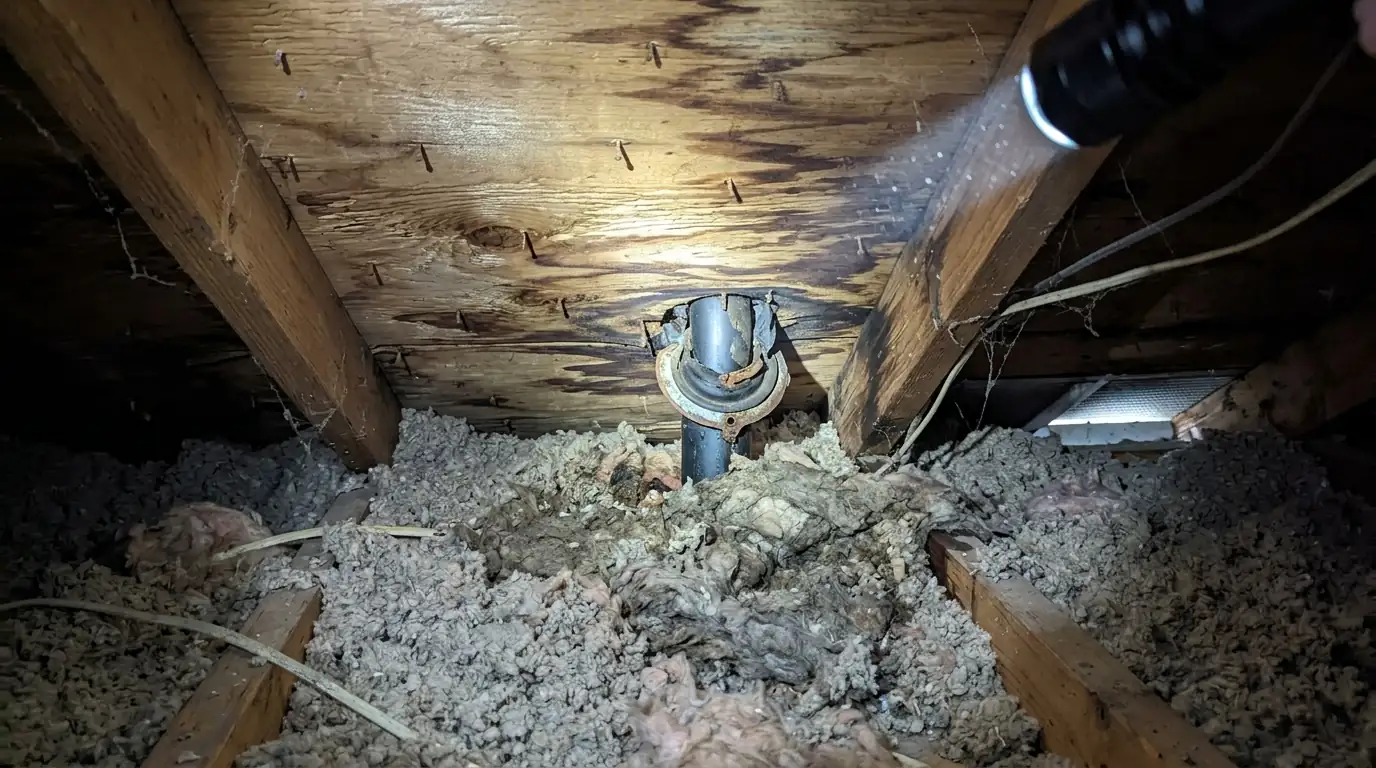
Roof leaks are the hardest to trace because water enters at one point and travels down the sheathing, along a rafter or across the top of the insulation before it drips. We start in the attic, following stains and wet insulation uphill to the likely entry point: a flashing seam, a vent boot, a nail hole or a damaged shingle. Then we check the roof above it and repair the leak, with ceiling water damage repair below if needed.
A pressurized city system means a hidden leak does not stop
Oklahoma City draws its drinking water from five surface reservoirs and, through two treatment plants, serves nearly 1.5 million people across 17 central Oklahoma communities. Every house on that system has supply lines under pressure day and night. That is why a pinhole in a line inside a wall or under a sink keeps leaking until someone closes a valve, and why a slow hidden leak can wet a whole wall cavity before any stain shows. A rising water bill is often the first clue we hear about.
Leak checks you can do before you call
A few simple tests narrow down where a leak is.
| Task | What a homeowner can do | When it needs us |
|---|---|---|
| Water meter test | Stop all water use, note the meter, check again in an hour. | When it moved and you cannot see where. |
| Under the sinks | Look for wet cabinet floors and rusty fittings. | When the cabinet floor is soft or damp. |
| Attic after rain | Look for wet insulation and stained roof boards. | When you cannot safely walk the attic. |
| Watching a stain | Pencil its outline and check whether it grows. | When it grows, sags or feels soft. |
What affects the cost of a leak and moisture inspection
Inspection cost follows how hard the leak is to reach and how many areas need checking.
- Number of areas. One stained ceiling takes less time than a whole floor with a musty smell.
- Access. Attics, crawl spaces and finished basements add time.
- Type of leak. Pressurized plumbing leaks trace faster than roof leaks that only show in rain.
- Small openings. A small inspection hole is sometimes needed behind tile or cabinets.
- Written report. Photos, readings and a moisture sketch for a claim add documentation time.
Published national price ranges
- Most homeowners pay $150 to $400; budget about $280 (per visit), leak detection. How Much Does Slab Leak Repair Cost in 2026? (HomeAdvisor)
These are planning ranges from national cost guides, not our quote. The price for your house depends on the factors above, and we give you a written scope before repair work starts.
How a leak and moisture inspection runs
- Hear the symptomsYou tell us what you have seen, smelled or heard, and when.
- Scan with thermal imagingWe scan the rooms and the spaces above and below for cool patterns.
- Confirm with metersEvery suspect area is checked against a dry reference spot.
- Trace to the sourceWe follow the water path through attics, crawl spaces or cabinets.
- Report and planYou get readings, photos and a plan for the plumber, the roof or the drywall.
Leak detection questions from Oklahoma City homeowners
Watch for a water bill that rises without a change in use, musty smells in one room, bubbling paint, swelling baseboards or a ceiling stain that grows after rain. Any one of these is worth a moisture check.
No. A thermal camera reads surface temperature only. Wet areas usually show as cooler patches, but cold ducts and exterior walls can look similar. That is why every thermal finding is confirmed with a moisture meter.
Usually not. Thermal scanning and meters find most leaks from the surface. Sometimes a small hole behind a baseboard or inside a cabinet confirms a reading, and that costs far less than opening the wrong wall.
It depends on the source. Roof, window and siding leaks are repairs we handle, along with the drywall and paint the water reached. A supply or drain line goes to a plumber, and we repair the damage after.
Wind-driven rain reaches gaps light rain does not, such as loose flashing, worn vent boots and damaged shingles near the ridge. Tracing it in the attic during or just after a storm gives the clearest trail.