
Updated October 2026
Storm damage repair in Oklahoma City starts with keeping more water out: a tarp over a damaged roof, plywood over a broken window and extraction of anything that already came in. The permanent repair to the roof, siding, gutters and interior follows once the house is dry and the damage is documented.
What storm repair covers, from the first night to the last shingle
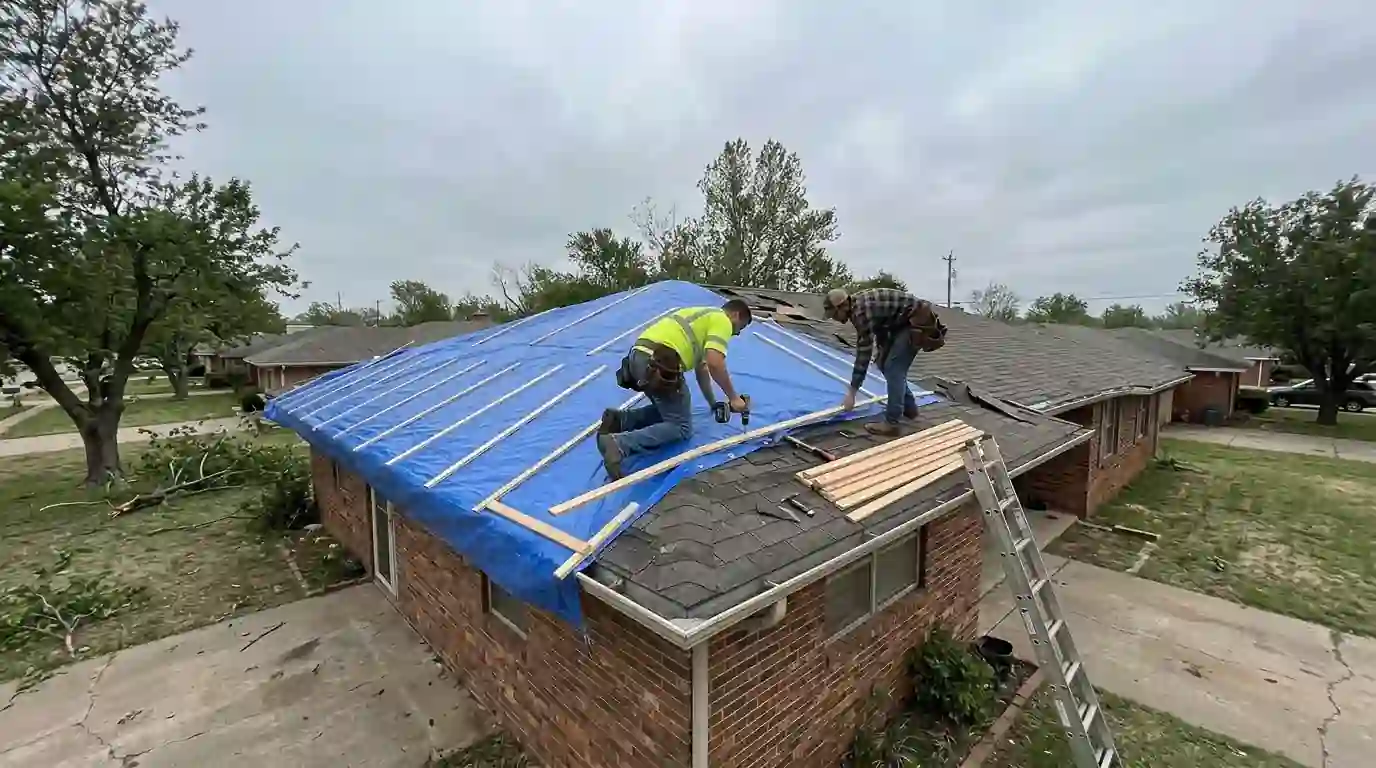
The first visit is about stopping further damage. Open roof areas get tarped, broken windows and doors get boarded, and water that came in gets extracted before it soaks deeper into ceilings and walls. Those temporary steps protect the house, the contents and your claim.
Then we document. Each damaged area is photographed, measured and listed, from missing shingles and cracked siding to wet insulation in the attic. That list becomes the repair scope your adjuster and you both work from.
The repair itself can cover roofing, siding, gutters, windows, fascia and soffit outside, plus drywall, insulation, flooring and paint inside. A tree through the roof may need structural work first, which is covered under tree on house damage repair.
Signs a storm did more damage than you can see from the yard
- Granules at the downspoutsPiles of shingle grit after a storm mean the shingle surface took a beating.
- Creased or lifted tabsA line across a shingle means wind bent it back and broke the seal.
- New ceiling stainsA stain after the storm means water got past the roof or flashing.
- Damp walls under windowsWet sills or bubbling paint show wind-driven rain got into the frame.
Most storm calls fall into one of three patterns, and each one damages the house differently.
Wind Damage
High wind peels shingles from the edges and the ridge, pulls siding panels loose, bends gutters and drives debris into windows. Some damage is obvious from the yard. Some, like shingles that lifted and dropped back with broken seal strips, only shows up on a close inspection. We check the roof, the walls and the attic for each, because lifted shingles let the next rain in and the next wind tear them off.
HomeAdvisor gives a normal range of $2,632 to $22,127 for storm and hail roof repairs, with an average of $12,300.
Ice Storm Damage
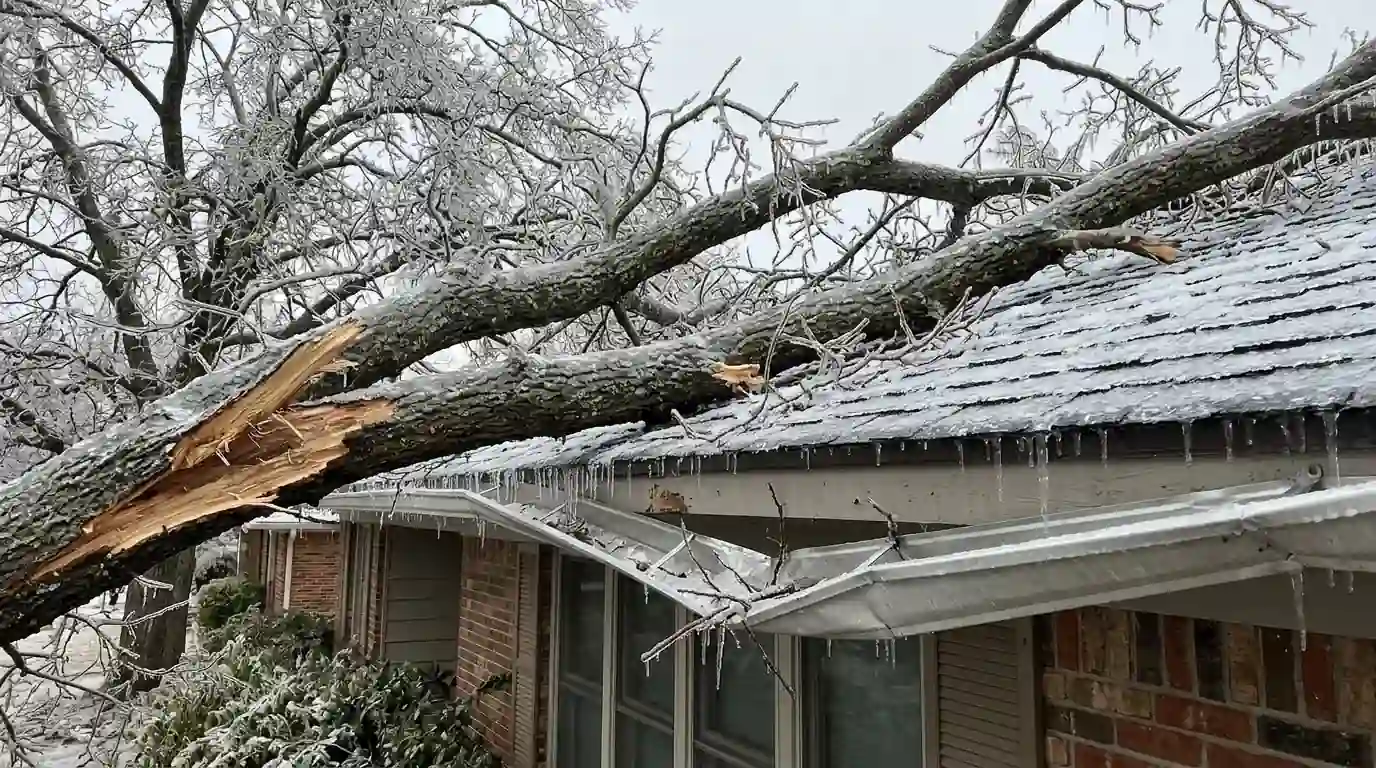
Ice adds weight to everything. Limbs and whole trees come down on roofs, gutters pull off the fascia under the load, and power lines drop. Long outages bring their own damage, since a house without heat for days in a hard freeze can split pipes that leak when heat returns. We tarp roof breaches, remove limbs from the roof, rehang or replace gutters and check plumbing walls and ceilings for leaks after the thaw.
Storm-Driven Water Entry
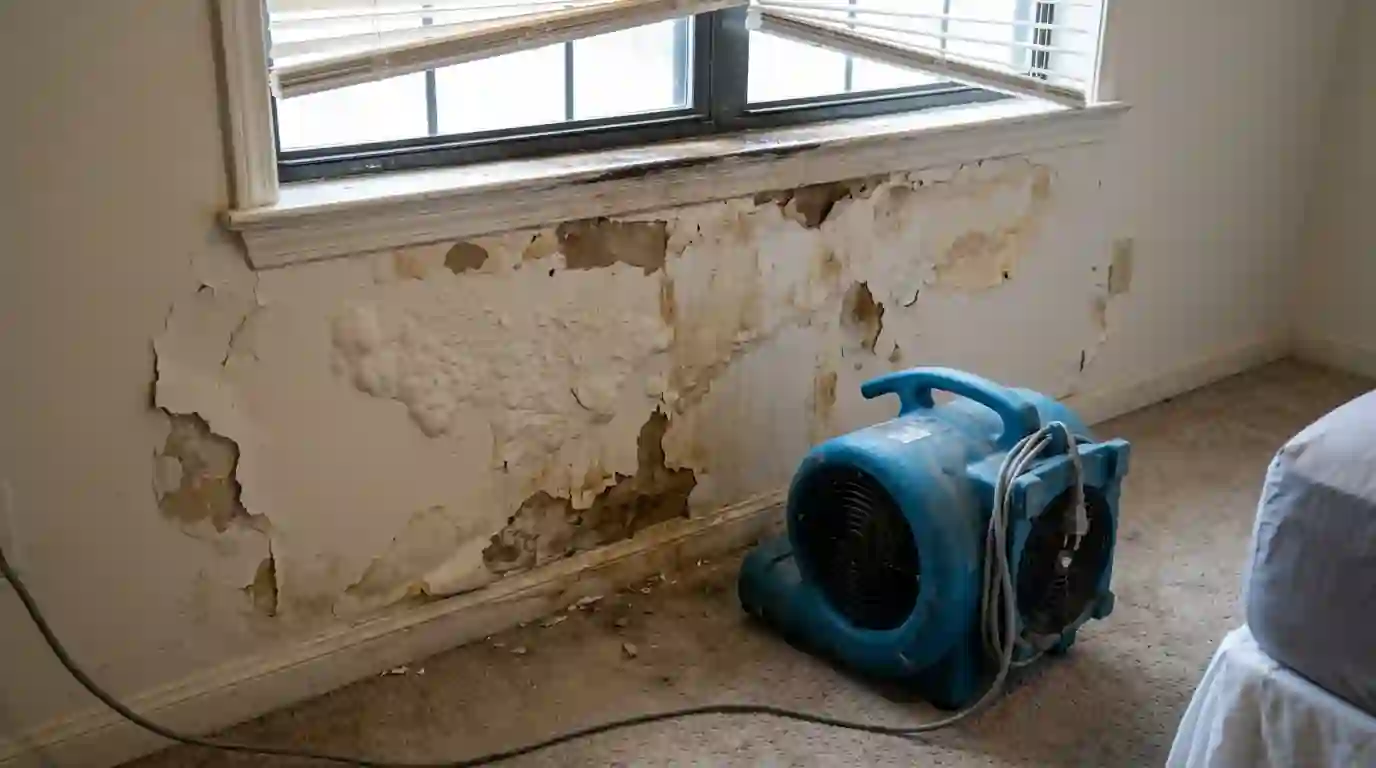
Heavy rain pushed by wind gets in where normal rain does not: under flashing, through window frames, around vent boots and through a damaged roof. The water usually shows up as a ceiling stain, a wet window sill or damp carpet along an exterior wall. We stop the entry point first, then extract and dry the inside with daily readings before any drywall, insulation or paint is closed back up.
Angi puts standard roof tarping at $150 to $3,300, with an average of $450.
How a storm repair moves from the first call to the final repair
- Make it safe and dryWe tarp roof openings, board broken glass and extract water inside.
- Document every areaPhotos and measurements cover the roof, walls, windows, gutters and rooms.
- Dry the interiorEquipment runs with daily readings until ceilings, walls and floors are dry.
- Repair the shellRoofing, siding, gutters, windows and trim close up the house.
- Finish insideDrywall, insulation, flooring and paint go back where the storm reached.
What the October 2020 ice storm showed about storm damage here
Storm damage in Oklahoma City is not only a spring problem. The October 26 to 28, 2020 ice storm put more than an inch of ice on parts of Oklahoma just west of the city, and state emergency management reported that nearly every tree in Oklahoma City had some damage because many still had their leaves. At the peak, more than 375,000 Oklahomans lost power, and more than 40,000 of those outages lasted ten days. That mix is why one ice storm call can mean a limb on the roof and a house that sat without power for days.
What a storm repair scope should list
Storm estimates often cover only the roof. A complete scope looks at the whole house.
- Roof surface, ridge, flashing and vent boots
- Attic decking and insulation checked for water
- Siding, trim, fascia and soffit on every side
- Gutters, hangers and downspouts
- Windows, screens and frames
- Interior ceilings, walls and floors
- Emergency tarp and board-up as separate lines
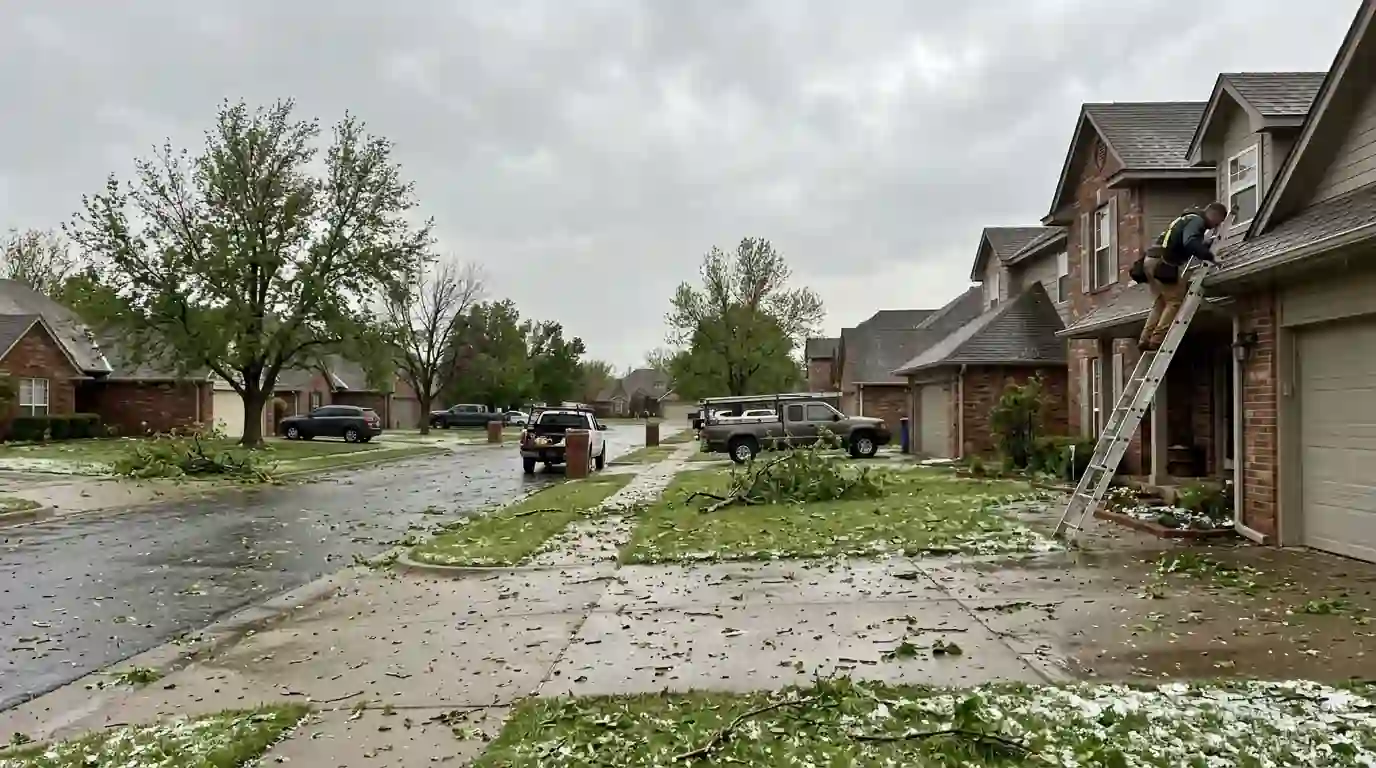
What drives the cost of storm damage repair
Storm repairs range from a few shingles to a rebuilt roof and interior.
- Roof area affected. A few missing shingles is a patch. Widespread creased tabs can mean a new roof.
- Water inside. Wet ceilings, insulation and floors add drying and interior rebuild.
- Tree or limb impact. A limb through the deck adds rigging, framing repair and new decking.
- Exterior systems involved. Roof, siding, gutters and windows each add materials and labor.
- Emergency work. Tarping and board-up are a separate line item from the permanent repair.
Published national price ranges
- Normal range $2,632 - $22,127; post-storm and hail roof repairs cost an average of $12,300 (per job), storm damage roof repair. How Much Do Storm and Hail Damage Roof Repairs Cost in 2026? (HomeAdvisor)
These are planning ranges from national cost guides, not our quote. The price for your house depends on the factors above, and we give you a written scope before repair work starts.
Storm damage questions we hear after a big storm
Make sure everyone is safe and stay clear of downed power lines. Photograph the damage from the ground before anything is moved, then call to get openings tarped or boarded. Keep receipts for emergency work.
No. Most policies expect you to take reasonable steps to prevent more damage, and a tarp is one of them. Photograph the damage first, then have it covered. The adjuster can still inspect the roof afterward.
Look for shingles at odd angles, creased tabs, granules piled at the downspouts and new ceiling stains after the next rain. Wind can break the seal strip without removing the shingle, leaving it ready to blow off later.
Damage from falling trees and the weight of ice is commonly covered by homeowners policies, though terms vary. Removing a fallen tree that hit nothing often is not. Check your policy and photograph everything before cleanup.
Yes. Doing them in one scope avoids repeat setups and keeps the claim records in one place. We sequence the work so the roof is closed first, then the walls, gutters and trim.