
Updated October 2026
Emergency roof tarping in Oklahoma City keeps rain out of an open roof until the permanent repair. A tarp weighted with bricks or tacked with a few nails tends to blow loose in the next gust, so we fasten it through wood battens, run it over the ridge where possible and cover well past the damage.
What separates a tarp that holds from one that blows off
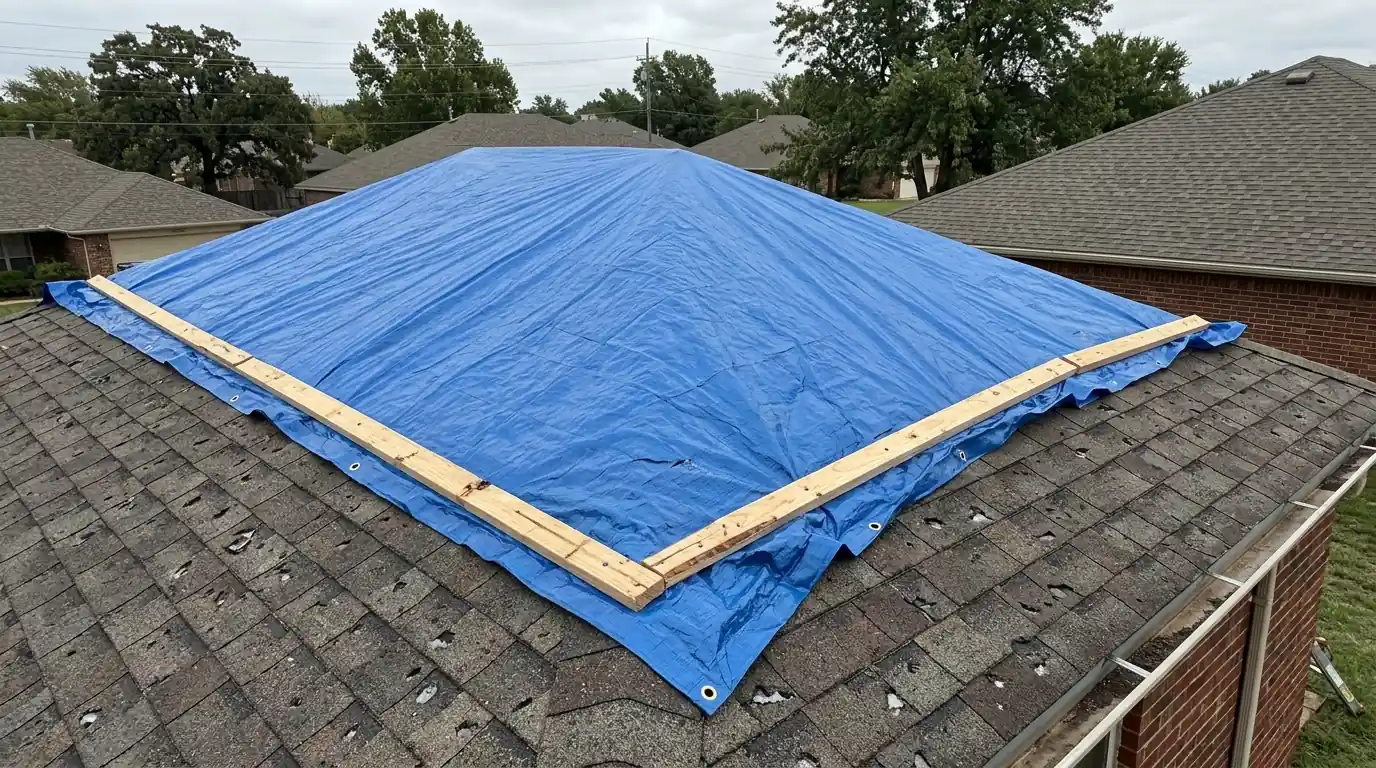
Most loose tarps fail at the edges. Wind gets under an unfastened edge, the tarp turns into a sail and the grommets tear out. Then the opening is uncovered again and the tarp is in the neighbor's yard.
We size the tarp well past the damage and, on most roofs, carry it over the ridge so water cannot run under the top edge. The edges are rolled around 2x4 battens screwed through to the deck, which spreads the load along the whole edge.
Before the tarp goes on, we photograph the damage and check that the deck is solid enough to walk on. Broken decking gets a plywood patch first, so the tarp is not stretched over a hole where it sags and holds water.
The tarp itself is similar every time. What changes is what sits under it.
Storm Tarps
After hail or wind, the usual tarp covers missing shingles, a cracked slope or a hole from a falling limb. We cover the damage with a margin on all sides, carry the tarp over the ridge when the damage is near it and batten every edge. We also leave the drainage path open, so water sheds off the tarp instead of pooling against a batten and working its way in at a fastener.
Angi puts standard tarping at $150 to $3,300, with an average of $450.
Tarping After a Fire
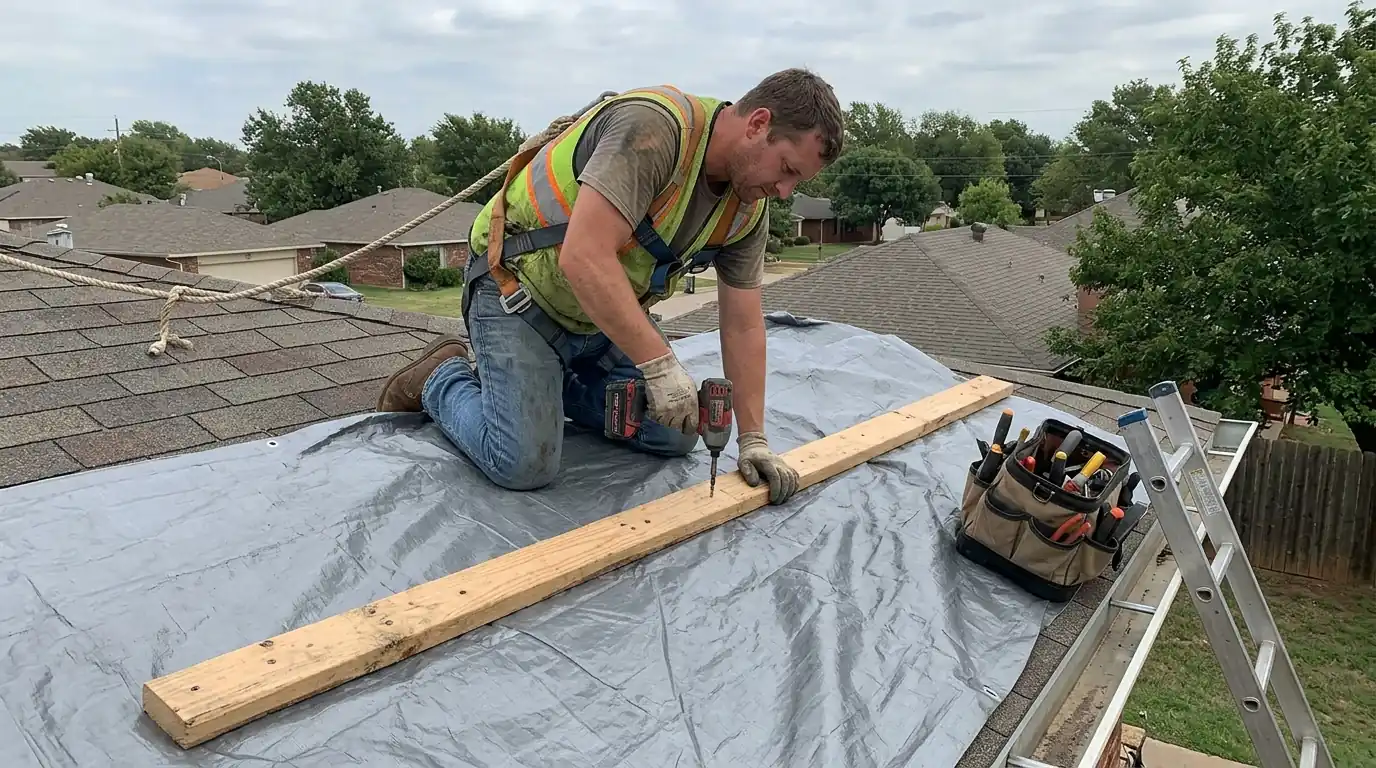
After a fire, the roof often has a hole cut by firefighters for ventilation, with charred decking around it. We check the framing near the opening before anyone walks there, cut burned decking back to sound wood, and cover the area so rain does not add water damage on top of the smoke. A closed roof also keeps the rooms below secure while the house sits empty during the cleanup.
Covering Holes in the Roof Deck
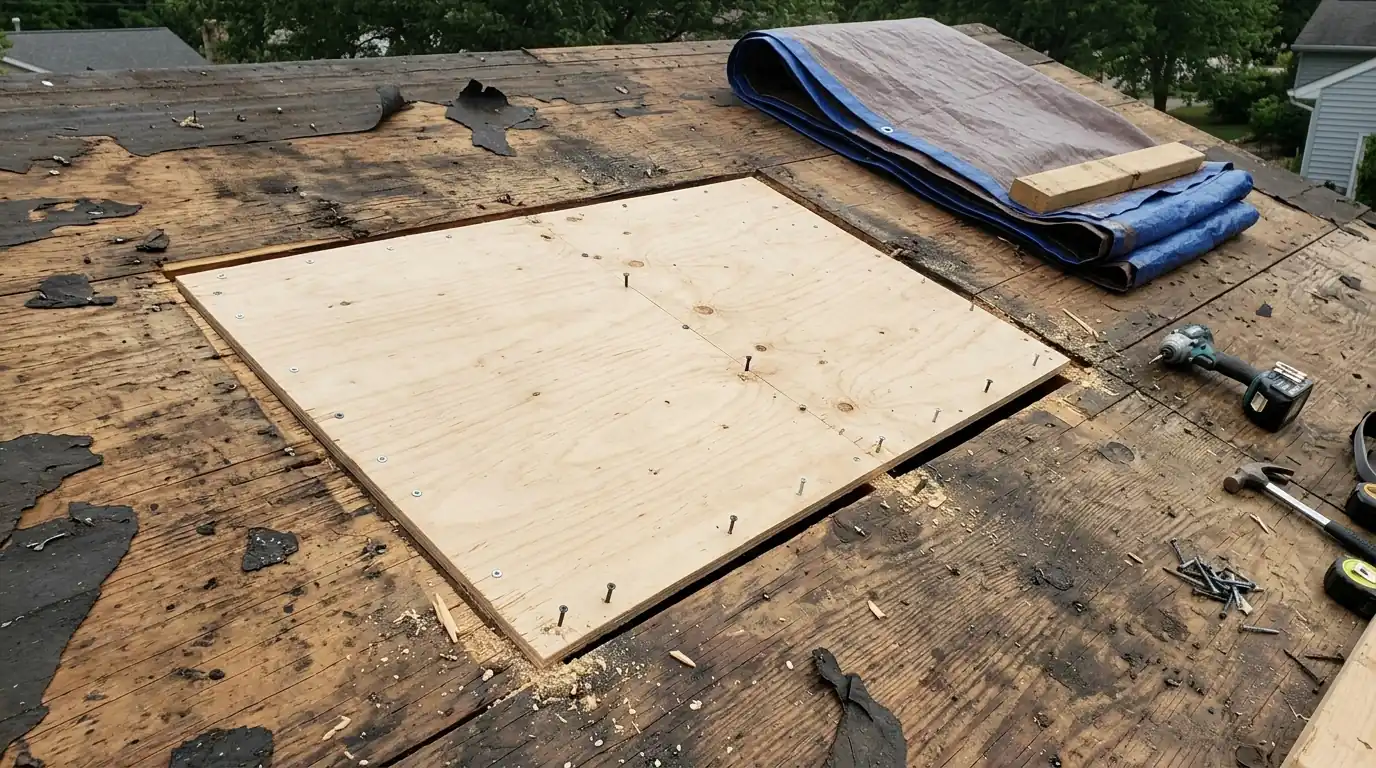
When a limb or debris punches through the decking, a tarp alone sags into the hole and collects water. We cut the broken decking back to the nearest rafters, screw a plywood patch over the opening and then tarp over the patch. The patch makes the cover rigid, keeps anyone on the roof from stepping into the hole and gives the roofer a clean, square edge to start from later.
How long an emergency tarp can stay on
A well-fastened tarp is a temporary cover meant to last until the permanent repair, usually a matter of weeks. Sun breaks the material down, and battens can loosen as the wood dries.
If the repair will take longer because the claim is open or materials are back-ordered, the tarp should be checked after strong storms and replaced before it wears through.
How we tarp a roof, start to finish
- We look before we climbGround and attic checks for weak decking, debris and power lines.
- We photograph the damageDated photos of the opening and the rooms below.
- We patch holes in the deckBroken decking is cut back to rafters and covered with plywood.
- We set and batten the tarpPast the damage, over the ridge where possible, edges screwed through battens.
- We keep an eye on itIf the repair is weeks out, we recheck the tarp after strong wind.
Why tarps stay in demand after a hail season here
A Cotality report cited by The Oklahoman counted 38,737 Oklahoma homes hit by damaging hail in 2025, ranking the state third in the nation. Big stones land close to home: on September 24, 2024, trained spotters measured hail around 2.25 inches about 3.1 miles northeast of Moore. Hail that size can crack shingles and vents across whole streets in one storm, and permanent repairs then wait their turn. A battened tarp keeps an Oklahoma City attic dry during that wait.
What you can safely do before the tarp goes on
Tarping looks simple from the ground. On a wet, damaged roof it is one of the riskier jobs a homeowner can take on.
| Task | What a homeowner can do | When it needs us |
|---|---|---|
| Catching drips | Set out buckets, move belongings and switch off the breaker if water reaches a fixture. | When the ceiling sags or water spreads. |
| Photos | Shoot from the ground and from the attic if you can reach it safely. | When the damage only shows from the roof. |
| The tarp itself | Very little, safely. Wet shingles and wind make slopes dangerous. | Any time someone has to climb up. |
| Storm debris | Pick up shingles and branches in the yard, away from any downed lines. | When debris is on the roof or stuck in the deck. |
What changes the cost of tarping a roof
Tarping prices follow the size of the opening, the roof itself and what has to be fixed before the tarp goes on.
- Size of the damaged area. Bigger openings need bigger tarps and more battens.
- Roof pitch and height. Steep and two-story roofs take more safety setup.
- Broken decking. A plywood patch adds material but stops the tarp from sagging.
- Debris on the roof. Limbs or wreckage come off before anything is covered.
- Timing of the call. Rush work on a storm night costs more than a scheduled cover.
Published national price ranges
- $1.00 and $2.80 per square foot for rush services; standard tarping $150 to $3,300, average $450 (per sq ft / per job), emergency roof tarping. How Much Does It Cost to Tarp a Roof? [2026 Data] (Angi)
These are planning ranges from national cost guides, not our quote. The price for your house depends on the factors above, and we give you a written scope before repair work starts.
Roof tarping questions homeowners ask us
The battens are screwed through to the deck, leaving small holes in the shingles under them, usually inside the area being repaired anyway. A loose tarp flapping for weeks does more harm, scrubbing granules off the shingles around it.
Many policies expect you to take reasonable steps to prevent further damage after a storm, and tarping is the usual example. Coverage still depends on your policy. Keep the invoice and photos, and tell your adjuster the roof was tarped.
In steady rain, often yes, with care. In lightning or high wind, nobody should be on a roof. Then we start inside, moving belongings and catching water, and tarp once the storm passes.
Big enough to cover the damage with plenty of margin on every side, and long enough to wrap over the ridge if the damage is near it. A tarp cut to the exact size of the hole leaks at the edges.
Usually yes, since a tarped roof keeps rain out of the living space. If the hole is large, water soaked the ceiling below or the framing was hit, keep people out of that room until the ceiling is checked.