
Updated October 2026
Commercial storm damage repair in Oklahoma City usually starts on the roof, because water ponding on a punctured flat roof drains straight into ceilings, stock and electrical gear below. Getting the openings covered and broken glass boarded comes first, and the full damage inspection follows once the building is closed in.
Why storm damage on a commercial building needs a different plan
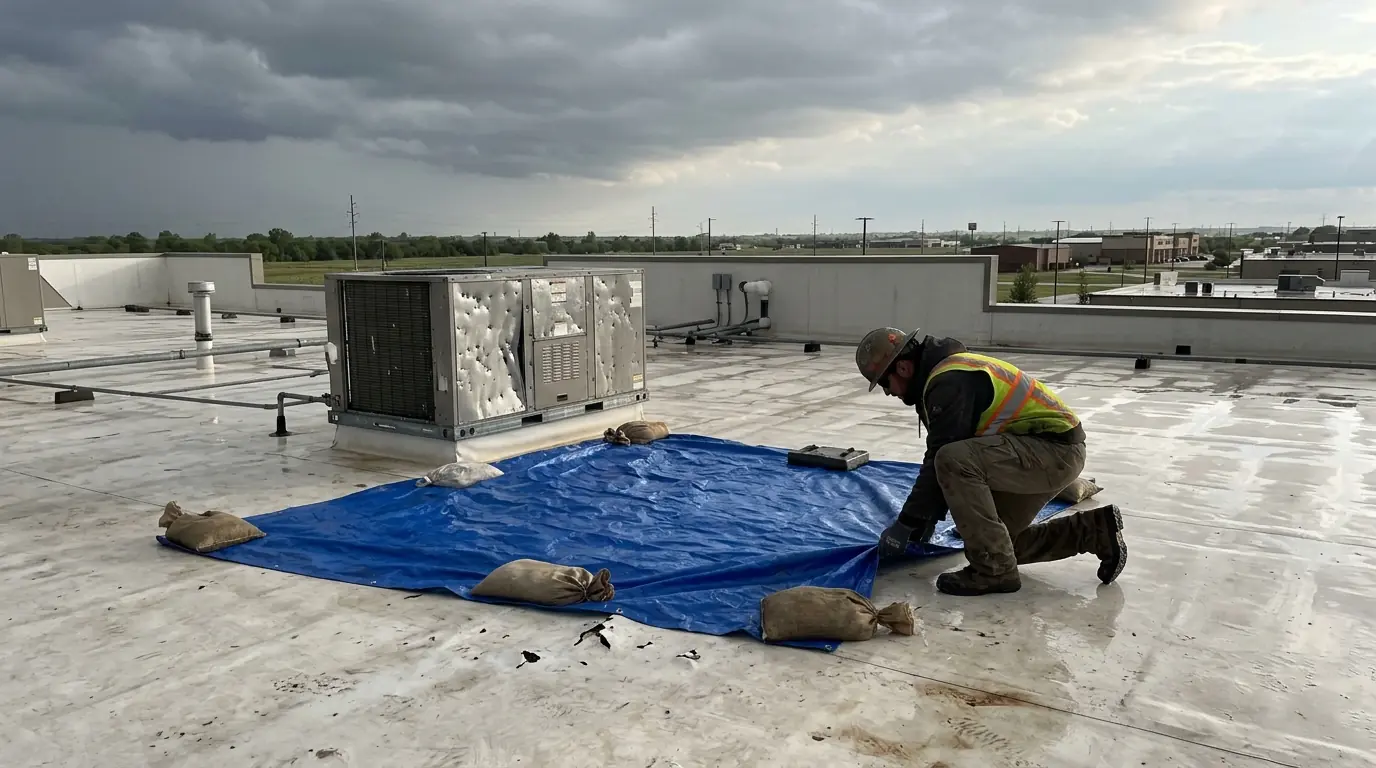
Most commercial buildings have low-slope membrane roofs, not shingles. Hail punctures the membrane, wind peels back edges and flashing, and water follows the slope to the nearest weak spot.
We start with temporary protection: tarping or patching the roof openings, boarding broken storefront glass, and taking down or securing anything loose on the front of the building. Then we deal with the water already inside, extracting it and drying ceilings, walls and floors.
Every part of the damage gets dated photos and notes, roof to sales floor, because a commercial storm claim often runs through a building policy and a tenant policy at once.
Storm damage signs to check after the weather passes
- New stains on ceiling tilesFresh rings in a drop ceiling after a storm often point to a punctured roof membrane above.
- Water ponding on the roofStanding water that stays a day or two can mean clogged drains or a low spot opened by debris.
- Cracked or crazed storefront glassHail can star or crack glass without breaking it out completely.
- Loose metal at roof edgesLifted coping or edge metal lets wind get under the membrane in the next storm.
- A sign or canopy leaningWind can loosen fasteners, so a slight lean can turn into a fall in the next gust.
Storm calls from businesses usually start with one of three parts of the building, and each has its own temporary fix before the permanent one.
Flat and Low-Slope Roof Leaks
Membrane roofs fail differently from shingles. Hail can puncture or crush the surface over insulation board, and wind can pull loose the edge or flashing around rooftop units. We find where water is entering, which is not always over the wet ceiling, then apply a temporary patch or tarp weighted and fastened for a flat surface.
Wet roof insulation under the membrane holds water and keeps leaking, so the permanent repair plan includes checking how much of it has to be cut out.
Storefront Glass

Broken storefront glass is a security problem as much as a weather one. We board the opening with plywood fitted to the frame so the building can be locked, and clean up the glass inside and out so customers and staff are not walking through it. Frames bent by wind or flying debris are noted for the glass replacement, since a new pane in a bent frame will not seal.
Signage and Canopies
Signs, awnings and metal canopies catch wind like a sail. After a storm they may hang by a few fasteners or pull water into the wall where they were anchored. We take down or secure what is loose so it cannot fall, cover the holes left in the wall or fascia, and dry anything that got wet behind them. Lit signs need the circuit shut off by an electrician first.
From storm call to permanent repair
- We close the building inRoof openings get tarped or patched, broken glass gets boarded and loose signs or canopies get secured.
- We stop the inside damageWater comes out of floors and ceilings, wet tiles come down and drying equipment goes in.
- We inspect and documentRoof, glass, signage and interior each get dated photos and written notes for owner and adjuster.
- We scope the permanent workA line-item scope separates roof, glass, sign and interior repairs so each can be approved.
- We repair and walk itPermanent repairs are completed, and the owner or manager walks the building with us.
Why hail is a commercial roof problem in this metro
Hail here is not a rare event for building owners. The two May 2010 hailstorms over Oklahoma City, on May 10 and May 16, each left damage estimates in the hundreds of millions. In September 2024, NWS Norman recorded hail up to 2 inches about 5.5 miles west of Edmond that broke vehicle windows. Hail that breaks car glass can crack a storefront and bruise a flat roof membrane on the same afternoon.
What a business owner can do after a storm, and where to stop
Some first steps are quick and safe. Others put staff on a roof or near broken glass and live wiring.
| Task | What a homeowner can do | When it needs us |
|---|---|---|
| Ceiling leaks | Move stock and electronics, set out buckets and photograph the stains. | When tiles sag, water runs near lights or the leak spreads. |
| Broken glass | Keep people away, sweep loose glass from walkways and photograph the damage. | When the opening needs boarding so the building can be locked. |
| Roof damage | Look from the ground or from inside, and note where water comes in. | Any time someone would need to climb onto the roof after a storm. |
| Loose signs and canopies | Close the area below and shut off power to lit signs if you can. | When anything is hanging, leaning or pulling away from the wall. |
What decides the cost of commercial storm repairs
Commercial storm repairs are priced from the inspection, because roof type, building size and interior damage vary too much for a flat number.
- Roof type and size. A large membrane roof with many penetrations takes more patching and inspection than a small shingled one.
- Wet roof insulation. Insulation boards that soaked up water must be cut out and replaced along with the membrane above.
- Glass sizes and type. Large storefront panes and tempered or insulated glass cost more to replace than small windows.
- Interior water damage. Ceilings, walls, flooring and stock below the leak add extraction, drying and rebuild work.
- Signs and canopies. Removing, storing and reinstalling signage can need electrical work and lifting equipment.
- Access and lift equipment. Tall buildings and roof edges may need lifts or ladders rated for the height.
Commercial storm damage questions from Oklahoma City owners
No. Water on a low-slope roof is pushed by the slope toward any opening, so a patch has to go on the membrane from above. Inside, we catch the water, take down wet ceiling tiles and dry what is underneath.
No. Insurers generally expect you to protect the building from further damage. Photograph the broken glass first, then board it. We photograph it again before and after boarding so the adjuster sees the original damage.
Water travels along the membrane, the insulation board and the deck before it finds a seam or fastener to drip through. The leak inside can show up many feet away from the actual opening, so the roof gets traced, not guessed.
Often, yes. Roof work happens above the sales floor, and interior drying can be sealed behind plastic. If water reached the sales floor or electrical panels, those areas may need to close until they are dry and checked.
A qualified electrician should disconnect and check any lit sign before it is removed or reinstalled. We secure the sign, cover the wall openings and work around the electrician's schedule so the job keeps moving.