In the first hour, stop the water, make the house electrically safe, and take photos before anything moves. Then lift what you can off wet floors and leave built-in materials where they are. The EPA advises drying water-damaged areas within 24 to 48 hours to prevent mold, so that clock starts the moment the water does.
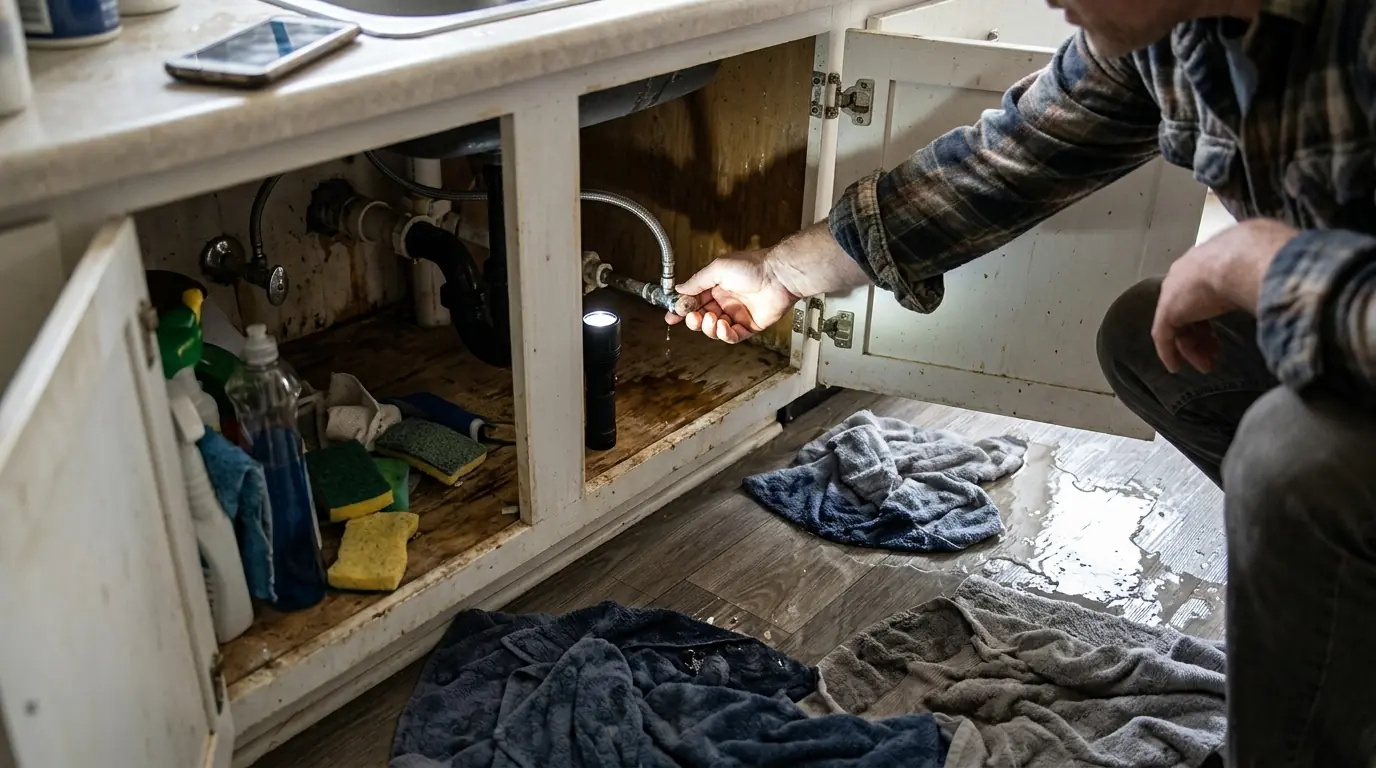
Stop the water at the fixture, then at the main
Most indoor water losses start at a fitting: a supply line under a sink, a washing machine hose, a toilet fill valve, a water heater, or a pipe in an attic or outside wall. Each of those usually has a small valve close by. Turn it clockwise until it stops. If you cannot find it, or the water keeps coming, go to the main shutoff for the house.
On many slab homes in Oklahoma City the main sits where the line enters the house, often in the garage, near the water heater or in a utility closet. Some houses only have a shutoff at the meter box near the street, which takes a meter key. Find out which kind you have before you need it. If a pipe is spraying inside a wall or ceiling and nothing stops it, call a plumber and call us at the same time. Pulling water out of the floors and walls does not have to wait for the pipe repair.
Make the house safe before you walk through it
Water and electricity are the first hazard. If water is near outlets, cords, a power strip or the electrical panel, do not stand in it to reach anything. Turn the power off at the breaker only if you can reach the panel from a dry spot with dry hands. If you cannot, leave it alone and call the electric utility or the fire department.
The second hazard is overhead. A ceiling holding water sags or bulges, and it can drop all at once with real weight behind it. Stay out of that room, keep kids and pets out, and do not poke the bulge or stand under it to drain it. Close the door and put towels down outside the room if you can do it without walking beneath the ceiling. Our ceiling water damage repair page explains what happens to that drywall next.
- Sagging or bulging ceilings, even after the dripping stops
- Outlets, cords and plugged-in appliances sitting in water
- The electrical panel when the floor around it is wet
- Water from a toilet with waste in it, a floor drain or outside, which can carry sewage
Take photos and video before anything moves
Spend two minutes with your phone before you start lifting things. Film a slow walk through each wet room, then take still photos of the source, the waterline on walls and cabinets, the wet flooring and anything damaged. Get a wide shot of every room and a close shot of the model labels on any appliance that sat in water.
If the source is a failed part, such as a burst supply line or a split washer hose, keep it. Put it in a bag and set it somewhere dry. Plumbers and adjusters often want to see it, and it is easy to toss during cleanup. Write down the time you found the water and the time you shut it off. Those notes take a minute now and are hard to rebuild a week later.
What to lift off the floor in the first hour
Move things that wick water or bleed color. Furniture legs sitting on wet carpet leave rust and stain rings within hours, so slide foil, plastic lids or wood blocks under them, or move the piece to a dry room. Lift curtains and bed skirts off the floor. If water reached a bedroom, lift the mattress and box spring onto chairs or another dry surface so air can reach the underside.
- Electronics and power strips, once the power to them is off
- Area rugs, which can bleed dye into wet carpet underneath
- Paper files, photos and books, laid flat in a dry room
- Cardboard boxes, which collapse and wick water into whatever is inside
- Shoes, toys and anything stored on closet floors
- Medication, valuables and anything you will need in the next few days
Leave built-in materials alone. Wall-to-wall carpet, baseboards, cabinets and drywall stay in place until someone measures the moisture. Pulling them early often makes the job bigger, not smaller, and it can remove material that would have dried fine.
Dealing with this right now? Call (405) 689-1123 any hour. A person answers and we get a crew moving.
Household moves that slow the drying down
A few common reactions make the job harder. Do not use a regular household vacuum on water; it is not built for it and it puts a cord and a motor in a wet room. Do not switch on a ceiling fan or ceiling lights in a room with a wet ceiling. Do not crank the heat to dry things out. Warm, still, humid air pushes moisture into rooms that were dry and gives mold what it needs.
Do not close the house up and wait to see. The EPA advises drying water-damaged areas and items within 24 to 48 hours to prevent mold growth, and wet carpet pad, the bottom few inches of drywall and the space under cabinets do not dry on their own in that time. Running the air conditioner and opening interior doors helps a little. A box fan aimed at wet drywall mostly dries the paint while the core stays wet.
Skip the bleach as well. It does not dry anything, it can discolor carpet and trim, and it adds fumes to a closed house.
Clean water, gray water and sewage are not the same job
What you do next depends on where the water came from. Water from a supply line, a burst pipe or a water heater starts out clean. Water from a washing machine drain, a dishwasher or a sink overflow carries soap, food and lint, and it gets worse the longer it sits in a warm house. Water from a toilet with waste in it, a backed-up floor drain, a sewer line, or floodwater that came in from outside is contaminated from the first minute.
Clean water losses are the ones where fast action saves the most. Carpet, pad, drywall and cabinets can often be dried in place if drying starts within the first day. Contaminated water changes that. Porous materials it touched, such as carpet, pad and the lower part of the drywall, are usually removed rather than dried, and the surfaces left behind get cleaned and disinfected.
If you think the water is contaminated, keep people and pets off it, wear rubber gloves and boots if you have to walk through it, wash your hands well afterward, and do not try to clean it up with household mops and towels.
When to call, and what the first visit looks like
Call when water has soaked carpet, reached the bottom of a wall, run under cabinets or come through a ceiling, or when it came from a dirty source. A small clean spill on tile that you can mop up in a few minutes does not need us.
On the first visit we find the edges of the wet area with moisture meters and a thermal camera, pull standing water with extraction tools, and decide what stays and what has to come out. Then we set air movers and dehumidifiers and take readings each day until the wet materials match a dry spot in the same house. Our water damage restoration page explains that process, and carpet water extraction covers when carpet and pad can be saved.
Where we can take it from here
Questions people ask in the first hour of a leak
Not right away. Carpet that got wet from a clean source can often be dried and stretched back, but tearing it up by hand stretches and damages it. Lift area rugs, leave wall-to-wall carpet down, and let someone check whether the pad underneath has to come out.
If water is still coming and no valve stops it, call a plumber to repair the pipe. Call us at the same time. Removing water from floors and walls does not have to wait for the plumbing repair, and starting both together saves drying time.
Close the cold water valve on top of the tank. On a gas heater, turn the control to off or pilot. On an electric heater, switch off its breaker if you can reach the panel from a dry spot. Leave draining the tank to a plumber.
It depends on what was in the bowl. Overflow from the tank or a clean bowl is usually low risk. Water from a bowl with waste in it, or from a floor drain backing up, should be treated as sewage. Keep people and pets off it and wear gloves.
In most cases, yes. The air conditioner pulls some moisture out of the air and keeps the house from turning warm and muggy. Keep interior doors open. If water came through a ceiling near a vent or return, or the unit itself leaked, leave it off until it is checked.