After a small kitchen fire, most hard surfaces can be cleaned: sealed cabinets, countertops, tile, metal and most painted walls come back with the right method. What often gets replaced is what heat warped or residue soaked into, such as the range hood, nearby upper cabinets and textured ceiling. Smoke travels, so check rooms the fire never reached.
Why a small fire leaves a big mess
The National Fire Protection Association says cooking fires are the number one cause of home fires and home fire injuries, and that unattended cooking is the leading cause of kitchen fires. Most of these fires are small. A pan of oil catches, someone covers it with a lid or the fire department puts it out, and the flames never leave the stovetop.
The smoke does not stay put. Hot smoke rises, spreads across the ceiling and moves through the house with the air. It settles on cooler surfaces, gets pulled into the HVAC return, and works into closets, curtains and bedding at the other end of the house. That is how a fire that scorched one cabinet leaves a film on a bedroom ceiling and an odor in every closet.
Wait for the fire department release, then go in carefully
If the fire department came, do not go back in until they release the property. Even when the flames look out, heat can linger in cabinets, the wall behind the range and the hood. Ask them whether the gas and electricity to the range are safe to use. If anything still smells hot, or a cabinet or wall feels warm, get out and call them back. Test the smoke alarms once you are back in, and replace any that were exposed to heavy heat or smoke.
Once you are cleared to go in, open windows for fresh air and wear gloves. Soot is oily and acidic, and it smears. Keep children, pets and anyone with asthma out of the kitchen until it has been cleaned. A few common reactions make the cleanup harder than it needs to be:
- Wiping soot with a wet rag, which pushes it into paint, grout and wood grain
- Running the heating or cooling system before the filter is changed and the return is checked
- Eating food that sat open on counters, near the stove or in a pantry with residue on the shelves
- Painting over soot or smoke stains without cleaning and sealing them first
- Using scented sprays to cover the odor, which only adds another smell
The kind of residue tells you what cleanup it needs
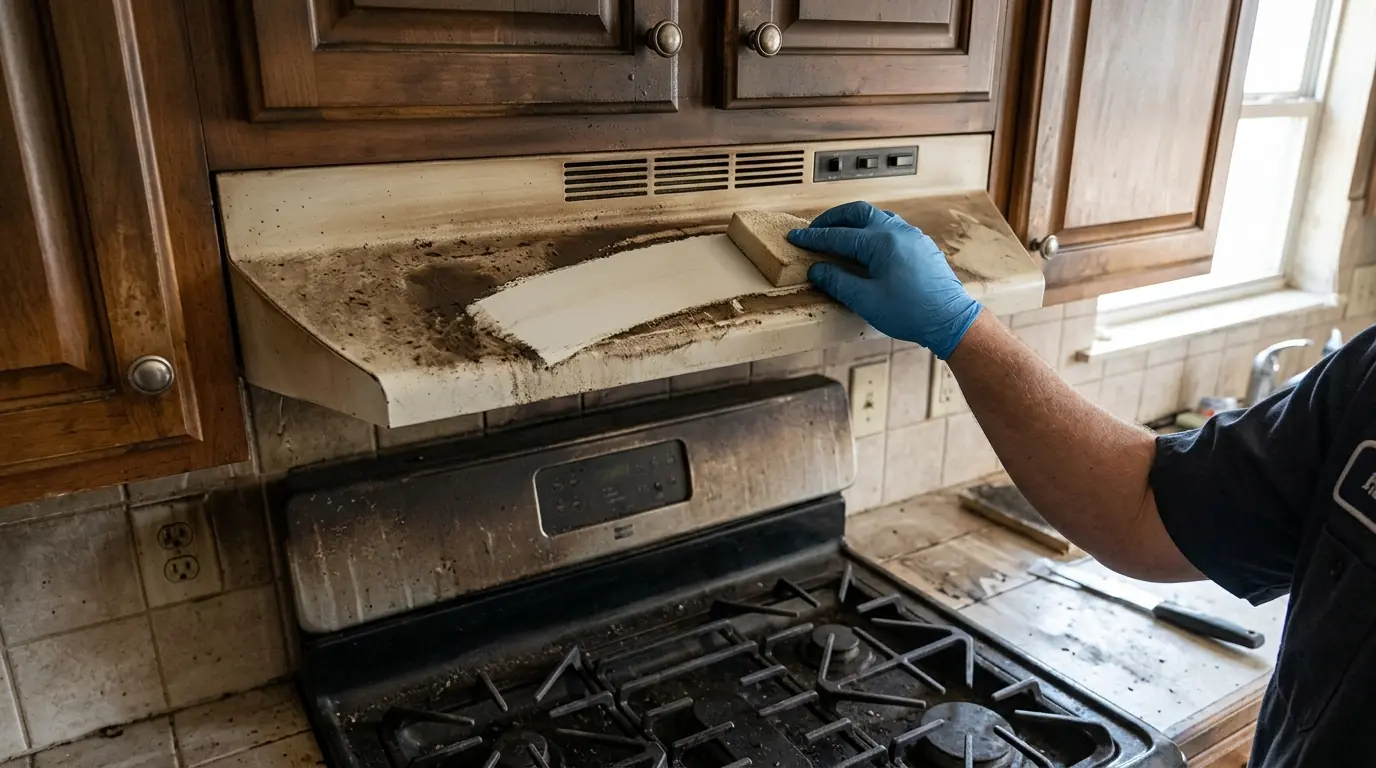
Kitchen fires usually leave one of two residues. An oil or grease fire that burns hot leaves dry, powdery soot, which can lift off with dry chemical sponges if nobody smears it first. Food that smolders on a burner, such as a pot boiled dry, leaves protein residue: a thin, sticky, yellow-brown film that is hard to see and very hard to get rid of, with a strong, lingering odor. Test any cleaner on a small hidden spot first, because some finishes and paints dull or stain.
Protein residue fools people. The kitchen looks clean, but cabinet doors feel tacky and the smell keeps coming back. It needs degreasing cleaners and, often, more than one pass. Melted plastic, such as a cutting board or utensil left on a hot burner, leaves black, smeary residue with a sharp smell. Our smoke and soot damage cleanup page covers the methods for each type.
What usually cleans and what usually gets replaced
Most of a kitchen comes back with careful cleaning. The question for each surface is whether heat damaged it or residue soaked in.
- Usually cleaned: stone and laminate countertops, tile and grout, sealed cabinet faces, stainless and enamel appliance exteriors, glass, metal hardware and most painted walls away from the range
- Usually cleaned, then sealed and repainted: walls and ceilings where cleaning lightens a smoke stain but does not remove it
- Often replaced: the range hood or the microwave over the range if heat warped them, and upper cabinets beside the stove with blistered finish or warped doors
- Usually replaced: popcorn or heavy texture on the ceiling over the stove, open food, plastic utensils, and potholders and towels that were near the flames
Particleboard cabinet boxes deserve a close look. Once heat or the water used to put the fire out reaches their raw edges, they swell and do not recover. Our kitchen fire damage repair page covers cabinets, counters and the ceiling over the range. For planning, HomeAdvisor lists smoke damage cleanup at $200 to $1,200 per room as a national range.
Dealing with this right now? Call (405) 689-1123 any hour. A person answers and we get a crew moving.
Clothes, bedding and the rest of the house
Smoke reaches closets and drawers, so check soft goods throughout the house, not only in the kitchen. Clothing, bedding and curtains with light odor often come clean with a regular wash and an odor-neutralizing laundry additive, or with dry cleaning when the cleaner is told the items have smoke odor. Shake items with visible soot outdoors first, and never wash them with soot still on them.
Upholstered furniture and mattresses are harder. Light odor can often be cleaned and deodorized, while heavy soot or a strong smell that survives cleaning usually means replacement. Books, papers and photos with a light film can be wiped with a dry sponge. Have electronics that sat near the fire checked before use, because soot and heat can damage what is inside.
When the residue is heavy or several rooms need work, belongings can be packed out, cleaned off site and returned after the rebuild, so nothing gets coated again during sanding and painting.
Getting the smell out for good
Smoke odor lives in the residue. Clean every surface first, including inside cabinets and drawers, the tops of the upper cabinets, light fixtures, ceiling fan blades and the HVAC return grille. Change the furnace filter. Wash or professionally clean curtains, rugs and soft goods from the affected rooms.
If the odor is still there after cleaning, it is coming from a spot that was missed or from a porous surface. Sealing primer over cleaned walls and ceilings locks in what cleaning cannot reach. Ozone and hydroxyl treatments break down odor that has worked into materials, but they come after cleaning, not instead of it, and nobody, pets and plants included, stays in the house during ozone work. Our odor removal work covers both.
When a small fire is a weekend job, and when it is not
A pan fire that left light, dry soot on the range and the wall behind it is a reasonable cleanup for a homeowner with dry sponges, a degreaser and patience. Call when soot reached the ceiling or other rooms, when the residue is sticky and the smell will not leave, when cabinets or the hood were heated, or when water from firefighting soaked the floor or the cabinet bases. If you clean it yourself, work in order: dry soot removal with dry chemical sponges, then a degreaser on any sticky film, then a clean water rinse and a dry towel. Change sponges often, since a loaded sponge only spreads soot.
A professional cleanup starts by testing each surface to pick the right method, cleans from the top of the room down so nothing drips onto finished areas, and checks the ductwork, because a running system can carry residue into rooms that were clean.
Where we can take it from here
Kitchen fire cleanup questions
Food sealed in a closed refrigerator that stayed cold is often fine, but check the door seal and the smell. Throw out anything that was open on the counter, in the pantry or near the stove, and anything in the refrigerator if the power was off for hours.
Not until it has been checked. Heat can damage wiring, gas connections, knobs and the hood above. If the fire department came, ask them whether the range is safe. If you are unsure, have an appliance technician or the gas company look before you cook on it.
Odor held in porous materials such as drywall paper, unsealed wood and fabric releases more when humidity rises. That usually means some residue was missed or soaked in too deep for cleaning. Recleaning, a sealing primer and an odor treatment deal with it.
If the system ran during or after the fire, check the filter and the return. Gray or black residue there means soot went through the ducts. A small fire with the system off often needs only a new filter, but sticky residue in the return calls for duct cleaning.
Only after they are cleaned and degreased and a stain-blocking, odor-sealing primer goes on first. Paint over raw smoke residue peels, and the stain and smell bleed through. Cabinets with blistered or warped finish from heat are usually refaced or replaced instead.