There is no single price. Bob Vila puts water damage restoration at $1,305 to $5,707 per project, with a national average of $3,455, and HomeGuide gives $2,000 to $6,000 on average with a full range of $150 to $100,000. Those are national planning ranges, not a quote. The water source, the area and the rebuild move it most.
Published national ranges for water damage work
Cost guides publish national figures drawn from contractor surveys and quotes. They are useful for planning and for spotting an estimate that is far off. They are not what any Oklahoma City job will cost, and none of them are our prices.
- Water damage restoration overall: Bob Vila puts it at $1,305 to $5,707, with a national average of $3,455
- The same job from a second source: HomeGuide lists $2,000 to $6,000 on average, with a full range of $150 to $100,000
- Burst pipe repair: HomeGuide gives $400 to $2,000, national average $1,200, for the pipe repair itself
- Ceiling water damage: HomeGuide lists $500 to $2,500 on average to fix the leak and repair the drywall
- Flood cleanup by professionals: HomeAdvisor gives an average of $1,000 to $4,000
- Sewage cleanup: HomeGuide says a small cleanup may cost $2,000 and a larger one up to $15,000, or more with mold or damage
- Leak detection: HomeAdvisor says most homeowners pay $150 to $400, and suggests budgeting about $280
The spread is wide because a damp closet and a flooded first floor both count as water damage. The factors below explain where a given job lands.
The five things that move the price
1. Where the water came from. A supply line or burst pipe brings clean water, and most materials can be dried in place if work starts fast. Water from a toilet with waste, a sewer backup or rising floodwater is contaminated, so carpet, pad and the lower part of the drywall come out. HomeGuide's sewage cleanup figure of $7 to $15+ per square foot shows how much that changes the math.
2. How much area got wet. Cost grows with square footage and with the number of rooms and floors involved. Water that ran through a ceiling into the room below doubles the setup and the rebuild.
3. How long it sat. Water caught in the first day mostly stays in the surfaces it hit. After a few days it wicks up drywall, swells cabinets and floors, and the EPA's 24 to 48 hour window for preventing mold has passed. Late jobs remove more material and sometimes add mold work.
4. What the floors and walls are made of. Tile over a slab dries differently than solid hardwood, which may need mat drying, or carpet with pad, which is cheap to replace but slow to dry. HomeGuide lists replacement flooring at $2 to $8 per square foot for carpet and $7 to $25 for hardwood, labor and materials included.
5. How much rebuild follows the drying. Drying and the rebuild are separate phases. Drywall, insulation, baseboards, paint, cabinets and flooring come after the house is dry. HomeGuide puts drywall replacement, including removal, at $2 to $6 per square foot and insulation replacement at $1.00 to $4.50 per square foot.
Where the money goes on a drying job
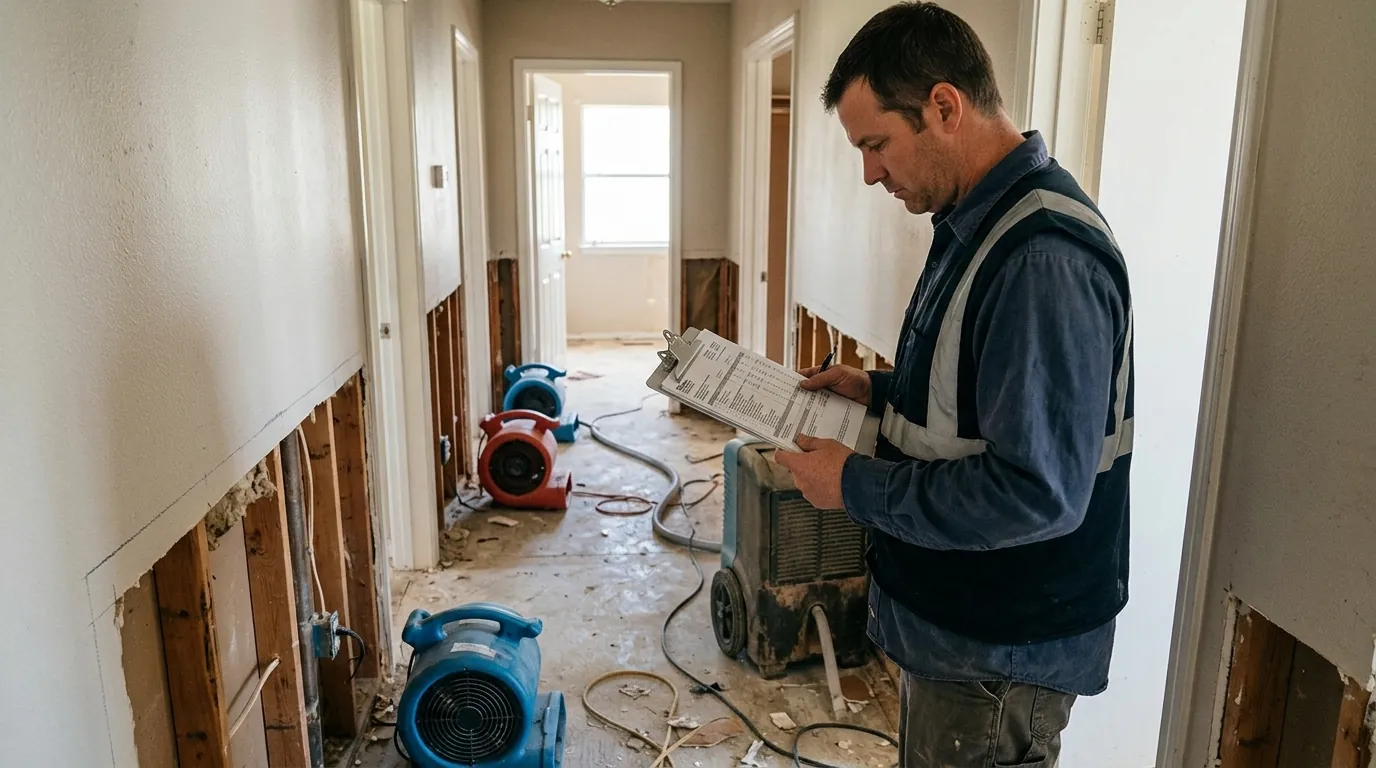
A typical clean water loss has three parts on the invoice. First is the emergency work: water extraction, moving contents, and removing pad or drywall that cannot be saved. Second is equipment: air movers, dehumidifiers and sometimes floor mats, billed by the day while they run. Third is monitoring: moisture readings each day until the wet materials match a dry reference spot in the same house.
Each extra day of drying adds equipment charges. That is why a slow start costs more twice: more material has to come out, and the equipment runs longer on what is left.
Ask for the estimate in line items: square feet of carpet removed, linear feet of drywall cut, the number of air movers and dehumidifiers and for how many days. A line-item scope lets you compare two estimates and lets an adjuster see each charge. Our damage assessment and insurance documentation work produces that kind of scope.
Published ranges for related jobs
Water damage rarely stays in one category. A few related jobs have their own published national ranges, again for planning only:
- Crawl space repair: HomeAdvisor gives a normal range of $4,500 - $8,000, with an average of $6,000
- Crawl space water damage restoration: HomeAdvisor puts it between $2,000 and $10,000
- Mold that follows a slow leak: Fixr puts mold remediation at $1,500 to $9,000, with a national average of $3,500
- Mold inspection and testing: Fixr lists $450 to $800 when billed separately
Notice how wide each range is. They cover everything from a small closet to a whole floor, which is why a site visit and a written scope tell you more than any national average.
Dealing with this right now? Call (405) 689-1123 any hour. A person answers and we get a crew moving.
What a homeowners policy usually covers
Policies differ, so read yours or ask your agent; this is general information, not advice about your coverage. In broad terms, standard homeowners policies are written around sudden, accidental water: a burst pipe, a failed supply line, an appliance that let go. Damage from long, slow leaks and from floodwater coming in from outside is often excluded from a basic policy, and flood coverage is usually a separate policy.
Insurance cost is a live topic here. The Oklahoman, citing a 2025 Bankrate report, said Oklahoma ranks 47th of 50 states for homeowners insurance rates, and the state insurance commissioner points mainly to extreme weather, high claim frequency and higher repair costs. Check your deductible before deciding anything. The photos, readings and written scope are the same whether you file a claim or pay directly, and the decision about filing is yours.
Ways to keep the bill down
Most of what lowers a water damage bill happens in the first day, and much of it is in the homeowner's hands.
- Know where the main shutoff is and stop the water fast
- Call the same day, so materials can be dried instead of replaced
- Lift rugs, furniture, boxes and electronics off the wet floor yourself
- Keep the failed part and take photos before cleanup starts
- Leave drying equipment running and in place until the readings say dry, even when surfaces feel dry
- Run the air conditioner and keep interior doors open while you wait
- Fix the source before the rebuild, so new drywall does not get wet again
When a stain keeps coming back and nobody can find the source, a leak detection and moisture inspection costs little next to a second rebuild.
Reading two estimates side by side
When estimates differ a lot, the difference is almost always in scope, not in the rate. One contractor may plan to dry the drywall in place while another plans to cut it at two feet. One may count four days of equipment and the other two. One may include the rebuild and the other may quote it separately. Also ask whether moving contents and any permits for the rebuild are included.
Ask each to explain what comes out, what stays, how many days of drying they expect and why, and what the rebuild includes. Compare the lines, not the totals. For how the drying itself works, see our water damage restoration page.
Where we can take it from here
Cost questions about water damage repair
Usually because they plan different work. One may dry drywall in place while another cuts it out, or count more equipment days. Ask both for a line-item scope and compare the quantities: square feet removed, linear feet cut and days of drying.
On a small clean water job, drying and cleanup often make up most of it. Once drywall, cabinets, flooring and paint have to be replaced, the rebuild usually outweighs the drying. That is why a fast start, while materials can still be saved, matters so much.
Often, because the pipe is under concrete. HomeAdvisor puts slab leak repair at $630 to $4,400, average $2,280, and water damage repair after one from $500 for a minor subfloor fix to $15,000 or more for extensive damage. Flooring over the slab drives much of it.
They are a starting point for planning. Labor rates, the age and finishes of the house and how quickly drying starts all shift a local job. Use the published ranges to judge whether an estimate is roughly in line, then compare the line items.
Yes. Many homeowners want a written scope first so they can weigh it against their deductible. The photos, moisture readings and line items are the same whether you file or pay directly, and the decision about filing stays with you.