In Oklahoma City, pipes usually split where they run through cold spaces: attics, exterior walls, unheated garages, crawl spaces and outdoor faucets. Those runs sit outside the heated part of the house. When the forecast drops hard, open sink cabinets, drip faucets on outside walls, protect hose bibs and make sure you know where the main shutoff is.
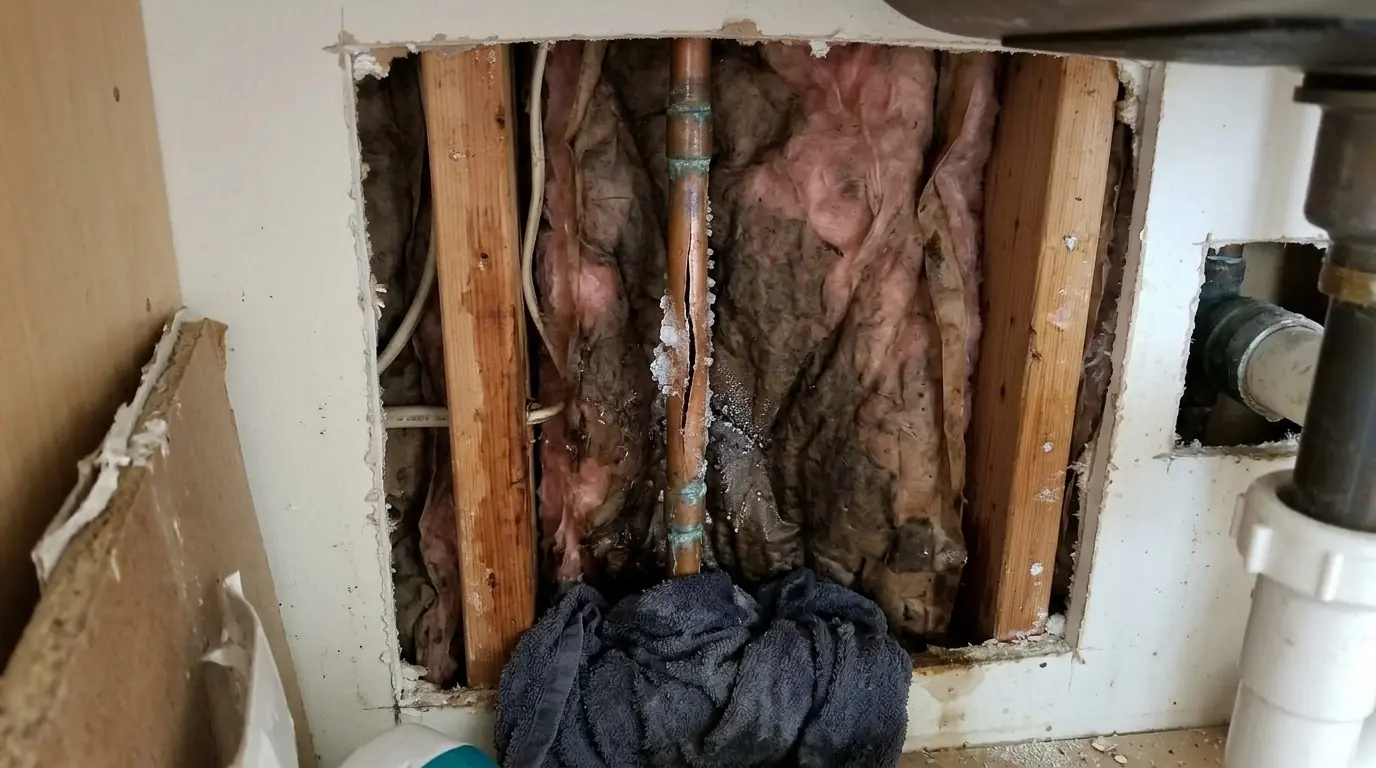
February 2021 showed what a long freeze does here
The Oklahoma Mesonet recorded minus 14 degrees in Oklahoma City on February 16, 2021, the city's second lowest temperature on record behind minus 17 degrees on February 12, 1899. The day before, February 15, was the single coldest day statewide since at least 1915, with a statewide average of minus 0.7 degrees. The month averaged 31 degrees, the sixth coldest February on record.
The Oklahoma Climatological Survey's summary for that month noted that many homes and businesses across Oklahoma had frozen and burst pipes, and the extended freeze damaged more than 120 public water systems. It took about 13 days for every Mesonet site to climb back above freezing. A pipe that freezes for one night may come through fine. A pipe that stays frozen for days, with pressure building behind an ice plug, often does not.
Why pipes split where they do
A pipe does not usually burst at the spot where the ice forms. Ice blocks the line, the water trapped between the ice and a closed faucet has nowhere to go, and pressure builds until the weakest point gives. That is why a split can turn up a few feet from the coldest spot, and why the leak often starts when the pipe thaws rather than while it is frozen. Copper, CPVC and galvanized steel all give way under that pressure.
The runs at risk are the ones outside the heated envelope or pressed against it. A pipe in an outside wall behind a closed sink cabinet is doubly cut off, with cold on one side and a closed door blocking house heat on the other:
- Supply lines routed through the attic, which some slab homes use instead of running pipe under the floor
- Pipes inside exterior walls, especially behind kitchen and bathroom sinks on north-facing walls
- Lines through an unheated garage, including the water heater supply and laundry hookups
- Pipes in a crawl space with torn insulation or open foundation vents
- Hose bibs and the short length of pipe just inside the wall behind them
- Any pipe near a gap where cold air gets in, such as a dryer vent or a hole around a line set
What to do the night the forecast drops
NOAA's 1991-2020 normals put Oklahoma City's typical last spring freeze around April 4 and first fall freeze around November 2, so the season for pipe trouble runs from late fall into early spring. Hard freezes usually come with a few days of warning. Use them.
- Disconnect garden hoses and cover outdoor faucets with insulated caps
- Open the cabinet doors under sinks on exterior walls so house heat reaches the pipes
- Let a thin, steady drip run from faucets on outside walls, hot and cold
- Keep the thermostat at the same setting day and night, including when you travel
- Keep the garage door closed if water lines or the water heater are in there
- Find the main shutoff and make sure it actually turns before you need it
If you will be away during a hard freeze, have someone check the house every day, or shut off the main and drain the lines by opening the lowest faucet in the house. Write the location of the main shutoff on a card by the garage door so a house sitter can find it fast.
Walk the house the morning after a hard freeze
The morning after a deep cold night, take ten minutes to check the house before the afternoon warms it up. Turn on each faucet briefly, including the ones in bathrooms you rarely use, and watch for low flow from any one of them. Look under sinks on outside walls, in the garage around the water heater and the washing machine, and at ceilings below any attic plumbing.
Check the water meter too. With every faucet and appliance off, the dial or leak indicator should sit still. If it is moving, water is going somewhere, often into a wall, under the slab or into the crawl space. Shut the main and call a plumber.
Outside, look at the hose bibs, the sprinkler backflow device and any exposed pipe. Ice on the outside of a wall, a puddle where there should not be one, or a hissing sound near a faucet all point to a split somewhere in that run.
Dealing with this right now? Call (405) 689-1123 any hour. A person answers and we get a crew moving.
If a pipe is frozen but has not burst
No water, or only a trickle, from one faucet during a freeze usually means an ice plug. Leave that faucet open so water can move as it thaws, and open nearby cabinet doors so house heat does some of the work. Warm the pipe gently with a hair dryer or warm towels, working from the faucet back toward the cold spot, and keep cords and appliances out of any water on the floor.
Never use an open flame, a torch or a propane heater on a pipe or inside a wall. Thawing attempts start house fires during cold snaps. If you cannot reach the frozen section, or it is inside a wall or ceiling, call a plumber rather than opening things up yourself.
When it thaws and the water starts
Most burst pipes announce themselves when the temperature climbs back above freezing. Water sprays inside a wall or drips through a ceiling. Shut the main right away, then open a faucet at the lowest point in the house to drain the lines. If the main will be off for a while, turn the water heater off as well.
If water is coming through a ceiling, stay out from under it. A ceiling holding water can sag and drop without warning. If water is near outlets or the panel, keep away and turn power off at the breaker only from a dry spot. Move rugs and furniture out of the path of the water and set buckets under drips, but only in rooms where the ceiling is not sagging.
Then photograph everything and call us. Our burst pipe water damage work opens the wall where the pipe broke so the plumber can repair it, then dries the cavity before it is closed. If the leak came through a ceiling, ceiling water damage repair takes it from there.
Fixing the weak spot so it does not split again
After the drying, find out why that pipe froze. Common fixes are insulating an attic run and keeping it on the warm side of the attic insulation instead of above it, sealing the gap where cold air reaches a pipe in an outside wall, replacing torn crawl space insulation, and swapping an old hose bib for a frost-free one. Heat cable on an exposed run can help, but only a product rated for that use, installed by its instructions and never wrapped over itself. A split in the same place two winters running means the cause was never addressed.
Crawl spaces deserve a look after any freeze, because a leak there can run for weeks before anyone notices. Our crawl space water damage work covers wet insulation and the vapor barrier under the floor.
Where we can take it from here
Freeze and burst pipe questions
There is no single number. The risk climbs with how long the cold lasts and how exposed the pipe is. A pipe in an attic, garage or outside wall can freeze during a long hard freeze with wind, while pipes inside the heated house rarely freeze unless the heat fails.
Drip both on faucets along outside walls, or set a single-handle faucet to the middle. Either line can freeze. A thin, steady drip is enough. The point is to keep water moving and relieve pressure, not to run a stream all night.
PEX handles freezing better than copper or CPVC because it can stretch, but it is not immune. Fittings, valves and the joints where PEX meets copper or a fixture can crack, and a long, deep freeze can still split the pipe itself.
A split pipe stays sealed by ice while it is frozen. Water flows once the ice thaws. In February 2021 it took about 13 days for every Mesonet site to climb back above freezing, so leaks kept appearing as different parts of houses warmed up.
If you will be gone during a freeze, shutting the main and draining the lines is the safest choice. Leave the heat on at a normal setting. If you keep the water on, have someone check the house each day so a leak cannot run for a week.